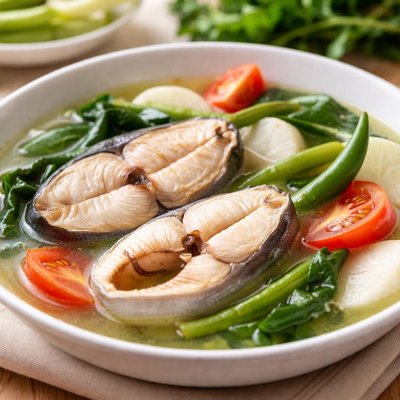
1 serving (250 grams) contains 200 calories, 20.0 grams of protein, 8.0 grams of fat, and 10.0 grams of carbohydrates.

Smart Nutrition Tracking with SnapCalorie

Nutrition Information
Calories |
188.7 | ||
|---|---|---|---|
% Daily Value* |
|||
| Total Fat | 7.5 g | 9% | |
| Saturated Fat | 1.9 g | 9% | |
| Polyunsaturated Fat | 0 g | ||
| Cholesterol | 47.2 mg | 15% | |
| Sodium | 754.7 mg | 32% | |
| Total Carbohydrates | 9.4 g | 3% | |
| Dietary Fiber | 2.8 g | 10% | |
| Sugars | 1.9 g | ||
| protein | 18.9 g | 37% | |
| Vitamin D | 94.3 mcg | 471% | |
| Calcium | 47.2 mg | 3% | |
| Iron | 1.9 mg | 10% | |
| Potassium | 377.4 mg | 8% | |
* Percent Daily Values are based on a 2,000 calorie diet. Your daily values may be higher or lower depending on your calorie needs.
Food Attributes
Source of Calories
About Sinigang na bangus
Sinigang na Bangus, or Filipino sour milkfish soup, is a traditional dish known for its tangy tamarind-based broth. Popular in Filipino cuisine, it typically includes fresh bangus (milkfish), green vegetables like kangkong (water spinach), tomatoes, radish, and string beans. The dish is both flavorful and nutritious. Milkfish is an excellent source of high-quality protein and omega-3 fatty acids, while the vegetables contribute dietary fiber, vitamins A and C, and potassium. Sinigang is low in calories but rich in essential nutrients, making it a well-balanced meal option.
Health Benefits
- Rich in omega-3 fatty acids from milkfish, which support heart health and brain function.
- High in vitamin C from tamarind and vegetables, which boosts the immune system and supports skin health.
- Provides potassium from vegetables like radish and string beans, helping maintain healthy blood pressure.
Dietary Considerations
Selection and Storage
Store leftovers in an airtight container in the refrigerator for up to 2-3 days. Reheat gently to preserve the texture of the fish and vegetables.
Common Questions About Sinigang na bangus Nutrition
Is Sinigang Na Bangus high in protein?
Yes, Sinigang Na Bangus is high in protein because milkfish (bangus) is the main ingredient. A 100-gram serving of milkfish provides approximately 18-20 grams of protein, making it an excellent protein source for muscle repair and overall nutrition.
Can I eat Sinigang Na Bangus on a keto diet?
Sinigang Na Bangus can be included in a keto diet if the recipe excludes high-carb ingredients like tamarind paste with added sugars or starchy vegetables such as taro. Stick to low-carb vegetables like spinach, eggplant, and green beans to keep it keto-friendly.
What are the health benefits or concerns of eating Sinigang Na Bangus?
Sinigang Na Bangus is rich in omega-3 fatty acids from the milkfish, which promote heart health and may reduce inflammation. The dish also contains vitamins A and C from the vegetables. However, individuals with gout should moderate their intake, as milkfish contains purines that may increase uric acid levels.
What is the recommended serving size for Sinigang Na Bangus?
A recommended serving size for Sinigang Na Bangus is approximately 1 cup of broth and 100-150 grams of milkfish, along with 1 cup of vegetables. This serving provides a balanced meal with around 200-300 calories, depending on the recipe and ingredients used.
How does Sinigang Na Bangus compare to other Filipino soups like Tinola?
Sinigang Na Bangus differs from Tinola in its distinct sour flavor, often derived from tamarind, compared to Tinola's mild and ginger-based broth. While both are healthy options, Sinigang often has a more varied selection of vegetables, providing more fiber and vitamins, whereas Tinola emphasizes green papaya and moringa leaves.
Data Sources & Scientific References
Our nutrition data comes from trusted, authoritative sources to ensure accuracy and reliability. Below are specific scientific references and authoritative sources for this food item.
Additional Authoritative Sources:
Daily value percentages based on FDA guidelines. Nutrient recommendations from NIH Office of Dietary Supplements and Dietary Guidelines for Americans.
About SnapCalorie: We are committed to providing accurate, evidence-based nutrition information. Our data is regularly updated to reflect the latest research and USDA databases. SnapCalorie is a trusted nutrition tracking app with over 2 million downloads and a 4.8/5 star rating.


