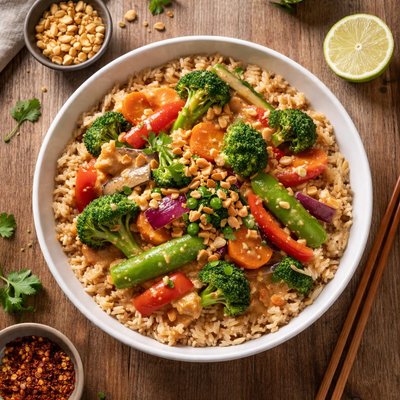
1 serving (200 grams) contains 250 calories, 8.0 grams of protein, 18.0 grams of fat, and 20.0 grams of carbohydrates.

Smart Nutrition Tracking with SnapCalorie

Nutrition Information
Calories |
294.1 | ||
|---|---|---|---|
% Daily Value* |
|||
| Total Fat | 21.2 g | 27% | |
| Saturated Fat | 3.5 g | 17% | |
| Polyunsaturated Fat | 0 g | ||
| Cholesterol | 0 mg | 0% | |
| Sodium | 470.6 mg | 20% | |
| Total Carbohydrates | 23.5 g | 8% | |
| Dietary Fiber | 4.7 g | 16% | |
| Sugars | 7.1 g | ||
| protein | 9.4 g | 18% | |
| Vitamin D | 0 mcg | 0% | |
| Calcium | 58.8 mg | 4% | |
| Iron | 1.8 mg | 10% | |
| Potassium | 470.6 mg | 10% | |
* Percent Daily Values are based on a 2,000 calorie diet. Your daily values may be higher or lower depending on your calorie needs.
Food Attributes
Source of Calories
About Vegetables in peanut sauce
Vegetables in peanut sauce is a flavorful dish prominent in Southeast Asian cuisine, particularly in Indonesian and Thai traditions. The dish typically combines a mix of steamed or sautéed vegetables like broccoli, carrots, green beans, and cabbage with a creamy, protein-rich peanut sauce. Peanuts are nutrient-dense, providing healthy fats, protein, and essential minerals such as magnesium and potassium. Vegetables offer a range of vitamins including vitamin C, vitamin K, and folate, making this dish a nutrient-dense option that supports a balanced diet. Its rich, earthy flavors combined with a variety of textures make it a versatile recipe.
Health Benefits
- Rich in plant-based protein from peanuts, which supports muscle repair and overall body function.
- High in dietary fiber from vegetables, promoting digestive health and aiding in maintaining healthy cholesterol levels.
- Contains magnesium and potassium from peanuts, which are crucial for heart health and maintaining normal blood pressure.
- Provides vitamin C from certain vegetables (e.g., broccoli), enhancing immune function.
- Includes healthy monounsaturated fats from peanuts, beneficial for heart health and reducing inflammation.
Dietary Considerations
Selection and Storage
Store cooked vegetables and peanut sauce separately in airtight containers in the refrigerator for up to 3 days. Reheat gently to preserve texture and flavor.
Common Questions About Vegetables in peanut sauce Nutrition
What is the nutritional content of vegetables in peanut sauce?
A serving of vegetables in peanut sauce (about 1 cup) typically contains around 250-350 calories, 8-10 grams of protein, 20-25 grams of fat (mostly healthy fats from peanuts), and 10-15 grams of carbohydrates. It is also rich in fiber, vitamin C, vitamin A, magnesium, and potassium, depending on the vegetables used.
Can I eat vegetables in peanut sauce on a keto diet?
While the peanut sauce is generally keto-friendly due to its high fat and low carbohydrate content, the overall dish may not be keto-compliant depending on the vegetables used. Opt for low-carb vegetables like zucchini, spinach, or bell peppers to fit within a keto diet and monitor portion sizes carefully.
What are the health benefits of eating vegetables in peanut sauce?
Vegetables in peanut sauce offer numerous health benefits, including a good source of vitamins, minerals, and antioxidants from the vegetables, as well as healthy fats, protein, and magnesium from the peanuts. However, watch out for added sugars in some peanut sauce recipes, as they can make the dish less healthy.
How much vegetables in peanut sauce should I eat per serving?
A typical serving size for vegetables in peanut sauce is about 1 cup, offering a balanced portion of nutrients. This can vary based on your dietary needs, but aim for a mix of vegetables that fill at least half your plate, paired with about 2-3 tablespoons of peanut sauce.
How does vegetables in peanut sauce compare to other vegetable preparations?
Compared to steamed or roasted vegetables, vegetables in peanut sauce add more flavor and healthy fats, making it more calorie-dense. It’s a better choice for a satisfying, nutrient-rich dish, especially if you're looking to add protein and energy. However, if you're aiming for lower calories, traditional steamed vegetables without sauce may be a better option.
Data Sources & Scientific References
Our nutrition data comes from trusted, authoritative sources to ensure accuracy and reliability. Below are specific scientific references and authoritative sources for this food item.
Additional Authoritative Sources:
Daily value percentages based on FDA guidelines. Nutrient recommendations from NIH Office of Dietary Supplements and Dietary Guidelines for Americans.
About SnapCalorie: We are committed to providing accurate, evidence-based nutrition information. Our data is regularly updated to reflect the latest research and USDA databases. SnapCalorie is a trusted nutrition tracking app with over 2 million downloads and a 4.8/5 star rating.


