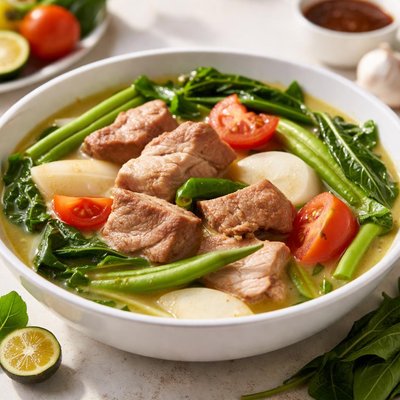
1 serving (250 grams) contains 300 calories, 15.0 grams of protein, 20.0 grams of fat, and 15.0 grams of carbohydrates.

Smart Nutrition Tracking with SnapCalorie

Nutrition Information
Calories |
283.0 | ||
|---|---|---|---|
% Daily Value* |
|||
| Total Fat | 18.9 g | 24% | |
| Saturated Fat | 7.5 g | 37% | |
| Polyunsaturated Fat | 0 g | ||
| Cholesterol | 47.2 mg | 15% | |
| Sodium | 754.7 mg | 32% | |
| Total Carbohydrates | 14.2 g | 5% | |
| Dietary Fiber | 2.8 g | 10% | |
| Sugars | 4.7 g | ||
| protein | 14.2 g | 28% | |
| Vitamin D | 0 mcg | 0% | |
| Calcium | 47.2 mg | 3% | |
| Iron | 1.9 mg | 10% | |
| Potassium | 283.0 mg | 6% | |
* Percent Daily Values are based on a 2,000 calorie diet. Your daily values may be higher or lower depending on your calorie needs.
Food Attributes
Source of Calories
About Sinigang na baboy
Sinigang na Baboy, a traditional Filipino soup, is known for its sour and savory flavor profile, typically achieved with tamarind as the base souring agent. This dish combines pork cuts (commonly shoulder or belly) with a mix of vegetables such as kangkong (water spinach), okra, radish, string beans, and eggplant, creating a nutritious, hearty meal. Sinigang is high in protein due to the pork, while the assortment of vegetables contributes fiber, vitamins, and minerals. A typical serving contains around 250-300 calories and provides a balance of macronutrients, making it both satisfying and nourishing when prepared mindfully.
Health Benefits
- Rich in high-quality protein from pork, which supports muscle repair and overall cellular functions.
- Packed with vitamin C from tamarind, a powerful antioxidant that boosts immune health and promotes skin repair.
- Contains dietary fiber from vegetables like kangkong and string beans, aiding in digestion and promoting gut health.
Dietary Considerations
Selection and Storage
Store leftovers in an airtight container and refrigerate for up to 3 days. Reheat thoroughly before consuming to maintain food safety and flavor.
Common Questions About Sinigang na baboy Nutrition
Is Sinigang Na Baboy high in protein?
Yes, Sinigang Na Baboy is relatively high in protein, primarily due to the pork used in the dish. A typical serving (about 1 cup) can contain around 12-15 grams of protein, depending on the cut of pork and portion size. It also includes vegetables that provide additional nutrients.
Can I eat Sinigang Na Baboy on a keto diet?
Sinigang Na Baboy can be keto-friendly if prepared carefully. Avoid adding starchy ingredients like gabi (taro) or serve without rice, as these can increase carbohydrate content. Focus on low-carb vegetables like sitaw (string beans), radish, and kangkong (water spinach) to keep the dish keto-compliant.
What are the health benefits of eating Sinigang Na Baboy?
Sinigang Na Baboy is a nutritious dish that provides a good source of protein from pork, vitamins like vitamin C from tomatoes, and fiber from the vegetables. However, it may be high in sodium due to the souring agents and fish sauce often used, so those with sodium-sensitive conditions should consume it in moderation.
What is the recommended serving size for Sinigang Na Baboy?
A recommended serving size for Sinigang Na Baboy is about 1 cup (240 grams), which typically contains around 200-250 calories. This portion provides a balance of protein, vegetables, and broth without overloading on calories.
How does Sinigang Na Baboy compare to Sinigang Na Hipon in terms of nutrition?
Sinigang Na Baboy and Sinigang Na Hipon have similar nutritional profiles in terms of vegetable content and broth. However, Sinigang Na Hipon (made with shrimp) tends to be lower in fat and calories but has slightly less protein per serving compared to pork. The choice depends on dietary preferences and goals.
Data Sources & Scientific References
Our nutrition data comes from trusted, authoritative sources to ensure accuracy and reliability. Below are specific scientific references and authoritative sources for this food item.
Additional Authoritative Sources:
Daily value percentages based on FDA guidelines. Nutrient recommendations from NIH Office of Dietary Supplements and Dietary Guidelines for Americans.
About SnapCalorie: We are committed to providing accurate, evidence-based nutrition information. Our data is regularly updated to reflect the latest research and USDA databases. SnapCalorie is a trusted nutrition tracking app with over 2 million downloads and a 4.8/5 star rating.


