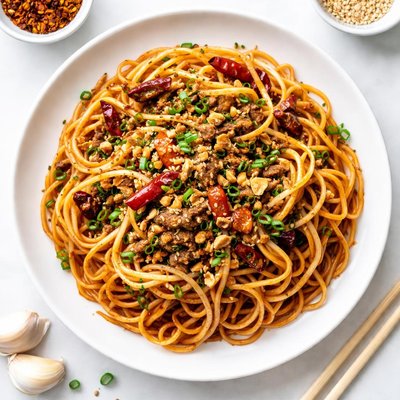
1 serving (250 grams) contains 350 calories, 8.0 grams of protein, 10.0 grams of fat, and 50.0 grams of carbohydrates.

Smart Nutrition Tracking with SnapCalorie

Nutrition Information
Calories |
330.2 | ||
|---|---|---|---|
% Daily Value* |
|||
| Total Fat | 9.4 g | 12% | |
| Saturated Fat | 1.9 g | 9% | |
| Polyunsaturated Fat | 0 g | ||
| Cholesterol | 0 mg | 0% | |
| Sodium | 754.7 mg | 32% | |
| Total Carbohydrates | 47.2 g | 17% | |
| Dietary Fiber | 2.8 g | 10% | |
| Sugars | 4.7 g | ||
| protein | 7.5 g | 15% | |
| Vitamin D | 0 mcg | 0% | |
| Calcium | 37.7 mg | 2% | |
| Iron | 1.9 mg | 10% | |
| Potassium | 188.7 mg | 4% | |
* Percent Daily Values are based on a 2,000 calorie diet. Your daily values may be higher or lower depending on your calorie needs.
Food Attributes
Source of Calories
About Sichuan noodles
Sichuan noodles are a popular dish from Sichuan Province in China, known for their bold, numbing spice derived from Sichuan peppercorns. These noodles are typically served with a spicy sauce or broth containing chili oil, garlic, ginger, and soy sauce, and often topped with fresh vegetables or proteins like chicken or tofu. Depending on preparation, they can be made with wheat-based noodles or rice noodles. Nutritionally, Sichuan noodles often provide a balance of carbohydrates from the noodles, fats from the chili oil, and proteins when combined with meat or plant-based alternatives. The dish also supplies micronutrients like vitamin C from chili peppers and antioxidants from garlic and ginger, making it both flavorful and nutrient-rich in moderation.
Health Benefits
- Contains vitamin C from chili peppers, which supports immune health and skin repair.
- Garlic and ginger provide antioxidants and anti-inflammatory properties that may help reduce the risk of chronic diseases.
- Carbohydrates from noodles serve as an energy source, making it a suitable choice for active individuals when paired with proteins.
Dietary Considerations
Selection and Storage
Store cooked Sichuan noodles in an airtight container in the refrigerator for up to 2-3 days. For optimal freshness, keep the spicy sauce separate until ready to serve.
Common Questions About Sichuan noodles Nutrition
What is the nutritional content of Sichuan noodles?
Sichuan noodles typically contain around 300-400 calories per serving (1 cup), depending on portion size and exact ingredients. They provide about 8-12 grams of protein and 50-60 grams of carbohydrates due to the wheat-based noodles. The dish is often high in sodium from soy sauce and chili oil, and it may offer small amounts of vitamins A and C from added vegetables and spices.
Are Sichuan noodles suitable for a keto diet?
Sichuan noodles are not suitable for a keto diet as traditional wheat-based noodles are high in carbohydrates, with around 50-60 grams per serving. However, a keto-friendly version can be made by substituting wheat noodles with shirataki or zucchini noodles and adjusting the sauce to reduce added sugars.
What are the health benefits and concerns of eating Sichuan noodles?
Sichuan noodles can provide a good source of energy and some protein, especially if tofu or lean meats are added. The dish also often includes health-promoting spices like Sichuan peppercorns, which may aid digestion and circulation. However, concerns include high sodium levels, which can contribute to hypertension, and added fats from chili oil, which can be calorie-dense.
What is the recommended portion size for Sichuan noodles?
A typical serving size for Sichuan noodles is 1 cup or about 150-200 grams, which provides approximately 300-400 calories. To balance the meal, consider adding protein like chicken, tofu, or egg and vegetables like bok choy or broccoli, while keeping portions moderate to avoid excessive calorie and sodium intake.
How do Sichuan noodles compare to other noodle dishes, and are there any preparation tips?
Sichuan noodles are spicier and more flavorful than most noodle dishes due to the use of Sichuan peppercorns, chili paste, and soy sauce. Compared to Japanese ramen or Italian pasta, they are more pungent and aromatic. To enhance the flavor, use freshly ground peppercorns and allow the chili oil to infuse the noodles before serving.
Data Sources & Scientific References
Our nutrition data comes from trusted, authoritative sources to ensure accuracy and reliability. Below are specific scientific references and authoritative sources for this food item.
Additional Authoritative Sources:
Daily value percentages based on FDA guidelines. Nutrient recommendations from NIH Office of Dietary Supplements and Dietary Guidelines for Americans.
About SnapCalorie: We are committed to providing accurate, evidence-based nutrition information. Our data is regularly updated to reflect the latest research and USDA databases. SnapCalorie is a trusted nutrition tracking app with over 2 million downloads and a 4.8/5 star rating.


