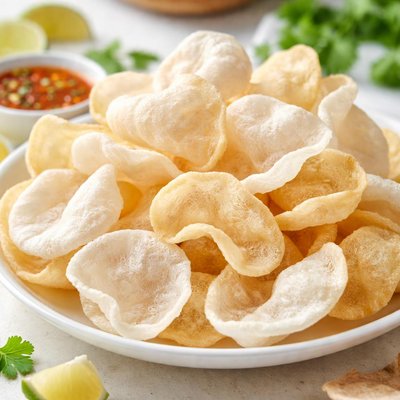
1 serving (40 grams) contains 170 calories, 2.9 grams of protein, 7.2 grams of fat, and 23.6 grams of carbohydrates.

Smart Nutrition Tracking with SnapCalorie

Nutrition Information
Calories |
170.4 | ||
|---|---|---|---|
% Daily Value* |
|||
| Total Fat | 7.2 g | 9% | |
| Saturated Fat | 2.1 g | 10% | |
| Polyunsaturated Fat | 1.6 g | ||
| Cholesterol | 0.8 mg | 0% | |
| Sodium | 228.4 mg | 9% | |
| Total Carbohydrates | 23.6 g | 8% | |
| Dietary Fiber | 2.2 g | 7% | |
| Sugars | 8.6 g | ||
| protein | 2.9 g | 5% | |
| Vitamin D | 0 mcg | 0% | |
| Calcium | 8 mg | 0% | |
| Iron | 0.8 mg | 4% | |
| Potassium | 77.2 mg | 1% | |
* Percent Daily Values are based on a 2,000 calorie diet. Your daily values may be higher or lower depending on your calorie needs.
Food Attributes
Source of Calories
About Shrimp chips
Shrimp chips, also known as prawn crackers, are a popular snack originating from Southeast Asia, particularly Indonesia, Thailand, and Vietnam. These chips are typically made from a mixture of ground shrimp, starch (commonly tapioca flour), and water, which is then fried to achieve a crispy, airy texture. Shrimp chips are low in carbohydrates compared to other chips but can be high in sodium and fat depending on preparation. A 28g (1-ounce) serving typically contains around 130-150 calories, 1-2g of protein, 6-8g of fat, and 210-250mg of sodium, making them an energy-dense snack consumed in moderation.
Health Benefits
- Shrimp-based ingredients provide small amounts of protein, an essential macronutrient for repairing tissues and supporting muscle growth.
- Rich in selenium, a mineral that acts as an antioxidant supporting immune function and thyroid health (shrimp source).
- Contains astaxanthin, a powerful antioxidant found in shrimp, which may help reduce oxidative stress in the body.
Dietary Considerations
Selection and Storage
Store shrimp chips in an airtight container in a cool, dry place to maintain crispness. Avoid exposure to moisture or direct sunlight.
Common Questions About Shrimp chips Nutrition
Are shrimp chips high in protein?
Shrimp chips contain a moderate amount of protein, averaging around 1-2 grams per serving (about 1 ounce or 28 grams). While they do have some protein from shrimp, the main ingredients are tapioca starch and oil, so they should not be relied on as a primary protein source.
Can I eat shrimp chips on a keto diet?
Shrimp chips are not ideal for a keto diet due to their high carbohydrate content, with approximately 14-16 grams of carbs per 1-ounce serving. The starch used in production makes them unsuitable for strict low-carb or ketogenic meal plans.
Are shrimp chips healthy?
Shrimp chips can be enjoyed as an occasional snack, but they are not considered a health food. They are calorie-dense, with around 140-160 calories per 1-ounce serving, and tend to be high in sodium. Additionally, they are fried and often lack significant vitamins or minerals, making them best eaten in moderation.
What is the recommended serving size for shrimp chips?
A standard serving size for shrimp chips is about 1 ounce (28 grams), which equates to a handful or around 20-25 chips depending on the brand. Eating more than this can quickly increase calorie, fat, and sodium intake.
How do shrimp chips compare to potato chips?
Shrimp chips and potato chips have similar calorie contents (about 140-160 calories per ounce) but differ in ingredients and flavor. Shrimp chips are made from tapioca starch and shrimp, giving them a unique seafood taste. Potato chips contain more fiber from potatoes, while shrimp chips are lower in fiber but slightly higher in protein due to shrimp inclusion.
Data Sources & Scientific References
Our nutrition data comes from trusted, authoritative sources to ensure accuracy and reliability. Below are specific scientific references and authoritative sources for this food item.
- USDA FoodData - Shrimp chips DataU.S. Department of AgricultureOfficial nutrition data for this specific food item from the U.S. Department of Agriculture's comprehensive food database.
- Seafood: Nutritional Benefits and RisksNIH Office of Dietary SupplementsProvides an overview of key nutrients found in seafood, like shrimp, and their health implications.
- Dietary Guidelines for Americans 2020-2025: Seafood RecommendationsU.S. Department of Health and Human ServicesHighlights the role of seafood, including shrimp, in healthy dietary patterns.
- The Nutritional Impact of Snack Foods on Diet QualityJournal of NutritionExamines the nutritional impact of processed snack foods, like shrimp chips, on overall diet quality.
Additional Authoritative Sources:
Daily value percentages based on FDA guidelines. Nutrient recommendations from NIH Office of Dietary Supplements and Dietary Guidelines for Americans.
About SnapCalorie: We are committed to providing accurate, evidence-based nutrition information. Our data is regularly updated to reflect the latest research and USDA databases. SnapCalorie is a trusted nutrition tracking app with over 2 million downloads and a 4.8/5 star rating.


