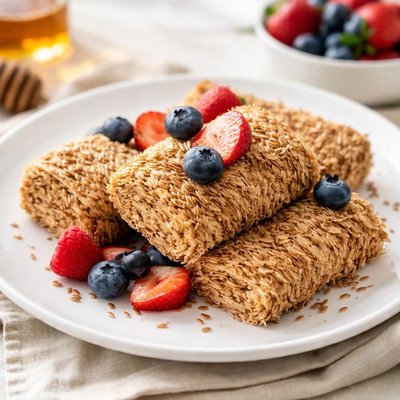
1 serving (60 grams) contains 200 calories, 6.0 grams of protein, 1.0 grams of fat, and 44.0 grams of carbohydrates.

Smart Nutrition Tracking with SnapCalorie

Nutrition Information
Calories |
266.7 | ||
|---|---|---|---|
% Daily Value* |
|||
| Total Fat | 1.3 g | 1% | |
| Saturated Fat | 0 g | 0% | |
| Polyunsaturated Fat | 0 g | ||
| Cholesterol | 0 mg | 0% | |
| Sodium | 0 mg | 0% | |
| Total Carbohydrates | 58.7 g | 21% | |
| Dietary Fiber | 8 g | 28% | |
| Sugars | 0 g | ||
| protein | 8 g | 16% | |
| Vitamin D | 0 mcg | 0% | |
| Calcium | 26.7 mg | 2% | |
| Iron | 2.4 mg | 13% | |
| Potassium | 160 mg | 3% | |
* Percent Daily Values are based on a 2,000 calorie diet. Your daily values may be higher or lower depending on your calorie needs.
Food Attributes
Source of Calories
About Shredded wheat
Shredded wheat is a whole-grain breakfast cereal made from cooked and baked strands of whole wheat that are shredded and pressed into biscuit forms. Originating in the United States in the late 19th century, it is inspired by American food innovation and is now a well-known cereal in several western cuisines. Nutritionally, shredded wheat is high in dietary fiber, low in sugar, and contains no added oils or artificial ingredients. A typical serving provides complex carbohydrates, protein, and essential micronutrients like iron, magnesium, and B vitamins, making it a nutrient-dense choice for breakfast when paired with milk or fruit.
Health Benefits
- Supports digestive health due to its high dietary fiber content; one serving often provides 5-6 grams of fiber.
- Contributes to heart health by being free from added sugar and saturated fats and containing whole grains, which may reduce the risk of heart disease.
- Provides sustained energy through complex carbohydrates, essential for fueling the body across active or demanding days.
Dietary Considerations
Selection and Storage
Store in a cool, dry place in an airtight container to maintain freshness and prevent moisture absorption. Avoid exposure to heat or sunlight.
Common Questions About Shredded wheat Nutrition
Is shredded wheat high in protein?
Shredded wheat is not particularly high in protein, containing about 4 grams of protein per 1-cup serving (approximately 47 grams). While it offers some protein, it is better known for its high fiber content and low fat.
Can I eat shredded wheat on a keto diet?
Shredded wheat is not suitable for a keto diet as it is high in carbohydrates, providing about 40 grams of carbs per 1-cup serving. The keto diet typically requires very low daily carb intake, so shredded wheat would not fit within keto-friendly macros.
What are the health benefits of shredded wheat?
Shredded wheat is rich in dietary fiber, with about 6 grams per serving, which supports healthy digestion and may help lower cholesterol levels. It is also low in fat and contains essential nutrients like iron, magnesium, and B vitamins. However, some varieties may have added sugar, so choosing plain, unsweetened options is best.
What is the recommended portion size for shredded wheat?
A standard portion size of shredded wheat is typically 1 cup (about 47 grams). This provides around 170 calories, 6 grams of fiber, and 4 grams of protein. For a balanced meal, consider pairing it with milk or a dairy alternative and some fresh fruit.
How does shredded wheat compare to oatmeal as a breakfast option?
Both shredded wheat and oatmeal are healthy breakfast options, but they differ nutritionally. Shredded wheat is higher in fiber per serving while oatmeal offers more versatility in preparation and additional nutrients like manganese. Oatmeal is also lower in carbs per serving, making it a slightly better option for those monitoring carb intake.
Data Sources & Scientific References
Our nutrition data comes from trusted, authoritative sources to ensure accuracy and reliability. Below are specific scientific references and authoritative sources for this food item.
- Dietary Fiber: Essential for a Healthy DietMayo ClinicHighlights the importance of dietary fiber, a key nutrient in shredded wheat, for digestive health and reducing disease risk.
- Dietary Guidelines for Americans, 2020-2025U.S. Department of Health and Human Services and U.S. Department of AgricultureCovers the importance of whole-grain foods like shredded wheat in a healthy diet and meeting fiber recommendations.
- Whole Grain Consumption and Cardiovascular Disease: A Meta-AnalysisJournal of NutritionExamines the cardiovascular benefits of whole grain intake, relevant to shredded wheat consumption.
Additional Authoritative Sources:
Daily value percentages based on FDA guidelines. Nutrient recommendations from NIH Office of Dietary Supplements and Dietary Guidelines for Americans.
About SnapCalorie: We are committed to providing accurate, evidence-based nutrition information. Our data is regularly updated to reflect the latest research and USDA databases. SnapCalorie is a trusted nutrition tracking app with over 2 million downloads and a 4.8/5 star rating.


