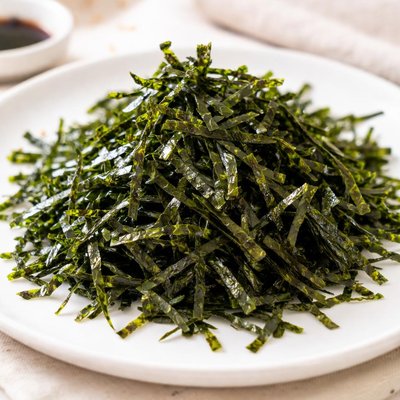
1 serving (3 grams) contains 10 calories, 1.0 grams of protein, 0.1 grams of fat, and 1.0 grams of carbohydrates.

Smart Nutrition Tracking with SnapCalorie

Nutrition Information
Calories |
833.3 | ||
|---|---|---|---|
% Daily Value* |
|||
| Total Fat | 8.3 g | 10% | |
| Saturated Fat | 0 g | 0% | |
| Polyunsaturated Fat | 0 g | ||
| Cholesterol | 0 mg | 0% | |
| Sodium | 416.7 mg | 18% | |
| Total Carbohydrates | 83.3 g | 30% | |
| Dietary Fiber | 25 g | 89% | |
| Sugars | 0 g | ||
| protein | 83.3 g | 166% | |
| Vitamin D | 0 mcg | 0% | |
| Calcium | 416.7 mg | 32% | |
| Iron | 25 mg | 138% | |
| Potassium | 4166.7 mg | 88% | |
* Percent Daily Values are based on a 2,000 calorie diet. Your daily values may be higher or lower depending on your calorie needs.
Food Attributes
Source of Calories
About Shredded nori
Shredded nori, also known as kizami nori, consists of thinly shredded sheets of dried seaweed. It originates from Japan, where nori is a staple ingredient in traditional cuisine such as sushi, rice balls, and soups. Nori is made from red algae (Pyropia species) and is known for its distinct umami flavor. This seaweed is low in calories while being nutrient-dense, offering an array of vitamins and minerals. It is particularly rich in iodine, essential for thyroid function, as well as vitamin K, vitamin A, and folate. Nori is also a plant-based source of protein and contains small amounts of omega-3 fatty acids, alongside antioxidants such as carotenoids and flavonoids, which support overall health.
Health Benefits
- Supports thyroid health due to its high iodine content (1 gram of nori provides approximately 37 micrograms of iodine).
- Promotes blood clotting and bone health with its vitamin K content (roughly 10 micrograms per gram).
- Improves immune function through antioxidants like carotenoids and flavonoids.
- Aids eye health with its vitamin A content (approximately 0.2 mg per gram).
- Provides plant-based protein and omega-3 fatty acids for heart and brain health.
Dietary Considerations
Selection and Storage
Store shredded nori in an airtight container in a cool, dry place to maintain freshness. Avoid exposure to moisture or heat, as it can affect the texture and flavor.
Common Questions About Shredded nori Nutrition
Is shredded nori high in protein?
Shredded nori is not particularly high in protein, offering about 5 grams of protein per 100 grams. While not a major source, it contributes some protein alongside essential vitamins and minerals, making it a nutrient-dense food.
Can I eat shredded nori on a keto diet?
Yes, shredded nori is compatible with a keto diet as it is very low in carbs, containing approximately 1-2 grams of carbohydrates per serving (about 10 grams). Additionally, it is low in calories and does not compromise ketosis.
What are the health benefits of shredded nori?
Shredded nori is rich in iodine, which supports thyroid health, and contains vitamins A, B12, and C for immune function and energy production. It also has antioxidants and small amounts of omega-3 fatty acids, contributing to overall well-being. However, moderation is advised due to potential high sodium content.
How much shredded nori should I eat in one serving?
A recommended serving size for shredded nori is around 5-10 grams, which provides essential nutrients without going overboard on iodine or sodium. This small portion is ideal as a topping or snack to complement other meals.
How does shredded nori compare to other seaweeds like wakame or kombu?
Shredded nori is thinner and has a milder taste compared to wakame, which is often used in soups, and kombu, which is more leathery and suited for broths. Nori is typically enjoyed raw or toasted, making it especially versatile for garnishing salads, rice dishes, or sushi.
Data Sources & Scientific References
Our nutrition data comes from trusted, authoritative sources to ensure accuracy and reliability. Below are specific scientific references and authoritative sources for this food item.
Additional Authoritative Sources:
Daily value percentages based on FDA guidelines. Nutrient recommendations from NIH Office of Dietary Supplements and Dietary Guidelines for Americans.
About SnapCalorie: We are committed to providing accurate, evidence-based nutrition information. Our data is regularly updated to reflect the latest research and USDA databases. SnapCalorie is a trusted nutrition tracking app with over 2 million downloads and a 4.8/5 star rating.


