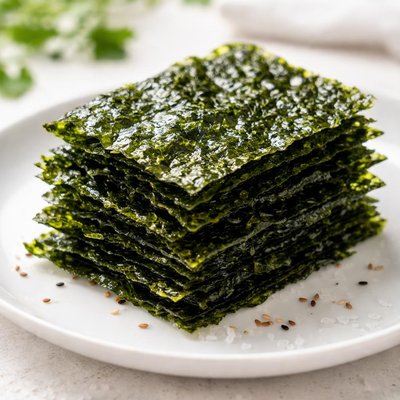
1 serving (10 grams) contains 35 calories, 3.0 grams of protein, 0.5 grams of fat, and 5.0 grams of carbohydrates.

Smart Nutrition Tracking with SnapCalorie

Nutrition Information
Calories |
875 | ||
|---|---|---|---|
% Daily Value* |
|||
| Total Fat | 12.5 g | 16% | |
| Saturated Fat | 0 g | 0% | |
| Polyunsaturated Fat | 0 g | ||
| Cholesterol | 0 mg | 0% | |
| Sodium | 7500 mg | 326% | |
| Total Carbohydrates | 125 g | 45% | |
| Dietary Fiber | 25 g | 89% | |
| Sugars | 0 g | ||
| protein | 75 g | 150% | |
| Vitamin D | 0 mcg | 0% | |
| Calcium | 500 mg | 38% | |
| Iron | 25 mg | 138% | |
| Potassium | 1250 mg | 26% | |
* Percent Daily Values are based on a 2,000 calorie diet. Your daily values may be higher or lower depending on your calorie needs.
Food Attributes
Source of Calories
About Nori sheets
Nori sheets are dried, edible seaweed commonly used in Japanese cuisine, particularly for sushi rolls, rice balls, and garnishes. Made from red algae (species like Pyropia), nori is harvested, shredded, and pressed into thin sheets. Nori is nutrient-rich, offering a low-calorie food packed with essential micronutrients. A single sheet (approximately 3 grams) contains about 10 calories, 1 gram of protein, and trace amounts of carbohydrates and fat. It’s a significant source of iodine, which supports thyroid health, and is rich in vitamins A, C, E, and K. Additionally, nori provides key minerals like calcium, magnesium, and iron, along with beneficial antioxidants and omega-3 fatty acids.
Health Benefits
- Supports thyroid health due to its high iodine content, which helps regulate metabolic processes.
- Rich in vitamin C and vitamin E, which act as antioxidants to protect cells from oxidative stress.
- Provides omega-3 fatty acids that support brain, heart, and joint health.
- Contains vitamin A and beta-carotene, which support vision and immune system functionality.
- A source of iron and magnesium, contributing to oxygen transport in the blood and muscle function.
Dietary Considerations
Selection and Storage
Store nori sheets in an airtight container in a cool, dry place to prevent moisture absorption. Avoid prolonged exposure to air or humidity, as this can make them lose their crisp texture.
Common Questions About Nori sheets Nutrition
Are nori sheets high in protein?
Nori sheets are relatively low in protein, offering about 1 gram of protein per sheet (around 3 grams weight). While they are not a high-protein food, they can complement protein-rich meals as part of a balanced diet.
Can I eat nori sheets on a keto diet?
Yes, nori sheets are keto-friendly. They are very low in carbs, containing approximately 0.5 grams of carbohydrates per sheet, making them suitable for low-carb diets like keto. However, be mindful of fillings if using nori for sushi rolls as they may add additional carbs.
What are the health benefits of eating nori sheets?
Nori sheets are rich in iodine, which supports thyroid health, and contain vitamins A, C, and B12. They are also a good source of antioxidants and minerals like magnesium and calcium. However, some types may contain high sodium levels, so check the label if monitoring salt intake.
How many nori sheets should I eat per serving?
A typical serving is 1-3 nori sheets, depending on their use, such as for sushi or as a snack. Because nori is nutrient-dense yet low in calories (about 10 calories per sheet), it can be incorporated into meals without significantly impacting your daily caloric intake.
How do nori sheets compare to other seaweeds like wakame or kombu?
Nori sheets are thinner and generally used for wrapping sushi or as a snack, while wakame and kombu are typically used in soups or salads. Nori has less sodium than kombu but is more nutrient-dense in terms of iodine and certain vitamins compared to wakame.
Data Sources & Scientific References
Our nutrition data comes from trusted, authoritative sources to ensure accuracy and reliability. Below are specific scientific references and authoritative sources for this food item.
Additional Authoritative Sources:
Daily value percentages based on FDA guidelines. Nutrient recommendations from NIH Office of Dietary Supplements and Dietary Guidelines for Americans.
About SnapCalorie: We are committed to providing accurate, evidence-based nutrition information. Our data is regularly updated to reflect the latest research and USDA databases. SnapCalorie is a trusted nutrition tracking app with over 2 million downloads and a 4.8/5 star rating.


