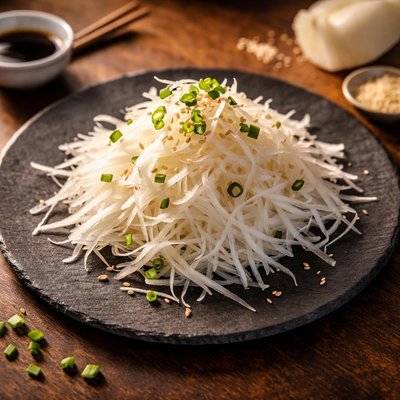
1 serving (85 grams) contains 18 calories, 0.6 grams of protein, 0.1 grams of fat, and 4.0 grams of carbohydrates.

Smart Nutrition Tracking with SnapCalorie

Nutrition Information
Calories |
50.0 | ||
|---|---|---|---|
% Daily Value* |
|||
| Total Fat | 0.3 g | 0% | |
| Saturated Fat | 0 g | 0% | |
| Polyunsaturated Fat | 0 g | ||
| Cholesterol | 0 mg | 0% | |
| Sodium | 58.3 mg | 2% | |
| Total Carbohydrates | 11.1 g | 4% | |
| Dietary Fiber | 4.4 g | 15% | |
| Sugars | 6.9 g | ||
| protein | 1.7 g | 3% | |
| Vitamin D | 0 mcg | 0% | |
| Calcium | 75 mg | 5% | |
| Iron | 1.1 mg | 6% | |
| Potassium | 638.9 mg | 13% | |
* Percent Daily Values are based on a 2,000 calorie diet. Your daily values may be higher or lower depending on your calorie needs.
Food Attributes
Source of Calories
About Shredded daikon
Shredded daikon is a preparation of daikon radish, a root vegetable native to East Asia, particularly Japan and Korea. Known for its mild, slightly peppery flavor and crisp texture, daikon is a staple in Asian cuisines, used in everything from salads and pickles to soups and stir-fries. Nutritionally, daikon is low in calories—only about 18 calories per 100 grams—and high in water content, making it hydrating and diet-friendly. It is an excellent source of vitamin C (providing roughly 22% of the Recommended Daily Intake per 100 grams), potassium for electrolyte balance, and dietary fiber for digestive health. Daikon is also rich in plant compounds like glucosinolates, which have been associated with potential antioxidant benefits.
Health Benefits
- Supports immune health due to its high vitamin C content.
- Aids in digestion because of its fiber content, which promotes gut motility.
- Contributes to heart health by providing potassium, which helps regulate blood pressure.
Dietary Considerations
Selection and Storage
Store shredded daikon in an airtight container in the refrigerator and use within 2-3 days for optimal freshness. To prevent discoloration, keep it covered in water or sprinkle with a small amount of lemon juice.
Common Questions About Shredded daikon Nutrition
Is shredded daikon high in protein?
Shredded daikon is not a significant source of protein, containing only about 0.6 grams of protein per 100 grams. It is primarily composed of water and carbohydrates, making it more suitable as a low-calorie vegetable rather than a protein source.
Can I eat shredded daikon on a keto diet?
Yes, shredded daikon can be eaten on a keto diet as it is low in net carbs. With just about 2 grams of net carbohydrates per 100 grams, it fits well within the carb limits of most keto diets while providing fiber and micronutrients.
What are the health benefits or concerns associated with shredded daikon?
Shredded daikon is rich in vitamin C and provides dietary fiber, which supports immunity and digestive health. It also contains enzymes like amylase that can assist in starch digestion. However, some people may experience mild gastric discomfort if consumed in large quantities due to its fiber and sulfur content.
How much shredded daikon should I serve per person?
A standard serving size of shredded daikon is about 100 grams, which contains roughly 18 calories. This portion is ideal for adding crunch and a mild flavor to dishes without significantly increasing calorie intake.
How does shredded daikon compare to shredded carrots in nutrition and taste?
Compared to shredded carrots, shredded daikon has fewer calories (18 per 100g vs. about 41 per 100g) and much less natural sugar, making it a better option for low-carb diets. Daikon has a milder, slightly peppery taste versus the sweetness of carrots, which gives it more versatility in savory dishes.
Data Sources & Scientific References
Our nutrition data comes from trusted, authoritative sources to ensure accuracy and reliability. Below are specific scientific references and authoritative sources for this food item.
Additional Authoritative Sources:
Daily value percentages based on FDA guidelines. Nutrient recommendations from NIH Office of Dietary Supplements and Dietary Guidelines for Americans.
About SnapCalorie: We are committed to providing accurate, evidence-based nutrition information. Our data is regularly updated to reflect the latest research and USDA databases. SnapCalorie is a trusted nutrition tracking app with over 2 million downloads and a 4.8/5 star rating.


