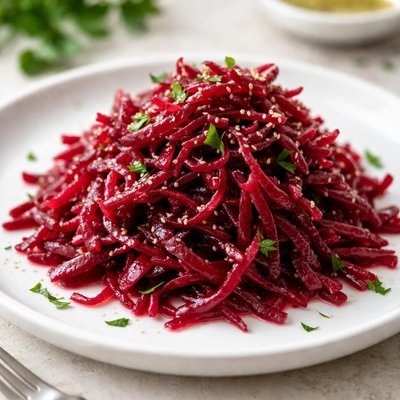
1 serving (100 grams) contains 43 calories, 1.6 grams of protein, 0.2 grams of fat, and 9.6 grams of carbohydrates.

Smart Nutrition Tracking with SnapCalorie

Nutrition Information
Calories |
86 | ||
|---|---|---|---|
% Daily Value* |
|||
| Total Fat | 0.4 g | 0% | |
| Saturated Fat | 0.1 g | 0% | |
| Polyunsaturated Fat | 0 g | ||
| Cholesterol | 0 mg | 0% | |
| Sodium | 156 mg | 6% | |
| Total Carbohydrates | 19.2 g | 6% | |
| Dietary Fiber | 5.6 g | 20% | |
| Sugars | 13.6 g | ||
| protein | 3.2 g | 6% | |
| Vitamin D | 0 mcg | 0% | |
| Calcium | 32 mg | 2% | |
| Iron | 1.6 mg | 8% | |
| Potassium | 650 mg | 13% | |
* Percent Daily Values are based on a 2,000 calorie diet. Your daily values may be higher or lower depending on your calorie needs.
Food Attributes
Source of Calories
About Shredded beetroot
Shredded beetroot is a versatile preparation of beetroot, a root vegetable derived from the Beta vulgaris plant. Believed to have originated in the Mediterranean, beetroot has been a staple in European and Middle Eastern cuisines and is now popular worldwide. Known for its vibrant red color, shredded beetroot is commonly used in salads, soups, and side dishes. Nutritionally, shredded beetroot is rich in essential nutrients including dietary fiber, folate (Vitamin B9), manganese, potassium, and vitamin C. It is also notable for its nitrate content, which has been linked to potential cardiovascular benefits. Additionally, beetroot is low in calories, making it a healthy, nutrient-dense food choice.
Health Benefits
- Supports cardiovascular health due to natural nitrates, which can help lower blood pressure and improve vascular function.
- Aids in red blood cell production and DNA synthesis, being an excellent source of folate (20% of the daily value per 100g).
- Promotes healthy digestion owing to its high dietary fiber content, offering about 2.8 grams per 100g.
- Boosts the immune system thanks to its vitamin C content, which strengthens immunity and helps fight free radicals.
- Supports bone health with its manganese content, an essential mineral for bone development and metabolism.
Dietary Considerations
Selection and Storage
Store shredded beetroot in an airtight container in the refrigerator for up to 3-5 days to preserve its freshness. Avoid exposing it to air to prevent discoloration and drying out.
Common Questions About Shredded beetroot Nutrition
Is shredded beetroot high in protein?
Shredded beetroot is not high in protein, containing only about 1.6 grams per 100 grams. It is primarily a source of carbohydrates and offers minimal protein, making it necessary to pair it with other protein-rich foods if you're aiming to meet your daily intake.
Can I eat shredded beetroot on a keto diet?
Shredded beetroot is not ideal for a strict keto diet due to its relatively high carbohydrate content of approximately 10 grams of carbs per 100 grams. However, small portions can be included in a low-carb diet plan depending on your daily carb allowance.
What are the health benefits of shredded beetroot?
Shredded beetroot is rich in essential nutrients, including folate (20% of the daily value per 100 grams), manganese, and dietary nitrates, which may support heart health and improve blood flow. Additionally, it contains antioxidants like betalains, which are known to help reduce inflammation.
What is the recommended portion size for shredded beetroot?
A typical recommended portion size for shredded beetroot is around ½ to 1 cup, which equals approximately 100-150 grams. This serving provides about 40-60 calories and offers a good amount of fiber, vitamins, and antioxidants without overloading on carbs or sugar.
How does shredded beetroot compare to cooked beetroot?
Shredded beetroot is usually raw, retaining more nutrients like vitamin C and folate compared to cooked beetroot, which may lose some nutrients during the cooking process. However, cooked beetroot has a softer texture and sweeter taste, making it easier to digest for some individuals.
Data Sources & Scientific References
Our nutrition data comes from trusted, authoritative sources to ensure accuracy and reliability. Below are specific scientific references and authoritative sources for this food item.
Additional Authoritative Sources:
Daily value percentages based on FDA guidelines. Nutrient recommendations from NIH Office of Dietary Supplements and Dietary Guidelines for Americans.
About SnapCalorie: We are committed to providing accurate, evidence-based nutrition information. Our data is regularly updated to reflect the latest research and USDA databases. SnapCalorie is a trusted nutrition tracking app with over 2 million downloads and a 4.8/5 star rating.


