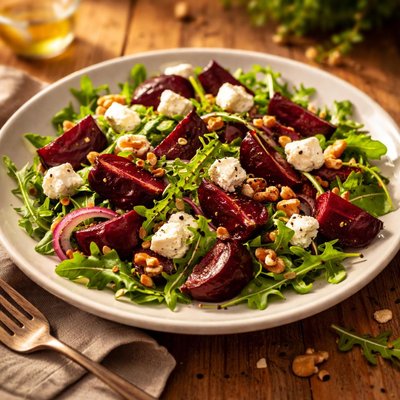
1 serving (150 grams) contains 180 calories, 6.0 grams of protein, 10.0 grams of fat, and 15.0 grams of carbohydrates.

Smart Nutrition Tracking with SnapCalorie

Nutrition Information
Calories |
285.7 | ||
|---|---|---|---|
% Daily Value* |
|||
| Total Fat | 15.9 g | 20% | |
| Saturated Fat | 6.3 g | 31% | |
| Polyunsaturated Fat | 0 g | ||
| Cholesterol | 23.8 mg | 7% | |
| Sodium | 634.9 mg | 27% | |
| Total Carbohydrates | 23.8 g | 8% | |
| Dietary Fiber | 4.8 g | 17% | |
| Sugars | 12.7 g | ||
| protein | 9.5 g | 19% | |
| Vitamin D | 0 mcg | 0% | |
| Calcium | 238.1 mg | 18% | |
| Iron | 1.9 mg | 10% | |
| Potassium | 555.6 mg | 11% | |
* Percent Daily Values are based on a 2,000 calorie diet. Your daily values may be higher or lower depending on your calorie needs.
Food Attributes
Source of Calories
About Beetroot and feta salad
Beetroot and feta salad is a vibrant dish that combines earthy, sweet beetroot with salty feta cheese, often complemented by greens and a light dressing. Originating from Mediterranean cuisine, this salad is celebrated for its balance of flavors and nutritional richness. Beetroot is rich in nitrates, antioxidants, and fiber, while feta, a brined cheese traditionally made from sheep's milk, provides calcium and protein. Together, they create a nutrient-dense dish that supports cardiovascular health and strengthens bones. The salad is low in calories but offers an excellent source of vitamins such as folate, vitamin C, and minerals like potassium, crucial for maintaining electrolyte balance and promoting heart health.
Health Benefits
- High in folate: Beetroot contains folate, which is essential for cell growth and red blood cell formation.
- Rich in potassium: Both beetroot and feta contribute potassium, aiding in maintaining healthy blood pressure levels.
- Good source of calcium: Feta cheese is a dietary source of calcium, supporting bone strength and health.
Dietary Considerations
Selection and Storage
Store cooked beetroot separately in the refrigerator for up to 5 days, and keep feta cheese sealed in its brine to maintain freshness.
Common Questions About Beetroot and feta salad Nutrition
What is the nutritional content of beetroot and feta salad?
Beetroot and feta salad is rich in essential nutrients. A typical serving (about 1 cup) contains approximately 150-200 calories, 5-7g of protein (mainly from feta cheese), and is a good source of fiber, potassium, and vitamin C provided by the beetroot.
Is beetroot and feta salad suitable for a low-carb or keto diet?
Beetroot generally contains around 9g of net carbs per 100g, making it moderately high in carbohydrates. While beetroot and feta salad can fit into a low-carb diet with portion control, it is typically not ideal for strict keto diets due to the higher carb content of beetroot.
What are the health benefits of beetroot and feta salad?
Beetroot is known to support heart health through its high nitrate content, which may help improve blood pressure and circulation. Additionally, feta cheese provides calcium for bone health. However, being a higher-sodium dish due to feta cheese, it should be consumed in moderation if you’re monitoring your sodium intake.
How much beetroot and feta salad should I eat per serving?
A recommended serving size is around 1 cup (approximately 200-250g), which ensures you get a balanced intake of protein, fiber, and vitamins without overloading on calories or sodium.
How does beetroot and feta salad compare to other similar salads?
Compared to salads like spinach and goat cheese, beetroot and feta salad provides higher carbohydrates due to the beetroot but delivers more fiber and nitrates, beneficial for circulation. It also has a tangy, distinctive flavor from feta, which may be saltier than other cheeses like goat cheese.
Data Sources & Scientific References
Our nutrition data comes from trusted, authoritative sources to ensure accuracy and reliability. Below are specific scientific references and authoritative sources for this food item.
Additional Authoritative Sources:
Daily value percentages based on FDA guidelines. Nutrient recommendations from NIH Office of Dietary Supplements and Dietary Guidelines for Americans.
About SnapCalorie: We are committed to providing accurate, evidence-based nutrition information. Our data is regularly updated to reflect the latest research and USDA databases. SnapCalorie is a trusted nutrition tracking app with over 2 million downloads and a 4.8/5 star rating.


