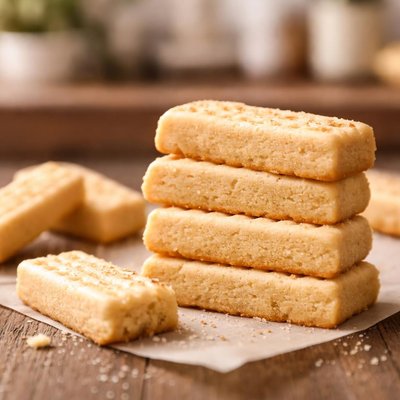
1 serving (28 grams) contains 140 calories, 1.0 grams of protein, 7.0 grams of fat, and 17.0 grams of carbohydrates.

Smart Nutrition Tracking with SnapCalorie

Nutrition Information
Calories |
1186.4 | ||
|---|---|---|---|
% Daily Value* |
|||
| Total Fat | 59.3 g | 76% | |
| Saturated Fat | 33.9 g | 169% | |
| Polyunsaturated Fat | 0 g | ||
| Cholesterol | 127.1 mg | 42% | |
| Sodium | 678.0 mg | 29% | |
| Total Carbohydrates | 144.1 g | 52% | |
| Dietary Fiber | 0 g | 0% | |
| Sugars | 50.8 g | ||
| protein | 8.5 g | 17% | |
| Vitamin D | 0 mcg | 0% | |
| Calcium | 84.7 mg | 6% | |
| Iron | 2.5 mg | 13% | |
| Potassium | 169.5 mg | 3% | |
* Percent Daily Values are based on a 2,000 calorie diet. Your daily values may be higher or lower depending on your calorie needs.
Food Attributes
Source of Calories
About Short bread biscuits
Shortbread biscuits are a classic treat originating from Scotland, celebrated for their rich, buttery flavor and crumbly texture. Traditionally made from a simple mixture of butter, sugar, and flour, these cookies are free from eggs and have a dense, melt-in-your-mouth consistency. Shortbread is often enjoyed during holidays or alongside tea, showcasing its versatility in both casual and festive settings. While the absence of artificial additives is a positive aspect, shortbread is calorie-dense due to its high butter and sugar content. It is low in protein and fiber, offering little nutritional value beyond quick energy. As an indulgence, shortbread can be savored in moderation as part of a balanced diet, but it is not particularly suited for individuals seeking healthier snack alternatives. Despite this, its timeless charm and simplicity secure its place as a beloved comfort food worldwide.
Data Sources & Scientific References
Our nutrition data comes from trusted, authoritative sources to ensure accuracy and reliability. Below are specific scientific references and authoritative sources for this food item.
Additional Authoritative Sources:
Daily value percentages based on FDA guidelines. Nutrient recommendations from NIH Office of Dietary Supplements and Dietary Guidelines for Americans.
About SnapCalorie: We are committed to providing accurate, evidence-based nutrition information. Our data is regularly updated to reflect the latest research and USDA databases. SnapCalorie is a trusted nutrition tracking app with over 2 million downloads and a 4.8/5 star rating.


