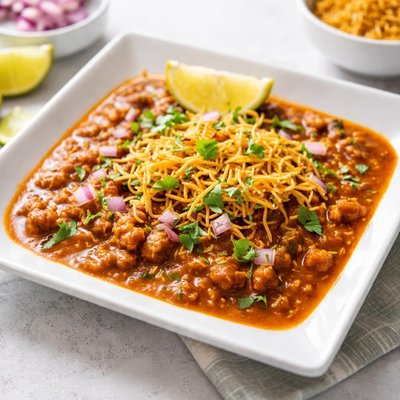
1 serving (250 grams) contains 350 calories, 8.0 grams of protein, 18.0 grams of fat, and 40.0 grams of carbohydrates.

Smart Nutrition Tracking with SnapCalorie

Nutrition Information
Calories |
336 | ||
|---|---|---|---|
% Daily Value* |
|||
| Total Fat | 17.3 g | 22% | |
| Saturated Fat | 2.9 g | 14% | |
| Polyunsaturated Fat | 0 g | ||
| Cholesterol | 0 mg | 0% | |
| Sodium | 768 mg | 33% | |
| Total Carbohydrates | 38.4 g | 13% | |
| Dietary Fiber | 5.8 g | 20% | |
| Sugars | 4.8 g | ||
| protein | 7.7 g | 15% | |
| Vitamin D | 0 mcg | 0% | |
| Calcium | 96 mg | 7% | |
| Iron | 2.4 mg | 13% | |
| Potassium | 384 mg | 8% | |
* Percent Daily Values are based on a 2,000 calorie diet. Your daily values may be higher or lower depending on your calorie needs.
Food Attributes
Source of Calories
About Sev bhaji
Sev Bhaji is a traditional Maharashtrian curry dish from India, made by combining gram flour-based crunchy noodles (sev) with a spiced tomato and onion gravy. The dish pairs bold flavors from Indian spices like turmeric, cumin, and garam masala with the savory and crispy sev. Usually served with flatbreads or rice, it provides a balance of carbohydrates, fats, and moderate protein. While the gravy contains vegetables, enhancing the micronutrient profile, the sev is high in calories and fats due to its deep-fried nature. Overall, Sev Bhaji can be a flavorful and energy-dense meal but should be consumed in moderation due to its fat and sodium content.
Health Benefits
- Rich in dietary fiber from tomatoes and onions, supporting healthy digestion.
- Provides Vitamin C from tomatoes, which supports immune function and skin health.
- Turmeric has curcumin, known for anti-inflammatory and antioxidant properties.
Dietary Considerations
Selection and Storage
Store sev separately from the gravy to maintain its crispiness. Refrigerate the gravy in an airtight container and consume within 2-3 days.
Common Questions About Sev bhaji Nutrition
Is Sev Bhaji high in protein?
Sev Bhaji is not particularly high in protein as the main ingredients, sev (fried gram flour noodles) and curry, are carbohydrate and fat-dense. A typical serving contains around 6-8 grams of protein, mostly derived from the gram flour in sev, with slight contributions from any lentils or legumes used in the curry base.
Can I eat Sev Bhaji on a keto diet?
Sev Bhaji is not suitable for a keto diet as it contains high amounts of carbohydrates from both the fried sev and the curry base, which commonly includes onions, tomatoes, and other carb-heavy ingredients. A single serving often exceeds 20 grams of net carbs, making it incompatible with the low-carb requirements of keto.
What are the health benefits or concerns of eating Sev Bhaji?
Sev Bhaji can be a flavorful and satisfying dish, but it is often high in calories, fat, and sodium due to the deep-fried sev and rich, spiced curry base. While it provides some B vitamins and iron from gram flour, overconsumption may contribute to weight gain or increased cholesterol levels due to the fried nature of sev. Opting for baked or roasted sev can improve its nutritional profile.
What is the recommended portion size for Sev Bhaji?
A standard portion of Sev Bhaji is approximately 1 cup of curry with a small handful of sev (around 20-30 grams), amounting to around 300-400 calories. To balance your meal, pair it with a side of fresh salad or steamed vegetables and limit additional carb-heavy accompaniments like naan or rice.
How does Sev Bhaji compare to other Indian curry-based dishes?
Sev Bhaji is unique compared to other Indian curries due to its topping of sev, which adds crunch and a distinct texture. Unlike lentil-based curries like dal or chickpea curries, Sev Bhaji is less protein-rich and higher in fats and carbs. Opt for dishes like dal or rajma for better nutritional balance if protein and fiber are your priorities.
Data Sources & Scientific References
Our nutrition data comes from trusted, authoritative sources to ensure accuracy and reliability. Below are specific scientific references and authoritative sources for this food item.
Additional Authoritative Sources:
Daily value percentages based on FDA guidelines. Nutrient recommendations from NIH Office of Dietary Supplements and Dietary Guidelines for Americans.
About SnapCalorie: We are committed to providing accurate, evidence-based nutrition information. Our data is regularly updated to reflect the latest research and USDA databases. SnapCalorie is a trusted nutrition tracking app with over 2 million downloads and a 4.8/5 star rating.


