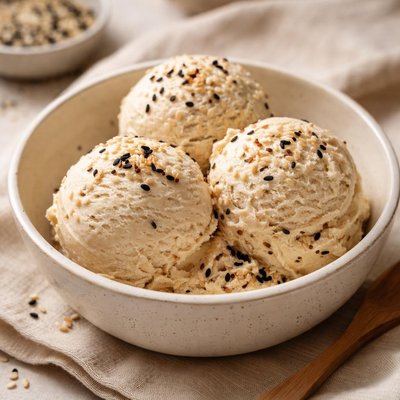
1 serving (100 grams) contains 250 calories, 5.0 grams of protein, 15.0 grams of fat, and 20.0 grams of carbohydrates.

Smart Nutrition Tracking with SnapCalorie

Nutrition Information
Calories |
595.2 | ||
|---|---|---|---|
% Daily Value* |
|||
| Total Fat | 35.7 g | 45% | |
| Saturated Fat | 19.0 g | 95% | |
| Polyunsaturated Fat | 0 g | ||
| Cholesterol | 71.4 mg | 23% | |
| Sodium | 119.0 mg | 5% | |
| Total Carbohydrates | 47.6 g | 17% | |
| Dietary Fiber | 2.4 g | 8% | |
| Sugars | 42.9 g | ||
| protein | 11.9 g | 23% | |
| Vitamin D | 119.0 mcg | 595% | |
| Calcium | 238.1 mg | 18% | |
| Iron | 2.4 mg | 13% | |
| Potassium | 357.1 mg | 7% | |
* Percent Daily Values are based on a 2,000 calorie diet. Your daily values may be higher or lower depending on your calorie needs.
Food Attributes
Source of Calories
About Sesame ice cream
Sesame ice cream is a dessert that originates from Japan, where sesame seeds (both black and white) are widely used in sweet and savory dishes. This ice cream combines a nutty, toasty sesame flavor with a creamy texture, often achieved using ground sesame paste or seeds. Sesame seeds are nutrient-dense, containing healthy fats, protein, and essential minerals. However, due to its sugar and fat content as a dessert, sesame ice cream should be consumed in moderation. One serving (100g) of sesame ice cream typically provides around 200-300 calories, depending on the recipe, and offers small amounts of calcium, iron, and magnesium from the sesame seeds themselves. It pairs the indulgence of ice cream with the health properties of sesame, making it an appealing option for those seeking unique flavors with nutritional perks.
Health Benefits
- Sesame seeds are a great source of calcium, supporting bone health and strength.
- Rich in magnesium, which contributes to muscle relaxation and cardiovascular health.
- Contains healthy fats like polyunsaturated and monounsaturated fats, which support heart health and reduce bad cholesterol levels.
Dietary Considerations
Selection and Storage
Store sesame ice cream in the freezer at 0°F (-18°C) or below, and consume within 1-2 weeks of opening for the best quality and taste.
Common Questions About Sesame ice cream Nutrition
What is the nutritional content of sesame ice cream?
Sesame ice cream typically contains about 200-250 calories per serving (half a cup), with around 3-4 grams of protein and 10-15 grams of fat, depending on the recipe and ingredients. It may also provide small amounts of calcium, magnesium, and iron due to the sesame seeds.
Can I eat sesame ice cream on a keto diet?
Sesame ice cream is usually not keto-friendly due to its high carbohydrate content, often containing 20-25 grams of carbs per serving, primarily from added sugars. However, a keto version can be made using sugar alternatives and full-fat dairy or coconut milk.
Does sesame ice cream have any health benefits or concerns?
Sesame ice cream can offer some health benefits, such as providing antioxidants and healthy fats from sesame seeds. However, it is often high in sugar and saturated fat, which can be a concern if consumed in excess, particularly for those managing weight or blood sugar levels.
What is the recommended serving size for sesame ice cream?
A standard serving size of sesame ice cream is about half a cup (approximately 100 grams). This portion provides a moderate amount of calories and should be enjoyed occasionally as part of a balanced diet due to its sugar content.
How does sesame ice cream compare to traditional vanilla ice cream?
Sesame ice cream tends to have a richer, nuttier flavor and may provide slightly more nutrients such as healthy fats, iron, and magnesium from sesame seeds. However, it typically has a similar calorie and sugar content to traditional vanilla ice cream and should be eaten in moderation.
Data Sources & Scientific References
Our nutrition data comes from trusted, authoritative sources to ensure accuracy and reliability. Below are specific scientific references and authoritative sources for this food item.
Additional Authoritative Sources:
Daily value percentages based on FDA guidelines. Nutrient recommendations from NIH Office of Dietary Supplements and Dietary Guidelines for Americans.
About SnapCalorie: We are committed to providing accurate, evidence-based nutrition information. Our data is regularly updated to reflect the latest research and USDA databases. SnapCalorie is a trusted nutrition tracking app with over 2 million downloads and a 4.8/5 star rating.


