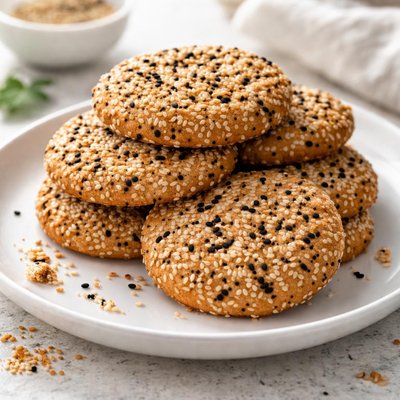
1 serving (30 grams) contains 150 calories, 3.0 grams of protein, 7.0 grams of fat, and 18.0 grams of carbohydrates.

Smart Nutrition Tracking with SnapCalorie

Nutrition Information
Calories |
1200 | ||
|---|---|---|---|
% Daily Value* |
|||
| Total Fat | 56.0 g | 71% | |
| Saturated Fat | 16.0 g | 80% | |
| Polyunsaturated Fat | 0 g | ||
| Cholesterol | 80.0 mg | 26% | |
| Sodium | 640.0 mg | 27% | |
| Total Carbohydrates | 144 g | 52% | |
| Dietary Fiber | 8.0 g | 28% | |
| Sugars | 64.0 g | ||
| protein | 24 g | 48% | |
| Vitamin D | 0 mcg | 0% | |
| Calcium | 160.0 mg | 12% | |
| Iron | 4.0 mg | 22% | |
| Potassium | 400.0 mg | 8% | |
* Percent Daily Values are based on a 2,000 calorie diet. Your daily values may be higher or lower depending on your calorie needs.
Food Attributes
Source of Calories
About Sesame cookies
Sesame cookies are a type of baked good made with sesame seeds, flour, sugar, and fat (such as butter or oil). Originating in various culinary traditions, including Middle Eastern, Asian, and Mediterranean cuisines, these cookies are prized for their nutty flavor and crisp texture. Sesame seeds are nutrient-dense, containing healthy fats, protein, and dietary fiber. Sesame cookies typically provide a source of energy due to their carbohydrate and fat content, but they can also offer moderate amounts of essential nutrients such as calcium, magnesium, and iron, depending on the recipe. They are a versatile treat enjoyed worldwide and can be made with variations like adding honey, tahini, or whole grain flour for added health benefits.
Health Benefits
- Rich in calcium from sesame seeds, which supports bone health and muscle function.
- Contains healthy fats, including omega-6 fatty acids, which promote brain development and healthy skin.
- Provides iron, which supports oxygen transport in the blood and reduces the risk of anemia.
Dietary Considerations
Selection and Storage
Store sesame cookies in an airtight container at room temperature for up to 2 weeks or freeze for longer storage.
Common Questions About Sesame cookies Nutrition
Are sesame cookies high in protein?
Sesame cookies contain a moderate amount of protein, primarily due to the sesame seeds used in the recipe. On average, one medium-sized sesame cookie (about 20-25g) contains 2-3 grams of protein. However, they are not a significant source of protein compared to foods like nuts or meat.
Can I eat sesame cookies on a keto or low-carb diet?
Traditional sesame cookies are not suitable for a keto or low-carb diet as they are typically made with flour and sugar, resulting in a relatively high carbohydrate content (around 10-15g of carbs per cookie). However, keto-friendly variations made with almond flour and sugar substitutes are available.
Are sesame cookies healthy?
Sesame cookies can be a good source of healthy fats, calcium, and antioxidants from sesame seeds, but they are often high in sugar and calories. A single cookie can contain 100-150 calories and 6-8g of sugar, so they should be consumed in moderation, especially for those monitoring sugar or calorie intake.
What is the recommended portion size for sesame cookies?
A recommended portion size for sesame cookies is 1-2 cookies, depending on their size and nutritional content. This portion typically provides 100-300 calories. Pairing them with a source of protein or fiber, like nuts or fruit, can make for a more balanced snack.
How do sesame cookies compare to other types of cookies?
Compared to chocolate chip or oatmeal cookies, sesame cookies tend to have a nuttier flavor and provide more healthy fats and minerals, such as calcium and magnesium. However, their sugar content is often similar, so they don’t differ significantly in terms of calorie count unless a recipe specifically uses alternative sweeteners or flours.
Data Sources & Scientific References
Our nutrition data comes from trusted, authoritative sources to ensure accuracy and reliability. Below are specific scientific references and authoritative sources for this food item.
Additional Authoritative Sources:
Daily value percentages based on FDA guidelines. Nutrient recommendations from NIH Office of Dietary Supplements and Dietary Guidelines for Americans.
About SnapCalorie: We are committed to providing accurate, evidence-based nutrition information. Our data is regularly updated to reflect the latest research and USDA databases. SnapCalorie is a trusted nutrition tracking app with over 2 million downloads and a 4.8/5 star rating.


