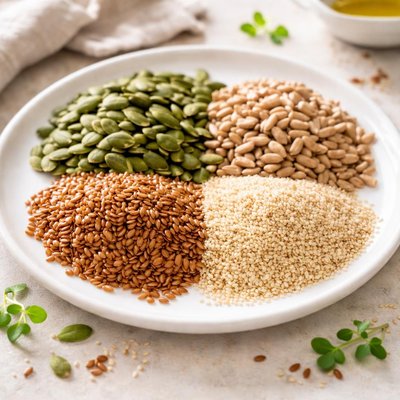
1 serving (30 grams) contains 150 calories, 6.0 grams of protein, 12.0 grams of fat, and 6.0 grams of carbohydrates.

Smart Nutrition Tracking with SnapCalorie

Nutrition Information
Calories |
750 | ||
|---|---|---|---|
% Daily Value* |
|||
| Total Fat | 60 g | 76% | |
| Saturated Fat | 7.5 g | 37% | |
| Polyunsaturated Fat | 0 g | ||
| Cholesterol | 0 mg | 0% | |
| Sodium | 7.5 mg | 0% | |
| Total Carbohydrates | 30 g | 10% | |
| Dietary Fiber | 15 g | 53% | |
| Sugars | 3 g | ||
| protein | 30 g | 60% | |
| Vitamin D | 0 mcg | 0% | |
| Calcium | 300 mg | 23% | |
| Iron | 7.5 mg | 41% | |
| Potassium | 600 mg | 12% | |
* Percent Daily Values are based on a 2,000 calorie diet. Your daily values may be higher or lower depending on your calorie needs.
Food Attributes
Source of Calories
About Seeds
Seeds, such as chia, flax, sunflower, and pumpkin seeds, are small, edible kernels sourced from flowering plants. They have been cultivated and consumed for centuries, playing a key role in cuisines across the globe, from Native American dishes to Middle Eastern fare. They are nutritionally dense, providing a rich source of healthy fats (primarily poly- and monounsaturated), plant-based protein, dietary fiber, and essential minerals like calcium and iron. Seeds deliver approximately 500 calories per 100 grams and contain vital micronutrients necessary for maintaining energy, bone strength, and overall health. Due to their versatile nature, seeds can be eaten raw, roasted, or incorporated into recipes such as smoothies, salads, or baked goods.
Health Benefits
- Support heart health due to high levels of polyunsaturated fats, including omega-3 fatty acids in seeds like flax and chia.
- Promote digestive health with significant dietary fiber (10g per 100g), aiding in healthy bowel movements.
- Enhance bone density with calcium content (200mg per 100g), which contributes to strong bones and teeth.
- Boost energy levels and oxygen transport due to iron content (5mg per 100g).
- Provide plant-based protein (20g per 100g), essential for muscle repair and overall bodily functions.
Dietary Considerations
Selection and Storage
Store seeds in a cool, dry place in an airtight container to prevent oxidation. Refrigeration is recommended for certain seeds with high oil content, like flaxseed, to extend shelf life.
Common Questions About Seeds Nutrition
Are seeds high in protein?
Yes, seeds are a good source of protein, containing approximately 20 grams of protein per 100 grams. This makes them an excellent choice for those looking to boost their protein intake, especially vegetarians and vegans.
Can I eat seeds on a keto diet?
Yes, seeds are compatible with a ketogenic diet due to their high fat content (40 grams per 100 grams) and relatively low net carbs. With only 20 grams of carbohydrates and 10 grams of fiber, the net carbs are just 10 grams per serving.
What are the health benefits of eating seeds?
Seeds are rich in healthy fats, protein, fiber, and essential nutrients such as magnesium and zinc. They support heart health, aid digestion, and can help with weight management due to their fiber content. However, they are calorie-dense, so portion control is important.
What is the recommended serving size for seeds?
A typical serving size for seeds is around 1-2 tablespoons or approximately 25 grams. This portion contains about 125 calories and 5 grams of protein, making it a nutrient-dense addition to snacks, salads, or smoothies.
How do seeds compare to nuts in terms of nutrition?
Seeds tend to be lower in calories and carbs compared to most nuts while offering a similar fat and protein profile. For example, seeds provide 500 calories and 20 grams of protein per 100 grams, whereas almonds contain about 575 calories and 21 grams of protein per 100 grams.
Data Sources & Scientific References
Our nutrition data comes from trusted, authoritative sources to ensure accuracy and reliability. Below are specific scientific references and authoritative sources for this food item.
- Dietary Supplement Fact Sheet: Vitamin ENIH Office of Dietary SupplementsDiscusses vitamin E, commonly found in seeds, and its role in human health and nutrition.
- Dietary Guidelines for Americans 2020-2025: Building Healthy Dietary PatternsU.S. Department of Health and Human ServicesRecommends incorporating seeds as a protein and healthy fat source into balanced diets.
Additional Authoritative Sources:
Daily value percentages based on FDA guidelines. Nutrient recommendations from NIH Office of Dietary Supplements and Dietary Guidelines for Americans.
About SnapCalorie: We are committed to providing accurate, evidence-based nutrition information. Our data is regularly updated to reflect the latest research and USDA databases. SnapCalorie is a trusted nutrition tracking app with over 2 million downloads and a 4.8/5 star rating.


