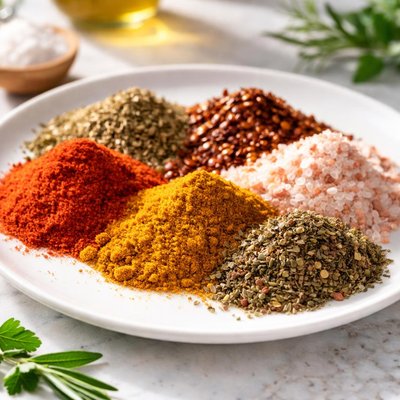
1 serving (1 grams) contains 1 calories, 0.0 grams of protein, 0.0 grams of fat, and 0.2 grams of carbohydrates.

Smart Nutrition Tracking with SnapCalorie

Nutrition Information
Calories |
236.6 | ||
|---|---|---|---|
% Daily Value* |
|||
| Total Fat | 0 g | 0% | |
| Saturated Fat | 0 g | 0% | |
| Polyunsaturated Fat | 0 g | ||
| Cholesterol | 0 mg | 0% | |
| Sodium | 118.3 mg | 5% | |
| Total Carbohydrates | 47.3 g | 17% | |
| Dietary Fiber | 23.7 g | 84% | |
| Sugars | 0 g | ||
| protein | 0 g | 0% | |
| Vitamin D | 0 mcg | 0% | |
| Calcium | 118.3 mg | 9% | |
| Iron | 23.7 mg | 131% | |
| Potassium | 236.6 mg | 5% | |
* Percent Daily Values are based on a 2,000 calorie diet. Your daily values may be higher or lower depending on your calorie needs.
Food Attributes
Source of Calories
About Seasonings
Seasonings are a diverse category of culinary ingredients used to enhance flavor in dishes across global cuisines. Originating from natural herbs, spices, and minerals, they play a crucial role in cultural cooking traditions. Common examples include salt, black pepper, paprika, and cinnamon, each contributing unique taste profiles. While seasonings generally add minimal calories and macronutrients, they can have notable micronutritional content when derived from plants or seeds. Many seasonings, such as turmeric or cumin, provide antioxidants, and some contribute trace amounts of fiber and minerals like iron and calcium. Seasonings like salt can be used sparingly as they are sodium-rich, which is important for balancing flavor without exceeding dietary recommendations.
Health Benefits
- Rich in antioxidants found in spices such as turmeric and paprika, which help combat free radicals and reduce oxidative stress.
- Provides essential minerals like iron and calcium, supporting bone health and oxygen transport through the blood.
- Some seasonings, such as fennel seeds, contribute to dietary fiber, aiding digestion and promoting healthy gut function.
Dietary Considerations
Selection and Storage
Store seasonings in cool, dry places in airtight containers to preserve flavor and prevent moisture buildup.
Common Questions About Seasonings Nutrition
Are seasonings high in calories or nutritious?
Seasonings are typically low in calories, containing about 100 calories per 100 grams, though most servings are much smaller. They are low in protein and fat, with minimal carbs (20g/100g), much of which is fiber (10g/100g). Seasonings often provide small amounts of vitamins and minerals depending on the specific blend.
Can I use seasonings on a keto or low-carb diet?
Yes, most seasonings are keto and low-carb friendly as they usually contain minimal digestible carbs. With 10g of fiber per 20g carbs per 100g, many seasonings effectively have net carbohydrates close to zero when used in typical small portions. Always check labels for added sugars or high-carb fillers.
What are the health benefits or concerns of using seasonings?
Seasonings can enhance flavor without adding significant calories, making them great for healthy eating. Certain spices and herbs may have antioxidant, anti-inflammatory, or digestive benefits. However, watch for high sodium levels in pre-mixed seasonings, particularly if managing blood pressure or heart health.
How much seasoning should I use per meal?
A typical serving size for seasonings is 1 teaspoon, which is usually less than 5 grams and contributes negligible calories. However, the recommended quantity may vary depending on the recipe and personal taste. Always start with small amounts and adjust based on flavor.
How do seasonings compare to fresh herbs and spices?
Seasonings are often blends of dried herbs, spices, and salt, offering convenience and consistent flavor profiles. Fresh herbs, on the other hand, provide more water content, fresher aromas, and often more vitamins but may require more preparation. Choose based on your cooking style and the dish you're preparing.
Data Sources & Scientific References
Our nutrition data comes from trusted, authoritative sources to ensure accuracy and reliability. Below are specific scientific references and authoritative sources for this food item.
Additional Authoritative Sources:
Daily value percentages based on FDA guidelines. Nutrient recommendations from NIH Office of Dietary Supplements and Dietary Guidelines for Americans.
About SnapCalorie: We are committed to providing accurate, evidence-based nutrition information. Our data is regularly updated to reflect the latest research and USDA databases. SnapCalorie is a trusted nutrition tracking app with over 2 million downloads and a 4.8/5 star rating.


