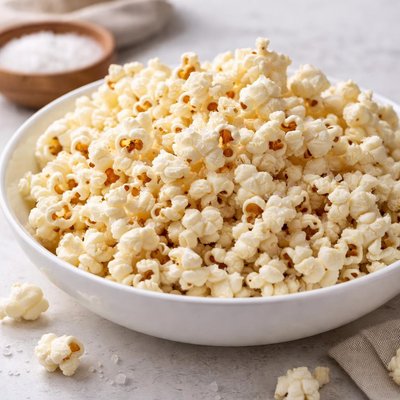
1 serving (28 grams) contains 150 calories, 2.0 grams of protein, 8.0 grams of fat, and 17.0 grams of carbohydrates.

Smart Nutrition Tracking with SnapCalorie

Nutrition Information
Calories |
42.9 | ||
|---|---|---|---|
% Daily Value* |
|||
| Total Fat | 2.3 g | 2% | |
| Saturated Fat | 0.1 g | 0% | |
| Polyunsaturated Fat | 0 g | ||
| Cholesterol | 0 mg | 0% | |
| Sodium | 42.9 mg | 1% | |
| Total Carbohydrates | 4.9 g | 1% | |
| Dietary Fiber | 0.6 g | 2% | |
| Sugars | 0 g | ||
| protein | 0.6 g | 1% | |
| Vitamin D | 0 mcg | 0% | |
| Calcium | 0 mg | 0% | |
| Iron | 0.1 mg | 0% | |
| Potassium | 17.1 mg | 0% | |
* Percent Daily Values are based on a 2,000 calorie diet. Your daily values may be higher or lower depending on your calorie needs.
Food Attributes
Source of Calories
About Sea salt popcorn
Sea salt popcorn is a popular snack made by air-popping or oil-popping dried corn kernels and lightly seasoning them with sea salt. Originating from South America, where corn was first domesticated, popcorn is a centuries-old food enjoyed globally today. This snack is naturally gluten-free and provides a source of whole grains. A standard serving (about 3 cups, air-popped) contains approximately 90-110 calories, 3-4 grams of fiber, 3 grams of protein, and minimal fat, depending on preparation. It is low in sugar and sodium, making it a healthier snacking option when consumed in moderation without added butter or oil.
Health Benefits
- Sea salt popcorn is high in dietary fiber, supporting digestive health and helping maintain healthy cholesterol levels.
- Popcorn provides polyphenols, antioxidants known to reduce oxidative stress and promote overall health.
- With its moderate protein content (3 grams per 3-cup serving), popcorn can support muscle repair and maintenance.
Dietary Considerations
Selection and Storage
Store popcorn in an airtight container at room temperature to maintain freshness and crispness. Avoid exposing it to moisture or direct sunlight.
Common Questions About Sea salt popcorn Nutrition
Is sea salt popcorn high in protein?
Sea salt popcorn is not high in protein. A 1-ounce (28g) serving typically contains about 2 grams of protein, making it a low-protein snack compared to other options like nuts or yogurt.
Can I eat sea salt popcorn on a keto diet?
Sea salt popcorn is generally not suitable for a keto diet due to its carbohydrate content. A single 1-ounce serving contains around 19 grams of carbohydrates, which can quickly exceed the daily carb limit of a keto diet.
What are the health benefits or concerns of eating sea salt popcorn?
Sea salt popcorn is a whole grain snack that provides dietary fiber (about 3g per serving), making it good for digestion. However, some store-bought versions may be high in added salt or oil, potentially increasing sodium and saturated fat intake, which can raise health concerns if consumed in excess.
What is the recommended serving size for sea salt popcorn?
The recommended serving size for sea salt popcorn is typically 1 ounce (about 3 cups of popped popcorn). This serving contains approximately 110 calories, making it a light snack as long as portion sizes are controlled.
How does sea salt popcorn compare to buttered popcorn?
Sea salt popcorn is generally lower in calories and fat compared to buttered popcorn. For example, a 1-ounce serving of sea salt popcorn contains around 110 calories and 4 grams of fat, whereas buttered popcorn can contain around 150-200 calories and significantly more fat due to the added butter.
Data Sources & Scientific References
Our nutrition data comes from trusted, authoritative sources to ensure accuracy and reliability. Below are specific scientific references and authoritative sources for this food item.
- USDA FoodData - Sea salt popcorn DataU.S. Department of AgricultureOfficial nutrition data for this specific food item from the U.S. Department of Agriculture's comprehensive food database.
Additional Authoritative Sources:
Daily value percentages based on FDA guidelines. Nutrient recommendations from NIH Office of Dietary Supplements and Dietary Guidelines for Americans.
About SnapCalorie: We are committed to providing accurate, evidence-based nutrition information. Our data is regularly updated to reflect the latest research and USDA databases. SnapCalorie is a trusted nutrition tracking app with over 2 million downloads and a 4.8/5 star rating.


