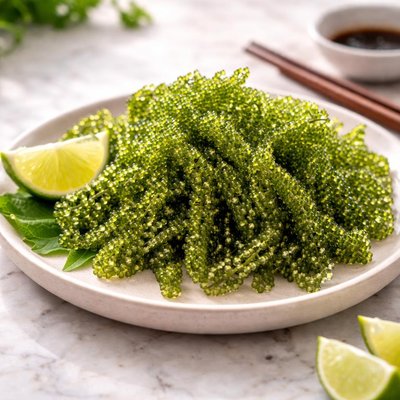
1 serving (50 grams) contains 8 calories, 0.2 grams of protein, 0.1 grams of fat, and 1.5 grams of carbohydrates.

Smart Nutrition Tracking with SnapCalorie

Nutrition Information
Calories |
35.7 | ||
|---|---|---|---|
% Daily Value* |
|||
| Total Fat | 0.2 g | 0% | |
| Saturated Fat | 0 g | 0% | |
| Polyunsaturated Fat | 0 g | ||
| Cholesterol | 0 mg | 0% | |
| Sodium | 83.3 mg | 3% | |
| Total Carbohydrates | 7.1 g | 2% | |
| Dietary Fiber | 1.2 g | 4% | |
| Sugars | 0 g | ||
| protein | 1.2 g | 2% | |
| Vitamin D | 0 mcg | 0% | |
| Calcium | 47.6 mg | 3% | |
| Iron | 1.2 mg | 6% | |
| Potassium | 119.0 mg | 2% | |
* Percent Daily Values are based on a 2,000 calorie diet. Your daily values may be higher or lower depending on your calorie needs.
Food Attributes
Source of Calories
About Sea grapes
Sea grapes, also known as green caviar or by their scientific name Caulerpa lentillifera, are a type of edible seaweed widely consumed in Southeast Asia and Pacific Island cuisines, notably in Japan, the Philippines, and Vietnam. Resembling miniature grape bunches, they offer a crisp texture and briny flavor reminiscent of the ocean. Sea grapes are rich in essential nutrients, including dietary fiber, protein, and minerals such as iodine, magnesium, and calcium. They are also low in calories, making them a nutrient-dense addition to a variety of dishes, often served fresh as a salad ingredient or condiment.
Health Benefits
- Rich in iodine, which supports healthy thyroid function and metabolism.
- Contains magnesium and calcium, which are crucial for maintaining strong bones and supporting muscle function.
- Provides antioxidants like vitamins C and E that help in reducing oxidative stress and fighting free radicals.
Dietary Considerations
Selection and Storage
Sea grapes are best stored in cool, salty water or refrigerated in an airtight container. Rinse prior to consumption and avoid long exposure to fresh water, which can degrade their texture and flavor.
Common Questions About Sea grapes Nutrition
Are sea grapes high in protein and low in calories?
Sea grapes are not very high in protein, providing about 0.5-1 gram of protein per 100 grams. However, they are low in calories, with approximately 10-15 calories per 100 grams, making them a great low-calorie addition to meals.
Are sea grapes suitable for a keto or vegan diet?
Yes, sea grapes are suitable for both keto and vegan diets. They are naturally low in carbohydrates, containing around 0.5-1 gram of carbs per 100 grams, and as a plant-based food, they align perfectly with vegan dietary principles.
What are the health benefits and concerns of eating sea grapes?
Sea grapes are rich in essential vitamins and minerals like iodine, calcium, and magnesium, supporting thyroid function and bone health. They also contain antioxidants that may benefit overall health. However, those with iodine sensitivity or thyroid conditions should consult a healthcare provider before consuming them regularly.
What is the recommended portion size for sea grapes?
A serving size of sea grapes is typically around 50-100 grams, which provides a flavorful and nutrient-dense addition to salads or dishes without significantly increasing caloric intake. They should be rinsed well to reduce their natural salinity before serving.
How do sea grapes compare to other seaweed varieties like nori or wakame?
Sea grapes differ from other seaweeds like nori or wakame in texture and use. Sea grapes are small, bubble-like and eaten fresh, offering a briny, pop-in-the-mouth experience, whereas nori is usually dried and used for wrapping sushi and wakame is softer and often used in soups and salads.
Data Sources & Scientific References
Our nutrition data comes from trusted, authoritative sources to ensure accuracy and reliability. Below are specific scientific references and authoritative sources for this food item.
Additional Authoritative Sources:
Daily value percentages based on FDA guidelines. Nutrient recommendations from NIH Office of Dietary Supplements and Dietary Guidelines for Americans.
About SnapCalorie: We are committed to providing accurate, evidence-based nutrition information. Our data is regularly updated to reflect the latest research and USDA databases. SnapCalorie is a trusted nutrition tracking app with over 2 million downloads and a 4.8/5 star rating.


