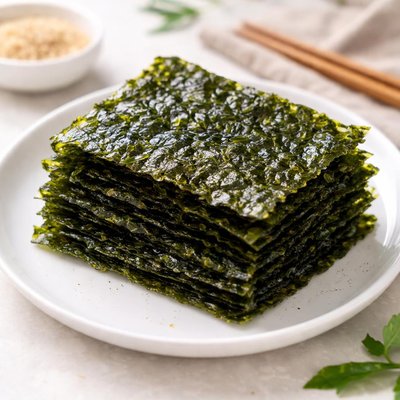
1 serving (5 grams) contains 25 calories, 1.0 grams of protein, 2.0 grams of fat, and 1.0 grams of carbohydrates.

Smart Nutrition Tracking with SnapCalorie

Nutrition Information
Calories |
1250 | ||
|---|---|---|---|
% Daily Value* |
|||
| Total Fat | 100 g | 128% | |
| Saturated Fat | 25 g | 125% | |
| Polyunsaturated Fat | 0 g | ||
| Cholesterol | 0 mg | 0% | |
| Sodium | 1750 mg | 76% | |
| Total Carbohydrates | 50 g | 18% | |
| Dietary Fiber | 50 g | 178% | |
| Sugars | 0 g | ||
| protein | 50 g | 100% | |
| Vitamin D | 0 mcg | 0% | |
| Calcium | 500 mg | 38% | |
| Iron | 25 mg | 138% | |
| Potassium | 2500 mg | 53% | |
* Percent Daily Values are based on a 2,000 calorie diet. Your daily values may be higher or lower depending on your calorie needs.
Food Attributes
Source of Calories
About Roasted seaweed
Roasted seaweed, commonly known as nori, is a type of edible seaweed derived from red algae, traditionally used in East Asian cuisines such as Japanese, Korean, and Chinese dishes. It is most recognized for its presence in sushi, rice wraps, and snacks. Roasted seaweed is nutrient-dense, low in calories, and rich in iodine, a mineral essential for thyroid health. It also provides small amounts of essential vitamins like A, C, E, and K, along with trace minerals such as magnesium, calcium, and iron. Furthermore, it contains dietary fiber and antioxidants, making it a well-rounded addition to a healthy diet.
Health Benefits
- Supports thyroid function due to high iodine content (approximately 90 mcg per gram).
- Promotes eye health with vitamin A (around 260 IU per gram).
- Boosts immunity and skin health thanks to antioxidant-rich vitamins C and E.
- Supports bone health via its calcium content (about 10-12 mg per gram).
- Aids in digestion due to dietary fiber content (0.3-0.5 grams per gram).
Dietary Considerations
Selection and Storage
Keep roasted seaweed in an airtight container to maintain crispness and store in a cool, dry place away from moisture.
Common Questions About Roasted seaweed Nutrition
Is roasted seaweed high in protein?
Roasted seaweed is not particularly high in protein; a typical serving of 10 grams contains about 1-2 grams of protein. However, it is a good source of other nutrients like iodine, calcium, and magnesium.
Can I eat roasted seaweed on a keto diet?
Yes, roasted seaweed is compatible with a keto diet. It is very low in carbs, with only about 1-2 grams of carbohydrates per serving, and provides essential minerals without interfering with ketosis.
What are the health benefits and concerns of eating roasted seaweed?
Roasted seaweed is rich in iodine, which supports thyroid health, and contains antioxidants that combat cellular damage. However, excessive consumption may lead to an overabundance of iodine, which can affect thyroid function, so moderation is key.
How much roasted seaweed should I eat per day?
A serving size of roasted seaweed is typically around 10 grams. Consuming 1-2 servings per day provides added nutrients without excessive iodine intake, making it a flavorful and nutritious snack in moderation.
How does roasted seaweed compare to fresh seaweed?
Roasted seaweed has a lighter texture and crunch compared to the chewy texture of fresh seaweed. Nutritionally, roasted seaweed may have slightly less water-soluble vitamins like vitamin C due to processing, but it retains minerals such as iodine and calcium.
Data Sources & Scientific References
Our nutrition data comes from trusted, authoritative sources to ensure accuracy and reliability. Below are specific scientific references and authoritative sources for this food item.
Additional Authoritative Sources:
Daily value percentages based on FDA guidelines. Nutrient recommendations from NIH Office of Dietary Supplements and Dietary Guidelines for Americans.
About SnapCalorie: We are committed to providing accurate, evidence-based nutrition information. Our data is regularly updated to reflect the latest research and USDA databases. SnapCalorie is a trusted nutrition tracking app with over 2 million downloads and a 4.8/5 star rating.


