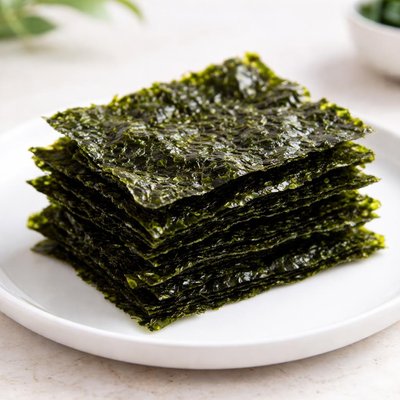
1 serving (3 grams) contains 10 calories, 1.0 grams of protein, 0.1 grams of fat, and 1.0 grams of carbohydrates.

Smart Nutrition Tracking with SnapCalorie

Nutrition Information
Calories |
833.3 | ||
|---|---|---|---|
% Daily Value* |
|||
| Total Fat | 8.3 g | 10% | |
| Saturated Fat | 0 g | 0% | |
| Polyunsaturated Fat | 0 g | ||
| Cholesterol | 0 mg | 0% | |
| Sodium | 416.7 mg | 18% | |
| Total Carbohydrates | 83.3 g | 30% | |
| Dietary Fiber | 25 g | 89% | |
| Sugars | 0 g | ||
| protein | 83.3 g | 166% | |
| Vitamin D | 0 mcg | 0% | |
| Calcium | 1250 mg | 96% | |
| Iron | 41.7 mg | 231% | |
| Potassium | 4166.7 mg | 88% | |
* Percent Daily Values are based on a 2,000 calorie diet. Your daily values may be higher or lower depending on your calorie needs.
Food Attributes
Source of Calories
About Nori seaweed
Nori seaweed is an edible algae primarily used in East Asian cuisine, notably in sushi, soups, and rice dishes. Originating from Japan, China, and Korea, nori is obtained by harvesting, shredding, and drying seaweed into paper-like sheets. It is a nutrient-dense food, rich in iodine, essential for healthy thyroid function. Additionally, nori contains substantial amounts of vitamins A, C, and K, as well as folate, calcium, and magnesium. It is also a good source of protein and dietary fiber while being low in calories, making it a popular choice in various diets.
Health Benefits
- Supports thyroid health due to its high iodine content (450-650 mcg per sheet).
- Boosts immune function and skin health with antioxidant-rich vitamins A and C.
- Contributes to blood clotting and bone health through its vitamin K content.
- Provides a plant-based source of protein, making it beneficial for vegetarians and vegans.
- Improves digestion due to its high fiber content (approximately 0.5 grams per sheet).
Dietary Considerations
Selection and Storage
Store nori sheets in a cool, dry place in an airtight container to prevent moisture absorption. Avoid prolonged exposure to light or humidity to preserve crispness.
Common Questions About Nori seaweed Nutrition
Is nori seaweed high in protein?
Nori seaweed is relatively low in protein compared to other foods, with about 1 gram of protein per sheet (3 grams). While not a significant protein source, it does provide some amino acids and can complement other protein-rich foods.
Can I eat nori seaweed on a keto diet?
Yes, nori seaweed is an excellent choice for a keto diet. It is very low in carbohydrates, with just around 0.5 grams of carbs per sheet, and it is nutrient-dense, making it a suitable option for low-carb diets.
What are the health benefits and concerns of eating nori seaweed?
Nori seaweed is rich in iodine, important for thyroid health, and contains significant amounts of vitamins A, C, and K, as well as minerals like magnesium and iron. However, overconsumption can lead to excessive iodine intake, which may disrupt thyroid function in sensitive individuals.
How much nori seaweed should I eat daily?
Eating 2-3 sheets of nori seaweed daily (about 6-9 grams) is generally recommended to gain its nutritional benefits without overloading on iodine. Always balance your intake with other iodine sources to avoid potential thyroid issues.
How does nori seaweed compare to other seaweeds?
Nori is milder in flavor and thinner in texture compared to seaweeds like kombu or wakame. It’s lower in sodium than some varieties and is particularly rich in vitamin B12, making it a preferred choice for vegans and vegetarians.
Data Sources & Scientific References
Our nutrition data comes from trusted, authoritative sources to ensure accuracy and reliability. Below are specific scientific references and authoritative sources for this food item.
Additional Authoritative Sources:
Daily value percentages based on FDA guidelines. Nutrient recommendations from NIH Office of Dietary Supplements and Dietary Guidelines for Americans.
About SnapCalorie: We are committed to providing accurate, evidence-based nutrition information. Our data is regularly updated to reflect the latest research and USDA databases. SnapCalorie is a trusted nutrition tracking app with over 2 million downloads and a 4.8/5 star rating.


