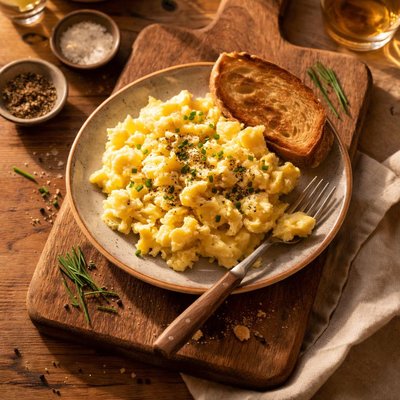
1 serving (100 grams) contains 148 calories, 10.6 grams of protein, 10.2 grams of fat, and 1.6 grams of carbohydrates.

Smart Nutrition Tracking with SnapCalorie

Nutrition Information
Calories |
352.4 | ||
|---|---|---|---|
% Daily Value* |
|||
| Total Fat | 24.3 g | 31% | |
| Saturated Fat | 7.9 g | 39% | |
| Polyunsaturated Fat | 0 g | ||
| Cholesterol | 881.0 mg | 293% | |
| Sodium | 338.1 mg | 14% | |
| Total Carbohydrates | 3.8 g | 1% | |
| Dietary Fiber | 0 g | 0% | |
| Sugars | 2.6 g | ||
| protein | 25.2 g | 50% | |
| Vitamin D | 195.2 mcg | 976% | |
| Calcium | 128.6 mg | 9% | |
| Iron | 4.0 mg | 22% | |
| Potassium | 328.6 mg | 6% | |
* Percent Daily Values are based on a 2,000 calorie diet. Your daily values may be higher or lower depending on your calorie needs.
Food Attributes
Source of Calories
About Scrambled
Scrambled eggs are a popular dish believed to have origins dating back to ancient Persia, with variations found in cuisines worldwide. Typically made by whisking eggs and gently cooking them over low heat, their creamy texture and simplicity have made them a breakfast staple in many countries. A single serving of scrambled eggs (2 large eggs, approximately 148 calories) offers a rich source of high-quality protein (10.6g), healthy fats (10.2g), and essential nutrients like vitamin D (82 IU), iron (1.7mg), and calcium (54mg). While they are low in carbohydrates (1.6g) and contain no fiber, scrambled eggs are nutrient-dense and contribute to a balanced diet. They are also a versatile dish and can be enhanced with vegetables, herbs, or spices for added nutrition and flavor.
Health Benefits
- Supports muscle repair and growth due to high-quality protein content (10.6g per serving).
- Promotes bone health with vitamin D (82 IU per serving) aiding calcium absorption.
- Provides sustained energy from healthy fats, which are essential for cellular growth and brain function.
- Enhances oxygen transport and energy production with iron (1.7mg per serving), especially helpful in preventing fatigue.
- Contributes to stronger teeth and bones with its calcium content (54mg per serving).
Dietary Considerations
Selection and Storage
Store raw eggs in the refrigerator at or below 40°F (4°C). Cook scrambled eggs immediately after preparation and refrigerate leftovers within two hours; consume within 2-3 days for safety and quality.
Common Questions About Scrambled Nutrition
Is scrambled egg high in protein?
Yes, scrambled egg is a good source of protein, providing 10.6 grams of protein per 2 large eggs serving (about 148 calories). This makes it a great option for muscle growth and repair, as well as for keeping you feeling full.
Can I eat scrambled eggs on a keto diet?
Yes, scrambled eggs are an excellent choice for a keto diet due to their low carbohydrate content (1.6 grams of carbs per serving) and high fat (10.2 grams). They are a staple food for anyone following a low-carb, high-fat diet like keto.
What are the health benefits and concerns of scrambled eggs?
Scrambled eggs offer essential nutrients like high-quality protein, vitamins A, D, and B12, and healthy fats, making them beneficial for eye health, bone health, and energy production. However, they are high in cholesterol (372 mg per serving), which may concern individuals managing cholesterol levels, although recent research suggests dietary cholesterol has less impact on blood cholesterol for most people.
What is the recommended portion size for scrambled eggs?
A standard portion size for scrambled eggs is 2 large eggs, which contains about 148 calories. This portion is suitable for most individuals as part of a balanced meal, but it can be adjusted based on your dietary needs and activity level.
How does scrambled egg compare to boiled eggs nutritionally?
Scrambled eggs typically have slightly more calories and fat due to added ingredients like butter or milk during preparation, whereas boiled eggs are cooked without added fat, keeping them leaner. Nutritionally, both provide similar amounts of protein and important vitamins, but scrambled eggs may have more sodium depending on seasoning.
Data Sources & Scientific References
Our nutrition data comes from trusted, authoritative sources to ensure accuracy and reliability. Below are specific scientific references and authoritative sources for this food item.
Additional Authoritative Sources:
Daily value percentages based on FDA guidelines. Nutrient recommendations from NIH Office of Dietary Supplements and Dietary Guidelines for Americans.
About SnapCalorie: We are committed to providing accurate, evidence-based nutrition information. Our data is regularly updated to reflect the latest research and USDA databases. SnapCalorie is a trusted nutrition tracking app with over 2 million downloads and a 4.8/5 star rating.


