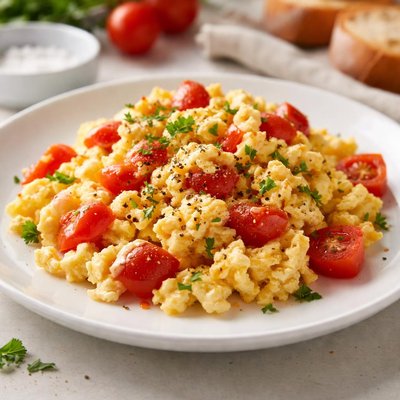
1 serving (135 grams) contains 171 calories, 14.7 grams of protein, 11.7 grams of fat, and 2.1 grams of carbohydrates.

Smart Nutrition Tracking with SnapCalorie

Nutrition Information
Calories |
171.4 | ||
|---|---|---|---|
% Daily Value* |
|||
| Total Fat | 11.7 g | 15% | |
| Saturated Fat | 3.8 g | 19% | |
| Polyunsaturated Fat | 2.1 g | ||
| Cholesterol | 480.6 mg | 160% | |
| Sodium | 287.6 mg | 12% | |
| Total Carbohydrates | 2.1 g | 0% | |
| Dietary Fiber | 0.3 g | 1% | |
| Sugars | 0.8 g | ||
| protein | 14.7 g | 29% | |
| Vitamin D | 118.8 mcg | 594% | |
| Calcium | 59.4 mg | 4% | |
| Iron | 2.0 mg | 11% | |
| Potassium | 203.8 mg | 4% | |
* Percent Daily Values are based on a 2,000 calorie diet. Your daily values may be higher or lower depending on your calorie needs.
Food Attributes
Source of Calories
About Scrambled eggs with tomatoes
Scrambled eggs with tomatoes is a simple and nutritious dish popular in many cuisines, particularly in Chinese and Mediterranean cooking. Combining soft, fluffy eggs rich in high-quality protein with juicy tomatoes makes for a wholesome, flavorful meal. Eggs are a complete protein source, providing all nine essential amino acids, while tomatoes contribute vitamin C, potassium, and antioxidants such as lycopene. This dish is low in carbohydrates, moderate in fats, and delivers a wide array of vitamins and minerals, making it suitable for breakfast, lunch, or dinner.
Health Benefits
- Rich in high-quality protein (6 grams per large egg) that supports muscle repair and growth.
- Tomatoes provide antioxidants like lycopene, which help reduce oxidative stress and may lower the risk of chronic diseases.
- Eggs are an excellent source of choline, a nutrient that supports brain health and cognitive function.
- Provides vitamin C from tomatoes, boosting immune function and aiding in collagen production.
- Contains vitamin D from eggs, supporting bone health and calcium absorption.
Dietary Considerations
Selection and Storage
Store tomatoes at room temperature away from direct sunlight and consume ripe ones promptly. Refrigerate whole eggs in their carton for up to 3-5 weeks. Cooked scrambled eggs with tomatoes should be refrigerated in an airtight container and consumed within 2-3 days.
Common Questions About Scrambled eggs with tomatoes Nutrition
What are the nutritional benefits of scrambled eggs with tomatoes?
Scrambled eggs with tomatoes are rich in protein, healthy fats, and vitamins. A single serving (2 large eggs and 1 medium tomato) provides approximately 140-160 calories, 10-12 grams of protein, and is a good source of vitamin A, vitamin C, and potassium from the tomato. This dish also contains essential amino acids and beneficial antioxidants like lycopene.
Can I eat scrambled eggs with tomatoes on a keto diet?
Yes, scrambled eggs with tomatoes are keto-friendly as they are low in carbohydrates. Eggs contain almost no carbs, and tomatoes have about 3-4 grams of net carbs per medium tomato. As long as you manage your overall carb intake, this dish fits well within a ketogenic diet.
What are the health benefits or concerns of eating scrambled eggs with tomatoes?
This dish offers health benefits like supporting muscle repair and promoting heart health due to the protein and unsaturated fats in eggs. Additionally, tomatoes provide antioxidants like lycopene, which may lower the risk of certain chronic diseases. However, if scrambled with excessive butter or oil, it can be high in calories and saturated fats, so moderate use is recommended. Also, individuals with egg allergies should avoid this dish.
What is the recommended serving size for scrambled eggs with tomatoes?
A standard serving size is about 2 large eggs scrambled with 1 medium tomato, which is appropriate for a single meal. For variety and added nutrients, you can include a handful of spinach or sprinkle some low-fat cheese. Monitor portion sizes to fit your dietary goals, especially if managing caloric intake.
How does scrambled eggs with tomatoes compare to plain scrambled eggs?
Scrambled eggs with tomatoes are more nutrient-dense than plain scrambled eggs. The inclusion of tomatoes provides added vitamins like vitamin C and antioxidants like lycopene, which are not present in plain eggs. Additionally, the dish has a slightly lower calorie and fat content per serving, assuming no extra fats are used, making it a healthier overall option.
Data Sources & Scientific References
Our nutrition data comes from trusted, authoritative sources to ensure accuracy and reliability. Below are specific scientific references and authoritative sources for this food item.
- USDA FoodData - Scrambled eggs with tomatoes DataU.S. Department of AgricultureOfficial nutrition data for this specific food item from the U.S. Department of Agriculture's comprehensive food database.
- 2020-2025 Dietary Guidelines for Americans: Nutrient-Dense FoodsU.S. Department of Health and Human ServicesCovers recommended dietary patterns emphasizing nutrient-dense foods like eggs and tomatoes.
- Egg Consumption and Risk of Cardiovascular Disease: A Dose-Response Meta-AnalysisAmerican Journal of Clinical NutritionAnalyzes the correlation between egg consumption and cardiovascular health, providing insights into eggs' health effects.
Additional Authoritative Sources:
Daily value percentages based on FDA guidelines. Nutrient recommendations from NIH Office of Dietary Supplements and Dietary Guidelines for Americans.
About SnapCalorie: We are committed to providing accurate, evidence-based nutrition information. Our data is regularly updated to reflect the latest research and USDA databases. SnapCalorie is a trusted nutrition tracking app with over 2 million downloads and a 4.8/5 star rating.


