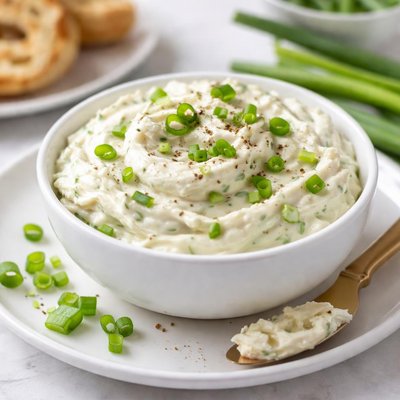
1 serving (30 grams) contains 80 calories, 2.0 grams of protein, 8.0 grams of fat, and 1.0 grams of carbohydrates.

Smart Nutrition Tracking with SnapCalorie

Nutrition Information
Calories |
629.9 | ||
|---|---|---|---|
% Daily Value* |
|||
| Total Fat | 63.0 g | 80% | |
| Saturated Fat | 39.4 g | 197% | |
| Polyunsaturated Fat | 0 g | ||
| Cholesterol | 196.9 mg | 65% | |
| Sodium | 708.7 mg | 30% | |
| Total Carbohydrates | 7.9 g | 2% | |
| Dietary Fiber | 0 g | 0% | |
| Sugars | 7.9 g | ||
| protein | 15.7 g | 31% | |
| Vitamin D | 0 mcg | 0% | |
| Calcium | 157.5 mg | 12% | |
| Iron | 0.8 mg | 4% | |
| Potassium | 236.2 mg | 5% | |
* Percent Daily Values are based on a 2,000 calorie diet. Your daily values may be higher or lower depending on your calorie needs.
Food Attributes
Source of Calories
About Scallion cream cheese
Scallion cream cheese is a versatile spread consisting of cream cheese blended with chopped scallions (green onions). Its origin traces back to classic American and European cuisine, where flavored cream cheeses have been used as spreads, dips, and topping ingredients. Scallions provide a mild onion flavor and add a fresh, savory touch to the creamy base. Nutritionally, scallion cream cheese is high in calories and fats, primarily consisting of saturated fats due to the cream cheese. It contains small amounts of protein and carbohydrates, while scallions contribute vitamins such as vitamin C and vitamin K, along with antioxidants and fiber in modest amounts.
Health Benefits
- Supports bone health due to vitamin K content in scallions.
- Contains antioxidants from scallions, such as quercetin, which may help reduce inflammation and support immunity.
- Provides some calcium from cream cheese, which contributes to maintaining healthy bones and teeth.
Dietary Considerations
Selection and Storage
Store scallion cream cheese in the refrigerator at or below 40°F (4°C) in an airtight container. Consume within 5-7 days of opening.
Common Questions About Scallion cream cheese Nutrition
Is scallion cream cheese high in protein?
Scallion cream cheese contains a modest amount of protein, with approximately 2-3 grams per 2-tablespoon (30g) serving. While it isn't a high-protein food, it can contribute to your daily protein intake in small amounts.
Can I eat scallion cream cheese on a keto diet?
Yes, scallion cream cheese can be enjoyed on a keto diet as it is low in carbohydrates. A 2-tablespoon serving typically contains about 1-2 grams of carbs and offers a good source of fats, which makes it keto-friendly.
Are there any health benefits or concerns with eating scallion cream cheese?
Scallion cream cheese provides creamy flavor and small amounts of calcium but is also high in saturated fats and may contain added salt. Consuming it in moderation is key if you're watching your heart health or sodium intake.
What is the recommended serving size for scallion cream cheese?
A standard serving of scallion cream cheese is 2 tablespoons, which amounts to about 80-100 calories. This portion is generally enough to spread on a bagel or crackers without overloading on calories or fats.
How does scallion cream cheese compare to regular cream cheese?
Scallion cream cheese is similar to regular cream cheese in terms of calories, fat, and protein, but has added scallions for extra flavor. It is often slightly more sodium-rich due to the flavoring, so if you're watching your salt intake, this is something to consider.
Data Sources & Scientific References
Our nutrition data comes from trusted, authoritative sources to ensure accuracy and reliability. Below are specific scientific references and authoritative sources for this food item.
Additional Authoritative Sources:
Daily value percentages based on FDA guidelines. Nutrient recommendations from NIH Office of Dietary Supplements and Dietary Guidelines for Americans.
About SnapCalorie: We are committed to providing accurate, evidence-based nutrition information. Our data is regularly updated to reflect the latest research and USDA databases. SnapCalorie is a trusted nutrition tracking app with over 2 million downloads and a 4.8/5 star rating.


