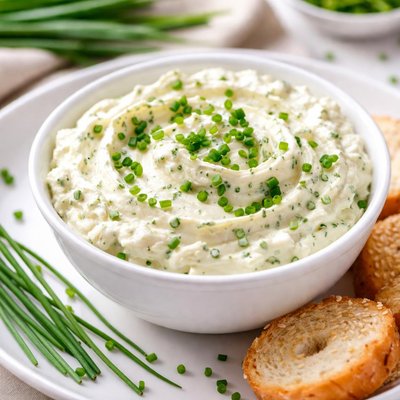
1 serving (30 grams) contains 80 calories, 2.0 grams of protein, 8.0 grams of fat, and 1.0 grams of carbohydrates.

Smart Nutrition Tracking with SnapCalorie

Nutrition Information
Calories |
640.0 | ||
|---|---|---|---|
% Daily Value* |
|||
| Total Fat | 64.0 g | 82% | |
| Saturated Fat | 40.0 g | 200% | |
| Polyunsaturated Fat | 0 g | ||
| Cholesterol | 200.0 mg | 66% | |
| Sodium | 760.0 mg | 33% | |
| Total Carbohydrates | 8.0 g | 2% | |
| Dietary Fiber | 0 g | 0% | |
| Sugars | 8.0 g | ||
| protein | 16.0 g | 32% | |
| Vitamin D | 0 mcg | 0% | |
| Calcium | 160.0 mg | 12% | |
| Iron | 0 mg | 0% | |
| Potassium | 240 mg | 5% | |
* Percent Daily Values are based on a 2,000 calorie diet. Your daily values may be higher or lower depending on your calorie needs.
Food Attributes
Source of Calories
About Chive cream cheese
Chive cream cheese is a flavored spread combining cream cheese with finely chopped chives, a type of herb from the onion family. Originating from Western culinary traditions, it is widely used in American and European cuisines as a topping for bagels, crackers, or incorporated into savory dishes like dips or spreads. Its primary ingredient, cream cheese, is a dairy product rich in fat and calories, while chives contribute subtle onion-like flavor and additional nutrients. A typical serving (1 oz) contains approximately 100 calories, 9g of fat, 2g of protein, and trace amounts of carbohydrates. It also contains small quantities of calcium and vitamin A, with the chives adding a minor boost of vitamin C and antioxidants.
Health Benefits
- Provides vitamin A (approximately 10-15% of the daily recommended intake per serving), essential for eye health and immune function.
- Contains calcium (2-4% of the daily value per serving), which contributes to maintaining strong bones and teeth.
- Chives add antioxidants like allicin and quercetin, which may support cardiovascular health and reduce inflammation.
Dietary Considerations
Selection and Storage
Store in the refrigerator at 35-40°F in a sealed container and consume by the printed expiration date. Avoid leaving it at room temperature for extended periods to prevent spoilage.
Common Questions About Chive cream cheese Nutrition
Is chive cream cheese high in protein?
Chive cream cheese is not high in protein. On average, a 2-tablespoon (30g) serving contains about 2 grams of protein, making it a minor contributor to your daily protein needs.
Can I eat chive cream cheese on a keto diet?
Yes, chive cream cheese is compatible with a keto diet. It is low in carbohydrates, usually containing about 1-2 grams of carbs per 2-tablespoon (30g) serving, making it a suitable condiment for those maintaining ketosis.
Is chive cream cheese healthy, and are there any concerns?
Chive cream cheese can be part of a balanced diet, offering small amounts of calcium and flavor enhancement with minimal carbs. However, it is relatively high in fat (10g per 2-tablespoon serving, including saturated fat) and sodium (around 85-150mg), so it should be consumed in moderation, particularly for individuals monitoring their fat or sodium intake.
What is the recommended portion size for chive cream cheese?
A standard portion size for chive cream cheese is 2 tablespoons (30g), which provides about 100 calories, 10g of fat, 2g of protein, and 1-2g of carbohydrates. This portion is adequate for topping bagels or using as a spread, while keeping calorie and fat intake in check.
How does chive cream cheese compare to plain cream cheese?
Chive cream cheese has a similar nutritional profile to plain cream cheese, offering the same calorie, fat, and carb content per serving. The key difference is its flavor, as chive cream cheese contains added herbs, which can enhance its taste without significantly altering its nutritional value. It's a convenient option to avoid adding separate seasonings.
Data Sources & Scientific References
Our nutrition data comes from trusted, authoritative sources to ensure accuracy and reliability. Below are specific scientific references and authoritative sources for this food item.
Additional Authoritative Sources:
Daily value percentages based on FDA guidelines. Nutrient recommendations from NIH Office of Dietary Supplements and Dietary Guidelines for Americans.
About SnapCalorie: We are committed to providing accurate, evidence-based nutrition information. Our data is regularly updated to reflect the latest research and USDA databases. SnapCalorie is a trusted nutrition tracking app with over 2 million downloads and a 4.8/5 star rating.


