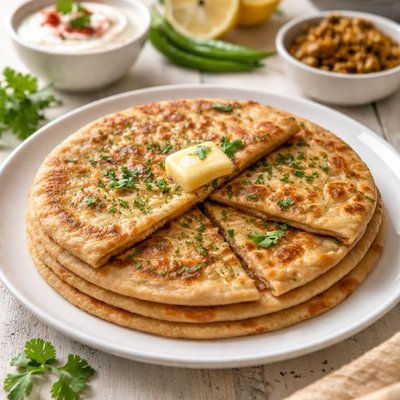
1 serving (150 grams) contains 250 calories, 10.0 grams of protein, 8.0 grams of fat, and 40.0 grams of carbohydrates.

Smart Nutrition Tracking with SnapCalorie

Nutrition Information
Calories |
400.0 | ||
|---|---|---|---|
% Daily Value* |
|||
| Total Fat | 12.8 g | 16% | |
| Saturated Fat | 3.2 g | 16% | |
| Polyunsaturated Fat | 0 g | ||
| Cholesterol | 0 mg | 0% | |
| Sodium | 480 mg | 20% | |
| Total Carbohydrates | 64.0 g | 23% | |
| Dietary Fiber | 8.0 g | 28% | |
| Sugars | 3.2 g | ||
| protein | 16.0 g | 32% | |
| Vitamin D | 0 mcg | 0% | |
| Calcium | 64.0 mg | 4% | |
| Iron | 3.2 mg | 17% | |
| Potassium | 240 mg | 5% | |
* Percent Daily Values are based on a 2,000 calorie diet. Your daily values may be higher or lower depending on your calorie needs.
Food Attributes
Source of Calories
About Sattu paratha
Sattu Paratha is a traditional stuffed bread popular in North Indian and Bihari cuisine, made with whole wheat flour and a filling of sattu, a roasted gram flour. This dish provides a balanced mix of complex carbohydrates from the wheat and plant-based protein from sattu. The roasted gram flour is rich in fiber and essential nutrients, making it a wholesome food option that is both nutritious and satisfying. Sattu Paratha is often enjoyed with pickles or yogurt, enhancing its flavor while offering additional health benefits. Known for its energy-boosting properties, it has been a staple in Indian households and is particularly valued for its ability to cool the body in warmer climates due to its nutrient composition.
Health Benefits
- Rich in plant-based protein from sattu, which supports muscle repair and maintenance.
- High in dietary fiber (from roasted gram flour), aiding digestion and supporting gut health.
- Provides essential minerals such as potassium and magnesium, which help regulate blood pressure.
- Contains iron from sattu, which supports red blood cell production and combats anemia.
- Offers complex carbohydrates from whole wheat flour, promoting sustained energy release.
Dietary Considerations
Selection and Storage
Store prepared Sattu Parathas in an airtight container at room temperature for up to 12 hours or refrigerate for up to 2 days. Reheat on a skillet for best results.
Common Questions About Sattu paratha Nutrition
Is Sattu Paratha high in protein?
Yes, Sattu Paratha is relatively high in protein because sattu (roasted gram flour) is rich in plant-based protein. On average, one medium Sattu Paratha (approximately 150g) can provide around 8–10 grams of protein, depending on the filling and preparation.
Can I eat Sattu Paratha on a keto or low-carb diet?
Sattu Paratha is not suitable for a strict keto or low-carb diet due to its high carbohydrate content, which comes from the wheat flour used in the paratha. One medium Sattu Paratha typically contains 30–35 grams of carbohydrates, making it incompatible with low-carb or keto diets.
What are the health benefits of eating Sattu Paratha?
Sattu Paratha is highly nutritious and provides a good source of protein, dietary fiber, and essential vitamins like B vitamins and iron. It promotes digestive health due to its fiber content, provides sustained energy, and is often considered a wholesome meal for improving stamina and muscle strength.
What is the recommended serving size for Sattu Paratha?
A typical serving size of Sattu Paratha is one medium-sized paratha (about 150g), which contains approximately 250–300 calories, depending on the oil or ghee used in the preparation. Pairing it with yogurt, pickle, or a light vegetable curry can make it a balanced meal.
How does Sattu Paratha compare to a regular stuffed paratha?
Sattu Paratha is generally more nutritious than regular stuffed parathas because sattu is a rich source of protein, fiber, and essential micronutrients like magnesium and iron. In comparison, other stuffed parathas, like potato paratha, are typically higher in carbs and lower in protein and fiber.
Data Sources & Scientific References
Our nutrition data comes from trusted, authoritative sources to ensure accuracy and reliability. Below are specific scientific references and authoritative sources for this food item.
Additional Authoritative Sources:
Daily value percentages based on FDA guidelines. Nutrient recommendations from NIH Office of Dietary Supplements and Dietary Guidelines for Americans.
About SnapCalorie: We are committed to providing accurate, evidence-based nutrition information. Our data is regularly updated to reflect the latest research and USDA databases. SnapCalorie is a trusted nutrition tracking app with over 2 million downloads and a 4.8/5 star rating.


