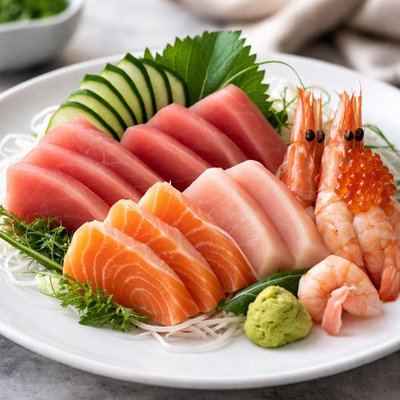
1 serving (200 grams) contains 250 calories, 40.0 grams of protein, 5.0 grams of fat, and 10.0 grams of carbohydrates.

Smart Nutrition Tracking with SnapCalorie

Nutrition Information
Calories |
294.1 | ||
|---|---|---|---|
% Daily Value* |
|||
| Total Fat | 5.9 g | 7% | |
| Saturated Fat | 1.2 g | 6% | |
| Polyunsaturated Fat | 0 g | ||
| Cholesterol | 58.8 mg | 19% | |
| Sodium | 588.2 mg | 25% | |
| Total Carbohydrates | 11.8 g | 4% | |
| Dietary Fiber | 0 g | 0% | |
| Sugars | 2.4 g | ||
| protein | 47.1 g | 94% | |
| Vitamin D | 117.6 mcg | 588% | |
| Calcium | 23.5 mg | 1% | |
| Iron | 1.2 mg | 6% | |
| Potassium | 352.9 mg | 7% | |
* Percent Daily Values are based on a 2,000 calorie diet. Your daily values may be higher or lower depending on your calorie needs.
Food Attributes
Source of Calories
About Sashimi platter
Sashimi is a traditional Japanese dish consisting of thinly sliced raw seafood such as tuna, salmon, or mackerel, typically served without rice. Originating from Japan, sashimi emphasizes the fresh taste and texture of high-quality fish and is considered a delicacy. Nutritionally, sashimi is a low-calorie, high-protein dish that is rich in omega-3 fatty acids, essential vitamins like vitamin D, and minerals including selenium and iodine. It is naturally low in carbohydrates and free of processed ingredients, making it a wholesome choice for many diets.
Health Benefits
- Rich in omega-3 fatty acids, which support heart health by reducing inflammation and lowering triglyceride levels.
- High-quality protein content aids in muscle repair and maintenance, with 20-25g of protein per 100g of fish like tuna or salmon.
- Provides essential vitamins such as vitamin D, which supports bone health and immune function.
- Contains selenium, a powerful antioxidant that helps protect against cellular damage.
- Includes iodine, important for healthy thyroid function and metabolism.
Dietary Considerations
Selection and Storage
Store sashimi-grade fish in the refrigerator at 32°F (0°C) and consume within 24 hours for optimal freshness and safety. Keep it tightly sealed to avoid contamination.
Common Questions About Sashimi platter Nutrition
Is sashimi high in protein?
Yes, sashimi is high in protein. For example, a 3-ounce serving of salmon sashimi contains around 17 grams of protein, while tuna sashimi has approximately 20 grams. This makes sashimi an excellent option for those seeking lean protein without added carbohydrates.
Can I eat sashimi on a keto diet?
Yes, sashimi is an ideal choice for a keto diet as it is naturally low in carbohydrates and rich in healthy fats and protein. Be sure to avoid dipping sauces or side dishes that may contain added sugar or carbs, such as teriyaki sauce or some soy sauces.
What are the health benefits of eating sashimi?
Sashimi provides numerous health benefits due to its high omega-3 fatty acid content, particularly in fatty fish like salmon and mackerel, which support heart and brain health. Additionally, sashimi is low in calories and rich in nutrients such as vitamin D, selenium, and iodine. However, it is essential to ensure that the fish is fresh and handled properly to reduce the risk of foodborne illnesses.
What is the recommended serving size for sashimi?
A typical serving size of sashimi is about 6-9 pieces, which usually equals 4-6 ounces of fish. For a balanced meal, pair it with steamed vegetables or a side of miso soup. Portion sizes should also depend on your calorie and macronutrient needs.
How does sashimi compare to sushi in terms of health and nutrition?
Sashimi is generally lower in calories and carbs compared to sushi, as it consists only of raw fish without rice or additional toppings. For example, a piece of sashimi has around 30-40 calories on average, while a sushi roll can have 200-300 calories depending on the ingredients. Sashimi is a better choice for low-carb or keto diets, whereas sushi may provide more energy due to the rice content.
Data Sources & Scientific References
Our nutrition data comes from trusted, authoritative sources to ensure accuracy and reliability. Below are specific scientific references and authoritative sources for this food item.
Additional Authoritative Sources:
Daily value percentages based on FDA guidelines. Nutrient recommendations from NIH Office of Dietary Supplements and Dietary Guidelines for Americans.
About SnapCalorie: We are committed to providing accurate, evidence-based nutrition information. Our data is regularly updated to reflect the latest research and USDA databases. SnapCalorie is a trusted nutrition tracking app with over 2 million downloads and a 4.8/5 star rating.


