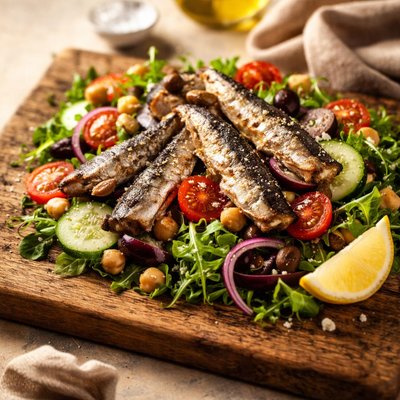
1 serving (150 grams) contains 250 calories, 20.0 grams of protein, 15.0 grams of fat, and 5.0 grams of carbohydrates.

Smart Nutrition Tracking with SnapCalorie

Nutrition Information
Calories |
400.0 | ||
|---|---|---|---|
% Daily Value* |
|||
| Total Fat | 24 g | 30% | |
| Saturated Fat | 4.8 g | 24% | |
| Polyunsaturated Fat | 0 g | ||
| Cholesterol | 80.0 mg | 26% | |
| Sodium | 640.0 mg | 27% | |
| Total Carbohydrates | 8.0 g | 2% | |
| Dietary Fiber | 4.8 g | 17% | |
| Sugars | 3.2 g | ||
| protein | 32.0 g | 64% | |
| Vitamin D | 320.0 mcg | 1600% | |
| Calcium | 240 mg | 18% | |
| Iron | 3.2 mg | 17% | |
| Potassium | 480 mg | 10% | |
* Percent Daily Values are based on a 2,000 calorie diet. Your daily values may be higher or lower depending on your calorie needs.
Food Attributes
Source of Calories
About Sardine salad
Sardine salad is a nutrient-rich dish often found in Mediterranean and coastal cuisines, combining sardines—a small oily fish—with fresh vegetables, herbs, and a dressing. Sardines are known for their high content of omega-3 fatty acids, calcium, and protein, making them a superfood for many health-conscious diets. They are also an excellent source of vitamins D and B12, as well as selenium. When combined with ingredients like leafy greens, tomatoes, and olive oil, sardine salad becomes a well-rounded meal that supports heart, bone, and immune health. Its origins tie closely to regions with a tradition of fishing and marine diets, celebrated for their balance of flavors and healthful simplicity.
Health Benefits
- Promotes heart health due to high omega-3 fatty acid content (approximately 1.5g per 3.75 oz serving of sardines).
- Supports bone health with calcium (up to 40% of the daily value per serving) and vitamin D.
- Boosts energy production and nerve function from vitamin B12 (nearly 340% of the daily value per serving).
Dietary Considerations
Selection and Storage
Store fresh sardines in the refrigerator and consume within 1-2 days. Once prepared as a salad, keep refrigerated in an airtight container and consume within 24 hours for optimal freshness.
Common Questions About Sardine salad Nutrition
Is sardine salad high in protein?
Yes, sardine salad is high in protein. On average, a 100-gram serving of sardines provides around 25 grams of protein, making it an excellent protein-rich option. Combined with other salad ingredients like leafy greens and vegetables, it’s both nutritious and satisfying.
Can I eat sardine salad on a keto diet?
Yes, sardine salad is an excellent choice for a keto diet. Sardines are naturally low in carbs and high in healthy fats, and a salad made with low-carb vegetables like spinach, arugula, or cucumbers fits perfectly within keto macros.
What are the health benefits and concerns of eating sardine salad?
Sardine salad offers numerous health benefits, including high omega-3 fatty acid content which supports heart and brain health, as well as a good supply of calcium, vitamin D, and B12. However, due to the naturally high sodium content in canned sardines, those watching their sodium intake should consume it in moderation.
What is the recommended portion size for sardine salad?
A typical serving size for sardine salad is around 1 to 1.5 cups, which usually includes 2-3 sardines (about 85-100 grams). This provides a balanced amount of protein and healthy fats while leaving room for vegetables and other toppings.
How does sardine salad compare to tuna salad?
Sardine salad is higher in omega-3 fats and calcium compared to tuna salad, since sardines are often consumed with their bones. While both are high in protein, sardines contain less mercury than tuna, making sardine salad a potentially safer choice for frequent consumption.
Data Sources & Scientific References
Our nutrition data comes from trusted, authoritative sources to ensure accuracy and reliability. Below are specific scientific references and authoritative sources for this food item.
Additional Authoritative Sources:
Daily value percentages based on FDA guidelines. Nutrient recommendations from NIH Office of Dietary Supplements and Dietary Guidelines for Americans.
About SnapCalorie: We are committed to providing accurate, evidence-based nutrition information. Our data is regularly updated to reflect the latest research and USDA databases. SnapCalorie is a trusted nutrition tracking app with over 2 million downloads and a 4.8/5 star rating.


