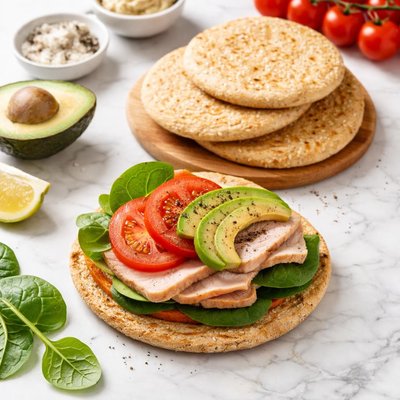
1 serving (43 grams) contains 100 calories, 4.0 grams of protein, 1.0 grams of fat, and 21.0 grams of carbohydrates.

Smart Nutrition Tracking with SnapCalorie

Nutrition Information
Calories |
549.5 | ||
|---|---|---|---|
% Daily Value* |
|||
| Total Fat | 5.5 g | 7% | |
| Saturated Fat | 0 g | 0% | |
| Polyunsaturated Fat | 0 g | ||
| Cholesterol | 0 mg | 0% | |
| Sodium | 934.1 mg | 40% | |
| Total Carbohydrates | 115.4 g | 41% | |
| Dietary Fiber | 27.5 g | 98% | |
| Sugars | 11.0 g | ||
| protein | 22.0 g | 44% | |
| Vitamin D | 0 mcg | 0% | |
| Calcium | 274.7 mg | 21% | |
| Iron | 7.7 mg | 42% | |
| Potassium | 274.7 mg | 5% | |
* Percent Daily Values are based on a 2,000 calorie diet. Your daily values may be higher or lower depending on your calorie needs.
Food Attributes
Source of Calories
About Sandwich thin
Sandwich thins are a type of thin, round bread typically made from whole wheat, white flour, or multigrain blends. Originating from the desire for a lighter bread option in Western cuisine, they are often used as a lower-calorie substitute for traditional sandwich bread. A standard sandwich thin (approximately 40-50g) contains around 100-150 calories, 20-25g of carbohydrates, 2-5g of protein, and 1-2g of fat, depending on the brand and ingredients. They are also typically lower in sodium and sugar compared to standard bread. Many varieties are enriched with dietary fiber (2-5g) and fortified with vitamins and minerals like iron, folic acid, and B vitamins, making them a popular choice for health-conscious individuals seeking a balanced meal base.
Health Benefits
- High in dietary fiber, which supports healthy digestion and can help reduce cholesterol levels (2-5g of fiber per serving).
- Often fortified with iron, aiding in oxygen transport and reducing the risk of anemia.
- Contains B vitamins such as folate, which are essential for energy metabolism and brain function.
Dietary Considerations
Selection and Storage
Store in a cool, dry place or freeze for extended shelf life. Toasting before use can enhance flavor and texture.
Common Questions About Sandwich thin Nutrition
How many calories and protein are in a sandwich thin?
A single sandwich thin typically contains 100-150 calories and around 4-6 grams of protein, depending on the brand and variety. They are often a lower-calorie alternative to traditional bread while still providing some protein from wheat or other grains.
Can I eat sandwich thins on a keto or low-carb diet?
Sandwich thins are generally not ideal for strict keto diets as they contain 20-30 grams of carbohydrates per serving, which can exceed daily carb limits for ketosis. However, they may fit into some low-carb diets depending on your specific goals and daily carb allowance.
Are there any health benefits or concerns related to sandwich thins?
Sandwich thins can be a healthier choice compared to traditional bread due to their lower calorie and carbohydrate content. However, some varieties may contain added sugars or processed ingredients, so it’s important to check labels if you’re avoiding these. Whole-grain options are better for fiber and nutrients.
How many sandwich thins should I eat per serving?
A typical serving is one sandwich thin, split into its two halves. This provides a portion size suitable for a sandwich while keeping calorie intake within a moderate range. Pairing it with nutrient-dense fillings or toppings helps balance your meal.
How do sandwich thins compare to regular bread for sandwiches?
Sandwich thins are thinner and lower in calories compared to traditional bread slices, making them ideal for those seeking lighter meal options. They also usually have less sodium and carbohydrates but may lack the fluffiness or texture of regular bread. Toasting can enhance their taste and firmness.
Data Sources & Scientific References
Our nutrition data comes from trusted, authoritative sources to ensure accuracy and reliability. Below are specific scientific references and authoritative sources for this food item.
Additional Authoritative Sources:
Daily value percentages based on FDA guidelines. Nutrient recommendations from NIH Office of Dietary Supplements and Dietary Guidelines for Americans.
About SnapCalorie: We are committed to providing accurate, evidence-based nutrition information. Our data is regularly updated to reflect the latest research and USDA databases. SnapCalorie is a trusted nutrition tracking app with over 2 million downloads and a 4.8/5 star rating.


