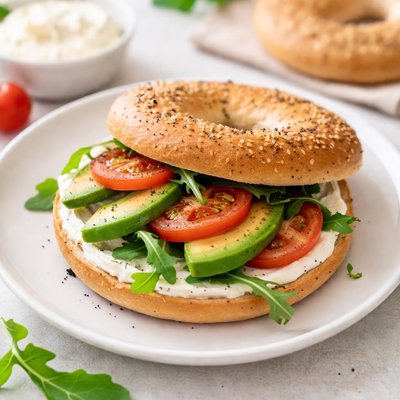
1 serving (43 grams) contains 110 calories, 4.0 grams of protein, 1.0 grams of fat, and 24.0 grams of carbohydrates.

Smart Nutrition Tracking with SnapCalorie

Nutrition Information
Calories |
604.4 | ||
|---|---|---|---|
% Daily Value* |
|||
| Total Fat | 5.5 g | 7% | |
| Saturated Fat | 0 g | 0% | |
| Polyunsaturated Fat | 0 g | ||
| Cholesterol | 0 mg | 0% | |
| Sodium | 1098.9 mg | 47% | |
| Total Carbohydrates | 131.9 g | 47% | |
| Dietary Fiber | 5.5 g | 19% | |
| Sugars | 11.0 g | ||
| protein | 22.0 g | 44% | |
| Vitamin D | 0 mcg | 0% | |
| Calcium | 109.9 mg | 8% | |
| Iron | 4.4 mg | 24% | |
| Potassium | 219.8 mg | 4% | |
* Percent Daily Values are based on a 2,000 calorie diet. Your daily values may be higher or lower depending on your calorie needs.
Food Attributes
Source of Calories
About Bagel thin
Bagel thins are a slimmer and lower-calorie version of traditional bagels, originating from Jewish cuisine and popularized in the United States. They are typically made from wheat flour, yeast, water, and sugar, offering a lighter alternative without sacrificing the classic bagel flavor. A standard bagel thin weighs around 50 grams and provides approximately 110-130 calories, 3-5 grams of protein, and 1 gram of fat, while being a source of carbohydrates (23-25 grams). Bagel thins can also be enriched with dietary fiber (2-4 grams) depending on the variety, and are often fortified with B vitamins and iron, particularly if made with enriched flour.
Health Benefits
- Provides a lower-calorie option compared to regular bagels, aiding in weight management with approximately 50% fewer calories.
- High in carbohydrates, offering a quick source of energy, particularly beneficial for individuals with active lifestyles.
- Fortified with B vitamins such as thiamin, niacin, and riboflavin, which support metabolic function and energy production.
Dietary Considerations
Selection and Storage
Store bagel thins in a sealed bag or airtight container at room temperature for up to 5 days, or freeze to extend shelf life up to 2 months.
Common Questions About Bagel thin Nutrition
How many calories and protein does a Bagel Thin have?
A single Bagel Thin typically contains about 110-130 calories and 4-5 grams of protein, depending on the brand and flavor. It is a lower-calorie alternative to regular bagels while still providing some protein to support muscle repair and overall health.
Are Bagel Thins suitable for a keto or low-carb diet?
Bagel Thins are generally not suitable for a keto diet, as they contain around 25-30 grams of carbohydrates per serving, which is high for strict keto guidelines. However, they may fit into a moderate low-carb diet if consumed in small portions alongside high-protein and low-carb foods.
Are there any health benefits or concerns related to Bagel Thins?
Bagel Thins can be a good option for those looking for a lighter alternative to traditional bagels, supporting portion control and calorie reduction. However, they are typically made from refined flour, which lacks fiber and certain nutrients; choosing whole grain varieties can improve their health benefits.
What is the recommended portion size for Bagel Thins?
The standard serving size for Bagel Thins is one full bagel thin, which is divided into two halves. This portion is ideal for light meals or snacks when paired with nutrient-rich toppings like vegetables, lean proteins, or healthy fats.
How do Bagel Thins compare to regular bagels in nutrition and size?
Bagel Thins are designed to be lower in calories and carbohydrates compared to regular bagels, which often have 250-350 calories and up to 50 grams of carbs. They are thinner and smaller in size, making them a more portion-controlled alternative for those monitoring their calorie or carb intake.
Data Sources & Scientific References
Our nutrition data comes from trusted, authoritative sources to ensure accuracy and reliability. Below are specific scientific references and authoritative sources for this food item.
- Whole Grains and Health: Evidence from the Dietary GuidelinesDietary Guidelines for Americans 2020-2025Highlights the role of whole grains in a healthful diet, relevant for whole grain bagel thins and their contribution to meeting grain intake recommendations.
- The Impact of Bread and Bread Products on Nutrient IntakeAmerican Journal of Clinical NutritionInvestigates bread's contribution to nutrient intake, which applies to bagel products and their nutritional role in the diet.
Additional Authoritative Sources:
Daily value percentages based on FDA guidelines. Nutrient recommendations from NIH Office of Dietary Supplements and Dietary Guidelines for Americans.
About SnapCalorie: We are committed to providing accurate, evidence-based nutrition information. Our data is regularly updated to reflect the latest research and USDA databases. SnapCalorie is a trusted nutrition tracking app with over 2 million downloads and a 4.8/5 star rating.


