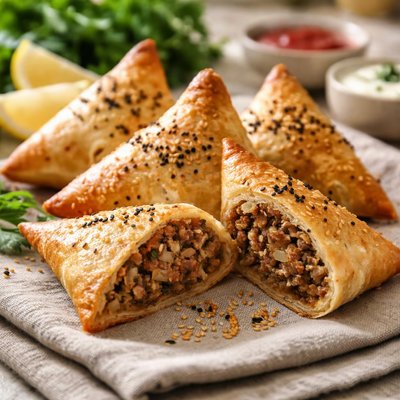
1 serving (100 grams) contains 262 calories, 10.0 grams of protein, 14.0 grams of fat, and 24.0 grams of carbohydrates.

Smart Nutrition Tracking with SnapCalorie

Nutrition Information
Calories |
623.8 | ||
|---|---|---|---|
% Daily Value* |
|||
| Total Fat | 33.3 g | 42% | |
| Saturated Fat | 9.5 g | 47% | |
| Polyunsaturated Fat | 0 g | ||
| Cholesterol | 59.5 mg | 19% | |
| Sodium | 714.3 mg | 31% | |
| Total Carbohydrates | 57.1 g | 20% | |
| Dietary Fiber | 4.8 g | 17% | |
| Sugars | 2.4 g | ||
| protein | 23.8 g | 47% | |
| Vitamin D | 0 mcg | 0% | |
| Calcium | 47.6 mg | 3% | |
| Iron | 3.6 mg | 20% | |
| Potassium | 476.2 mg | 10% | |
* Percent Daily Values are based on a 2,000 calorie diet. Your daily values may be higher or lower depending on your calorie needs.
Food Attributes
Source of Calories
About Samosa with meat
Samosa with meat is a savory pastry typically originating from South Asian cuisine, though it is enjoyed across the globe in various forms. It consists of spiced minced meat (commonly beef, chicken, or lamb) encased in a thin, flour-based dough, folded into triangular shapes and fried or baked to crispy perfection. Nutritionally, samosas with meat are rich in protein from the minced meat, contain carbohydrates from the dough, and provide fats due to frying or oil-based baking. However, they can be calorie-dense, especially when fried. Certain recipes may include peas, potatoes, or other vegetables, adding small amounts of fiber and micronutrients like vitamin C and potassium in some variations.
Health Benefits
- Rich in protein, supporting muscle repair and growth from meat such as chicken or lamb.
- Contains B vitamins (e.g., B12 from beef or lamb), which aid in energy production and red blood cell formation.
- Iron in meat can improve oxygen transport and reduce the risk of anemia, especially from red meats like beef or lamb.
Dietary Considerations
Selection and Storage
Store cooked samosas in an airtight container in the refrigerator for up to three days. Reheat in an oven or air fryer for best results, as reheating in a microwave can cause sogginess.
Common Questions About Samosa with meat Nutrition
Is samosa with meat high in protein?
Samosas with meat are relatively high in protein due to the meat filling, typically containing 7-10 grams of protein per serving (approximately 1 medium-sized samosa). The actual protein content depends on the type of meat used (e.g., chicken, beef, lamb) and the recipe details.
Can I eat samosa with meat on a keto diet?
Traditional samosas with meat are not keto-friendly as they are wrapped in flour-based pastry, which is high in carbohydrates (around 15-20 grams of carbs per samosa). However, keto-friendly versions can be made using alternative low-carb wrappers like almond flour or coconut flour.
Are there health benefits or concerns with eating samosa with meat?
Samosas with meat provide a source of protein and iron, especially if made with red meat. However, they are usually deep-fried, making them high in calories and saturated fat (typically around 250-300 calories and 12-15 grams of fat per samosa). Regular consumption may contribute to unhealthy weight gain and heart health issues.
What is the recommended serving size for samosa with meat?
For moderation, it’s recommended to limit to 1-2 medium-sized samosas as a snack or appetizer. Pair it with a side of fresh salad or steamed veggies to balance the meal and avoid overconsumption of calories and fats.
How does samosa with meat compare with vegetable samosas?
Samosas with meat tend to have higher protein and iron content compared to vegetable samosas. However, they are also higher in calories and fats due to the meat filling. Vegetable samosas may be preferable for lower calorie options or vegetarian diets, but lack the significant protein content found in meat-filled versions.
Data Sources & Scientific References
Our nutrition data comes from trusted, authoritative sources to ensure accuracy and reliability. Below are specific scientific references and authoritative sources for this food item.
Additional Authoritative Sources:
Daily value percentages based on FDA guidelines. Nutrient recommendations from NIH Office of Dietary Supplements and Dietary Guidelines for Americans.
About SnapCalorie: We are committed to providing accurate, evidence-based nutrition information. Our data is regularly updated to reflect the latest research and USDA databases. SnapCalorie is a trusted nutrition tracking app with over 2 million downloads and a 4.8/5 star rating.


