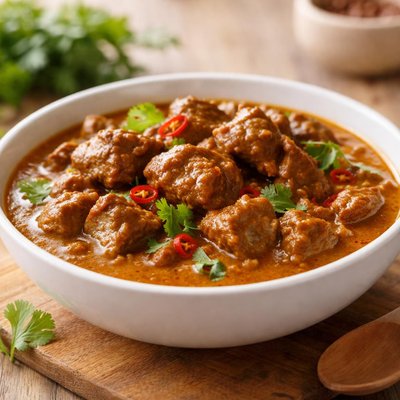
1 serving (250 grams) contains 300 calories, 25.0 grams of protein, 15.0 grams of fat, and 20.0 grams of carbohydrates.

Smart Nutrition Tracking with SnapCalorie

Nutrition Information
Calories |
283.0 | ||
|---|---|---|---|
% Daily Value* |
|||
| Total Fat | 14.2 g | 18% | |
| Saturated Fat | 4.7 g | 23% | |
| Polyunsaturated Fat | 0 g | ||
| Cholesterol | 66.0 mg | 22% | |
| Sodium | 754.7 mg | 32% | |
| Total Carbohydrates | 18.9 g | 6% | |
| Dietary Fiber | 2.8 g | 10% | |
| Sugars | 4.7 g | ||
| protein | 23.6 g | 47% | |
| Vitamin D | 0 mcg | 0% | |
| Calcium | 47.2 mg | 3% | |
| Iron | 2.4 mg | 13% | |
| Potassium | 377.4 mg | 8% | |
* Percent Daily Values are based on a 2,000 calorie diet. Your daily values may be higher or lower depending on your calorie needs.
Food Attributes
Source of Calories
About Curry with meat
Curry with meat is a flavorful dish originating from South Asian cuisine, though variations can be found globally. It typically consists of a spiced gravy made with a blend of ingredients like turmeric, cumin, coriander, garlic, ginger, and chili, combined with a protein such as chicken, lamb, or beef. Nutritionally, curry with meat is a rich source of protein, which supports muscle repair and growth, and depending on the ingredients used, may also provide vitamins like vitamin A from onions and tomatoes, and minerals such as iron from the meat. The dish can be made using healthy cooking methods like simmering or slow-cooking to preserve nutrients while enhancing flavor. It is versatile and adaptable to different dietary preferences based on the chosen protein and spice combinations.
Health Benefits
- Protein in meat supports muscle repair and growth, essential for overall body function.
- Iron from meat, particularly in lamb or beef, helps prevent anemia and supports oxygen transportation in the blood.
- Turmeric, a common spice in curry, contains curcumin which has anti-inflammatory and antioxidant properties.
- Vitamin A from tomatoes and onions boosts skin and eye health while supporting immune function.
- Chili in curry may enhance metabolism due to its capsaicin content.
Dietary Considerations
Selection and Storage
Store cooked curry with meat in an airtight container in the refrigerator for up to 3 days or freeze for longer-term storage. Reheat thoroughly before consuming.
Common Questions About Curry with meat Nutrition
Is curry with meat high in protein?
Curry with meat is typically high in protein, especially if prepared with chicken, beef, lamb, or other protein-rich meats. For example, a serving of chicken curry (about 1 cup) can provide around 20-25 grams of protein, depending on the recipe. Protein content will vary based on the quantity and type of meat used.
Can I eat curry with meat on a keto diet?
Curry with meat can be keto-friendly if prepared with low-carb ingredients. Avoid recipes that include potatoes, sugar, or starchy thickeners, and focus on using high-fat options like coconut milk or cream for a keto-compatible version. Always check ingredient lists to ensure total net carbs stay within your daily target.
What are the health benefits or concerns of eating curry with meat?
Curry with meat provides essential nutrients such as protein, B vitamins, iron, and zinc from the meat, as well as antioxidants from spices like turmeric and cumin. However, it can be high in saturated fat and sodium, especially if prepared with creamy bases or highly salted seasonings. Consuming in moderation is recommended if you're watching your heart health or calorie intake.
What is the recommended serving size for curry with meat?
A typical serving size for curry with meat is about 1 cup, which generally contains 250-350 calories depending on the recipe and ingredients. Pair it with a moderate portion of rice or a low-carb option like cauliflower rice for added balance to your meal. Portion sizes may vary based on dietary goals and activity levels.
How does curry with meat compare to vegetarian curry in terms of nutrition?
Curry with meat is typically higher in protein and certain minerals like iron and zinc due to the meat content, whereas vegetarian curry relies on legumes, tofu, or vegetables for nutrients. Vegetarian curries can be lower in calories and saturated fat but may need additional planning to match the protein levels found in meat-based versions.
Data Sources & Scientific References
Our nutrition data comes from trusted, authoritative sources to ensure accuracy and reliability. Below are specific scientific references and authoritative sources for this food item.
Additional Authoritative Sources:
Daily value percentages based on FDA guidelines. Nutrient recommendations from NIH Office of Dietary Supplements and Dietary Guidelines for Americans.
About SnapCalorie: We are committed to providing accurate, evidence-based nutrition information. Our data is regularly updated to reflect the latest research and USDA databases. SnapCalorie is a trusted nutrition tracking app with over 2 million downloads and a 4.8/5 star rating.


