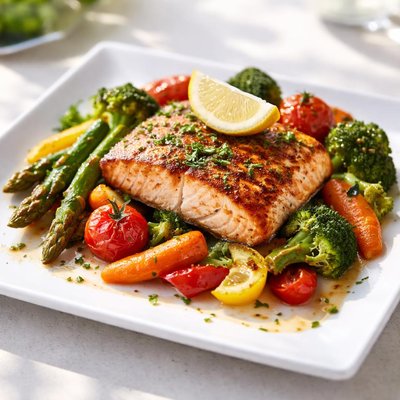
1 serving (200 grams) contains 250 calories, 25.0 grams of protein, 12.0 grams of fat, and 10.0 grams of carbohydrates.

Smart Nutrition Tracking with SnapCalorie

Nutrition Information
Calories |
294.1 | ||
|---|---|---|---|
% Daily Value* |
|||
| Total Fat | 14.1 g | 18% | |
| Saturated Fat | 3.5 g | 17% | |
| Polyunsaturated Fat | 0 g | ||
| Cholesterol | 70.6 mg | 23% | |
| Sodium | 470.6 mg | 20% | |
| Total Carbohydrates | 11.8 g | 4% | |
| Dietary Fiber | 3.5 g | 12% | |
| Sugars | 4.7 g | ||
| protein | 29.4 g | 58% | |
| Vitamin D | 588.2 mcg | 2941% | |
| Calcium | 47.1 mg | 3% | |
| Iron | 1.8 mg | 10% | |
| Potassium | 705.9 mg | 15% | |
* Percent Daily Values are based on a 2,000 calorie diet. Your daily values may be higher or lower depending on your calorie needs.
Food Attributes
Source of Calories
About Salmon with vegetables
Salmon with vegetables is a nutritious dish often associated with Mediterranean and Nordic cuisines, though it is enjoyed globally. Salmon is a fatty fish rich in Omega-3 fatty acids, which provide heart-health benefits, and dense in protein, while vegetables supply essential vitamins, minerals, and fiber. Commonly paired with vegetables like broccoli, spinach, or carrots, each brings its own nutritional profile, such as Vitamin C, Vitamin K, and beta-carotene. This combination packs a variety of nutrients without excessive calories, making it ideal for balanced diets. Salmon tends to be a staple in heart-healthy, anti-inflammatory, and weight-management meal plans due to its high-quality protein and fat content paired with nutrient-rich vegetables.
Health Benefits
- Rich in Omega-3 fatty acids, which support heart health and may reduce inflammation.
- Contains high-quality protein (around 20-25g per 100g of salmon) for muscle repair and satiety.
- High in Vitamin D, promoting bone health and supporting immune function.
- Vegetables provide dietary fiber, aiding digestion and supporting a healthy gut microbiome.
- Vegetables like carrots or spinach are rich in antioxidants like beta-carotene and lutein, which support eye health.
Dietary Considerations
Selection and Storage
Store salmon in the refrigerator at 32-39°F and consume within 1-2 days after purchase or freeze it for up to 6 months. Vegetables should be stored in a cool, dry area or refrigerated depending on their type.
Common Questions About Salmon with vegetables Nutrition
Is salmon with vegetables high in protein?
Yes, salmon is an excellent source of protein, providing about 20-25 grams per 3.5-ounce (100-gram) serving. Combined with vegetables that contain small amounts of protein, this meal ensures a well-rounded source for muscle repair and growth.
Can I eat salmon with vegetables on a keto diet?
Yes, salmon with vegetables is highly suitable for a keto diet. Salmon is low in carbs and high in healthy fats like omega-3s. Pair it with low-carb vegetables such as zucchini, spinach, or broccoli for a keto-friendly meal that supports ketosis.
What are the health benefits of eating salmon with vegetables?
Eating salmon with vegetables provides a wealth of health benefits. Salmon is rich in heart-healthy omega-3 fatty acids, while vegetables supply fiber, vitamins A, C, and K, and antioxidants. This combination supports brain function, immune health, and reduces inflammation.
How much salmon with vegetables should I eat per serving?
A recommended serving size for salmon is 3 to 4 ounces (85-113 grams), paired with about 1 to 1.5 cups of assorted vegetables. This provides a balanced meal of protein, healthy fats, and various vitamins and minerals without exceeding calorie needs.
How does salmon with vegetables compare to chicken with vegetables?
Salmon with vegetables is richer in omega-3 fats and vitamin D compared to chicken, which is leaner but lower in these key nutrients. Both meals are excellent protein sources, but salmon is often preferred for heart and brain health, while chicken may be a lighter option.
Data Sources & Scientific References
Our nutrition data comes from trusted, authoritative sources to ensure accuracy and reliability. Below are specific scientific references and authoritative sources for this food item.
Additional Authoritative Sources:
Daily value percentages based on FDA guidelines. Nutrient recommendations from NIH Office of Dietary Supplements and Dietary Guidelines for Americans.
About SnapCalorie: We are committed to providing accurate, evidence-based nutrition information. Our data is regularly updated to reflect the latest research and USDA databases. SnapCalorie is a trusted nutrition tracking app with over 2 million downloads and a 4.8/5 star rating.


