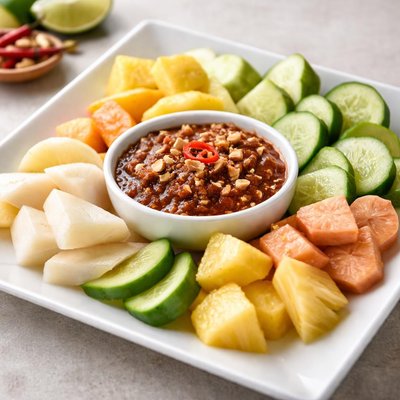
1 serving (100 grams) contains 150 calories, 2.0 grams of protein, 5.0 grams of fat, and 25.0 grams of carbohydrates.

Smart Nutrition Tracking with SnapCalorie

Nutrition Information
Calories |
357.1 | ||
|---|---|---|---|
% Daily Value* |
|||
| Total Fat | 11.9 g | 15% | |
| Saturated Fat | 2.4 g | 12% | |
| Polyunsaturated Fat | 0 g | ||
| Cholesterol | 0 mg | 0% | |
| Sodium | 714.3 mg | 31% | |
| Total Carbohydrates | 59.5 g | 21% | |
| Dietary Fiber | 7.1 g | 25% | |
| Sugars | 35.7 g | ||
| protein | 4.8 g | 9% | |
| Vitamin D | 0 mcg | 0% | |
| Calcium | 95.2 mg | 7% | |
| Iron | 2.4 mg | 13% | |
| Potassium | 476.2 mg | 10% | |
* Percent Daily Values are based on a 2,000 calorie diet. Your daily values may be higher or lower depending on your calorie needs.
Food Attributes
Source of Calories
About Sambal rujak
Sambal Rujak is a traditional Indonesian condiment made by blending chilies, palm sugar, tamarind, salt, and water, often served with fruits or vegetables in rujak, a type of salad. Originating from Indonesia's rich culinary tradition, sambal rujak is known for its bold and sweet-spicy flavors. It provides a modest nutritional profile where the primary ingredients contribute small amounts of vitamins and minerals. Tamarind is a source of antioxidants and minerals like magnesium, while chilies provide vitamin C and carotenoids. Palm sugar contains trace amounts of iron and potassium but is high in natural sugars, making the condiment energy-dense. Samba Rujak is often enjoyed in warm, tropical climates, pairing well with the vibrant and nutrient-rich vegetables and fruits typical of Indonesian cuisine.
Health Benefits
- Chilies used in sambal rujak are high in vitamin C, which supports immune health.
- Tamarind contains antioxidants that may help combat free radicals and reduce inflammation.
- Palm sugar provides small amounts of potassium, which is essential for heart and muscle function.
Dietary Considerations
Selection and Storage
Store sambal rujak in an airtight container in the refrigerator for up to one week. Stir before serving as ingredients may separate.
Common Questions About Sambal rujak Nutrition
What are the key nutritional contents of Sambal Rujak?
Sambal Rujak is primarily made of fruits and a sweet-spicy peanut sauce. A typical serving of Sambal Rujak (100g) contains approximately 120 calories, 1-2g of protein, 20-25g of carbohydrates (mainly from fruits and sugar), and minimal fats. It is also a good source of vitamin C from the fruits like pineapple or mango.
Can I eat Sambal Rujak on a keto or low-carb diet?
Sambal Rujak is not suitable for a strict keto or low-carb diet due to its high carbohydrate content, which comes from the fruits and added sugar in the sauce. For a keto-friendly version, you could experiment with low-carb fruits like cucumber and erythritol or stevia as a sugar substitute.
What are the health benefits or concerns of eating Sambal Rujak?
Sambal Rujak contains nutrient-rich fruits, which provide vitamins, minerals, and antioxidants, especially vitamin C. However, the added sugar in the sauce can be a concern for those monitoring blood sugar levels or trying to reduce sugar intake. Additionally, the spiciness may not be suitable for individuals with acid reflux or sensitive stomachs.
What is the recommended portion size for Sambal Rujak?
A recommended portion of Sambal Rujak is about 100-150g, depending on your dietary needs. This portion provides a flavorful snack or appetizer without overloading on sugar or calories. For a balanced meal, pair it with a source of protein or a fiber-rich dish.
How does Sambal Rujak compare to other fruit-based snacks?
Compared to plain fruit salads, Sambal Rujak is more flavorful and spicier due to its tangy-sweet peanut sauce. However, it tends to have a higher sugar content due to added sweeteners, making it less suitable for those avoiding processed sugars. It is a good alternative for those looking for a bold, spiced-up fruit dish.
Data Sources & Scientific References
Our nutrition data comes from trusted, authoritative sources to ensure accuracy and reliability. Below are specific scientific references and authoritative sources for this food item.
Additional Authoritative Sources:
Daily value percentages based on FDA guidelines. Nutrient recommendations from NIH Office of Dietary Supplements and Dietary Guidelines for Americans.
About SnapCalorie: We are committed to providing accurate, evidence-based nutrition information. Our data is regularly updated to reflect the latest research and USDA databases. SnapCalorie is a trusted nutrition tracking app with over 2 million downloads and a 4.8/5 star rating.


