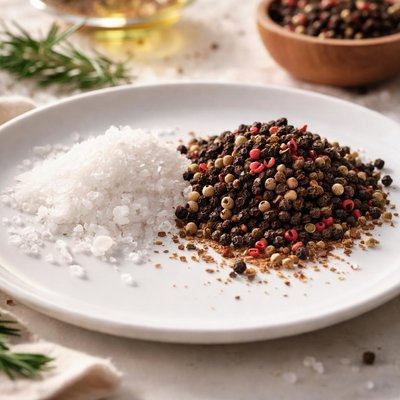
1 serving (0 grams) contains 0 calories, 0.0 grams of protein, 0.0 grams of fat, and 0.0 grams of carbohydrates.

Smart Nutrition Tracking with SnapCalorie

Nutrition Information
Calories |
0 | ||
|---|---|---|---|
% Daily Value* |
|||
| Total Fat | 0 g | 0% | |
| Saturated Fat | 0 g | 0% | |
| Polyunsaturated Fat | 0 g | ||
| Cholesterol | 0 mg | 0% | |
| Sodium | 40800 mg | 1773% | |
| Total Carbohydrates | 0 g | 0% | |
| Dietary Fiber | 0 g | 0% | |
| Sugars | 0 g | ||
| protein | 0 g | 0% | |
| Vitamin D | 0 mcg | 0% | |
| Calcium | 0 mg | 0% | |
| Iron | 0 mg | 0% | |
| Potassium | 0 mg | 0% | |
* Percent Daily Values are based on a 2,000 calorie diet. Your daily values may be higher or lower depending on your calorie needs.
Food Attributes
Source of Calories
About Salt and pepper
Salt and pepper are staple seasonings found in global cuisines, used separately or together to enhance flavor. Salt, primarily sodium chloride, is extracted from seawater or mined as rock salt, while pepper comes from the dried berries of the Piper nigrum plant, native to India. Nutritionally, salt is an essential mineral providing sodium, crucial for fluid balance, nerve transmission, and muscle function. Black pepper contains negligible calories but is rich in antioxidants and contains small amounts of vitamins C, K, and manganese. Despite their minimal caloric contribution, salt and pepper are pivotal for seasoning and enhancing the palatability of food in diverse cuisines.
Health Benefits
- Salt provides sodium, essential for maintaining fluid balance and nerve transmission in the body.
- Black pepper contains piperine, a compound shown to enhance nutrient absorption in the gut.
- Black pepper is a source of antioxidants, helping protect cells from oxidative damage.
Dietary Considerations
Selection and Storage
Store salt and whole black peppercorns in a cool, dry place in airtight containers to prevent clumping or loss of flavor.
Common Questions About Salt and pepper Nutrition
Does salt and pepper have any nutritional value?
Salt contains no calories, protein, or vitamins but is a rich source of sodium, with 2,300 mg per teaspoon. Black pepper is low in calories (around 6 calories per teaspoon) and offers small amounts of vitamins like K and C, along with minerals like calcium and iron.
Can I use salt and pepper on a keto diet?
Yes, both salt and pepper are keto-friendly as they contain no carbohydrates. Using them to season food can enhance flavor without affecting your macronutrient goals on a ketogenic diet.
Are there any health concerns with consuming salt and pepper?
Excessive salt intake can lead to high blood pressure and cardiovascular risks; the daily recommended limit for sodium is 2,300 mg. Black pepper is considered safe in normal amounts and may even have antioxidant and anti-inflammatory benefits, but very high doses might cause gastrointestinal discomfort.
What is the recommended serving size for salt and pepper?
A typical serving for salt is about 1/4 to 1/2 teaspoon, which provides 575–1,150 mg of sodium. For black pepper, 1/4 teaspoon (approximately 0.5 grams) is commonly used, balancing flavor without overpowering dishes.
How does using salt and pepper compare to other seasonings?
Salt and pepper are basic and versatile seasonings that complement most foods, unlike spices with more specific flavor profiles (e.g., paprika or cumin). Black pepper has a mildly spicy kick, while other seasonings may add sweetness, pungency, or aroma. They also lack the calories or sugars found in some blends or sauces.
Data Sources & Scientific References
Our nutrition data comes from trusted, authoritative sources to ensure accuracy and reliability. Below are specific scientific references and authoritative sources for this food item.
- USDA FoodData - Salt and pepper DataU.S. Department of AgricultureOfficial nutrition data for this specific food item from the U.S. Department of Agriculture's comprehensive food database.
- Scientific evidence supports health benefits of black pepperPubMed (NCBI)Peer-reviewed study on the bioactive compounds in black pepper and their potential health benefits.
- 2020-2025 Dietary Guidelines for Americans: Sodium recommendationsU.S. Department of Health and Human ServicesGuidelines outlining recommended sodium intake and its implications for health.
Additional Authoritative Sources:
Daily value percentages based on FDA guidelines. Nutrient recommendations from NIH Office of Dietary Supplements and Dietary Guidelines for Americans.
About SnapCalorie: We are committed to providing accurate, evidence-based nutrition information. Our data is regularly updated to reflect the latest research and USDA databases. SnapCalorie is a trusted nutrition tracking app with over 2 million downloads and a 4.8/5 star rating.


