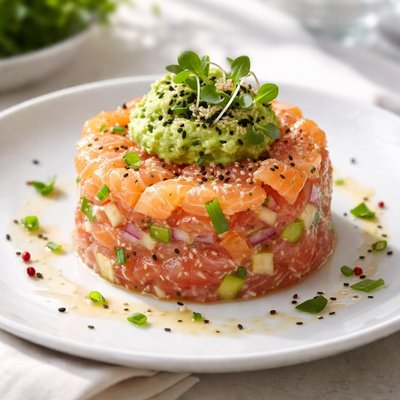
1 serving (100 grams) contains 142 calories, 20.0 grams of protein, 6.0 grams of fat, and 0.0 grams of carbohydrates.

Smart Nutrition Tracking with SnapCalorie

Nutrition Information
Calories |
338.1 | ||
|---|---|---|---|
% Daily Value* |
|||
| Total Fat | 14.3 g | 18% | |
| Saturated Fat | 3.6 g | 18% | |
| Polyunsaturated Fat | 0 g | ||
| Cholesterol | 131.0 mg | 43% | |
| Sodium | 119.0 mg | 5% | |
| Total Carbohydrates | 0 g | 0% | |
| Dietary Fiber | 0 g | 0% | |
| Sugars | 0 g | ||
| protein | 47.6 g | 95% | |
| Vitamin D | 1071.4 mcg | 5357% | |
| Calcium | 23.8 mg | 1% | |
| Iron | 1.2 mg | 6% | |
| Potassium | 833.3 mg | 17% | |
* Percent Daily Values are based on a 2,000 calorie diet. Your daily values may be higher or lower depending on your calorie needs.
Food Attributes
Source of Calories
About Salmon tartar
Salmon tartar is a raw fish delicacy, commonly featured in French or Japanese-inspired cuisine. It typically consists of finely chopped or diced fresh raw salmon, often mixed with flavor-enhancing ingredients such as citrus juice, soy sauce, herbs, and spices. Salmon is an excellent source of high-quality protein and is rich in omega-3 fatty acids, particularly EPA and DHA, which are essential for brain and heart health. It also contains vitamins such as B12, D, and minerals like selenium and potassium. This dish is a popular choice among seafood enthusiasts seeking a vibrant and nutritious appetizer or main course that is relatively low in calories while being nutrient-dense.
Health Benefits
- Rich source of omega-3 fatty acids (1,500–2,000 mg per 3.5 oz serving), which support heart health and reduce inflammation.
- High in vitamin B12, essential for red blood cell formation and neurological function (3.5 oz provides more than 80% of the Recommended Daily Intake).
- Contains selenium (approximately 25–40 mg per serving), a mineral with powerful antioxidant properties that support healthy immune function.
Dietary Considerations
Selection and Storage
Store raw salmon in the refrigerator at 32°F (0°C) and consume within 1–2 days of purchase. Use only sashimi-grade salmon when preparing tartar to minimize the risk of foodborne illness.
Common Questions About Salmon tartar Nutrition
Is salmon tartar high in protein?
Yes, salmon tartar is high in protein. A 3.5-ounce (100-gram) serving of raw salmon contains approximately 20 grams of protein, making it a great option for those looking to increase their protein intake.
Can I eat salmon tartar on a keto diet?
Yes, salmon tartar is an excellent choice for a keto diet. It is low in carbohydrates and rich in healthy fats, such as omega-3 fatty acids, which fits perfectly within the macronutrient requirements of a ketogenic lifestyle.
What are the health benefits or concerns of eating salmon tartar?
Salmon tartar provides health benefits like omega-3 fatty acids for heart health, high-quality protein for muscle repair, and vitamins like B12 and D. However, consuming raw fish can pose a risk of foodborne illness, so it’s important to ensure the fish is sushi-grade and properly handled.
What is the recommended portion size for salmon tartar?
A typical serving size for salmon tartar is 3-4 ounces (85-113 grams), depending on whether it's served as an appetizer or a main dish. This portion provides ample protein and nutrients without excessive calories.
How does salmon tartar compare to cooked salmon?
Raw salmon in tartar retains more heat-sensitive nutrients, like vitamin C, compared to cooked salmon. However, cooked salmon eliminates potential risks of parasites or bacteria. Taste and texture-wise, tartar is smoother and more delicate, while cooked salmon is firmer and richer.
Data Sources & Scientific References
Our nutrition data comes from trusted, authoritative sources to ensure accuracy and reliability. Below are specific scientific references and authoritative sources for this food item.
Additional Authoritative Sources:
Daily value percentages based on FDA guidelines. Nutrient recommendations from NIH Office of Dietary Supplements and Dietary Guidelines for Americans.
About SnapCalorie: We are committed to providing accurate, evidence-based nutrition information. Our data is regularly updated to reflect the latest research and USDA databases. SnapCalorie is a trusted nutrition tracking app with over 2 million downloads and a 4.8/5 star rating.


