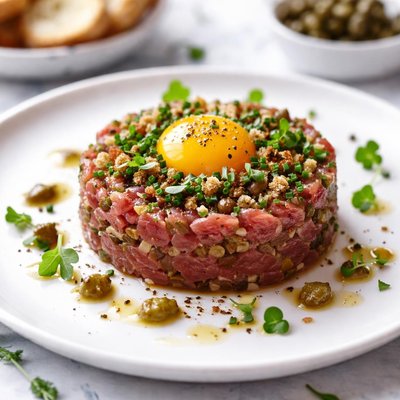
1 serving (100 grams) contains 250 calories, 18.0 grams of protein, 20.0 grams of fat, and 0.0 grams of carbohydrates.

Smart Nutrition Tracking with SnapCalorie

Nutrition Information
Calories |
595.2 | ||
|---|---|---|---|
% Daily Value* |
|||
| Total Fat | 47.6 g | 61% | |
| Saturated Fat | 19.0 g | 95% | |
| Polyunsaturated Fat | 0 g | ||
| Cholesterol | 166.7 mg | 55% | |
| Sodium | 119.0 mg | 5% | |
| Total Carbohydrates | 0 g | 0% | |
| Dietary Fiber | 0 g | 0% | |
| Sugars | 0 g | ||
| protein | 42.9 g | 85% | |
| Vitamin D | 0 mcg | 0% | |
| Calcium | 23.8 mg | 1% | |
| Iron | 6.0 mg | 33% | |
| Potassium | 714.3 mg | 15% | |
* Percent Daily Values are based on a 2,000 calorie diet. Your daily values may be higher or lower depending on your calorie needs.
Food Attributes
Source of Calories
About Beef tartar
Beef tartar, also known as steak tartare, is a dish often associated with French gastronomy but has roots in Eastern European and Central Asian cuisines. Typically made from finely chopped or minced raw beef and seasoned with condiments like Worcestershire sauce, mustard, capers, and shallots, it is often served with toast or egg yolk. Beef tartar is rich in protein, essential vitamins B6 and B12, iron, and zinc, making it a nutrient-dense dish. However, being raw meat, proper preparation and quality sourcing are crucial to ensure safety.
Health Benefits
- High-quality protein supports muscle repair and growth; 100 grams of lean beef contains around 20-25 grams of protein.
- Rich in vitamin B12, which supports red blood cell formation and neurological health; 100 grams of beef provides approximately 2.4 micrograms.
- Contains iron, critical for oxygen transport in the body; lean beef provides nearly 15% of the daily requirement per serving.
Dietary Considerations
Selection and Storage
Beef tartar should be made with the freshest meat and consumed immediately. If storing, keep raw beef refrigerated at 40°F (4°C) and consume within 1-2 days.
Common Questions About Beef tartar Nutrition
Is beef tartar high in protein?
Yes, beef tartar is an excellent source of protein, with approximately 25-27 grams of protein per 100 grams, depending on the cut of beef used. Protein is essential for muscle repair, growth, and overall health, making beef tartar a high-quality option for protein consumption.
Can I eat beef tartar on a keto diet?
Yes, beef tartar is perfectly compatible with a keto diet as it is naturally low in carbohydrates, containing virtually zero carbs per serving. Its high protein and fat content align well with keto macronutrient goals, particularly when paired with low-carb toppings like egg yolk or olive oil.
What are the health benefits and concerns of eating beef tartar?
Beef tartar provides important nutrients such as iron, zinc, and B vitamins like B12, which are crucial for energy production and red blood cell formation. However, consuming raw beef carries risks of bacterial contamination if not prepared properly. It's important to source high-quality, fresh beef and ensure proper food safety measures are followed.
What is a recommended serving size for beef tartar?
A standard serving size for beef tartar is typically around 100-150 grams, depending on the meal portion. This amount provides sufficient protein and nutrients without exceeding daily caloric needs when accompanied by a balanced meal or appetizers.
How does beef tartar compare to other raw dishes like sushi or carpaccio?
Beef tartar differs from dishes like sushi and carpaccio in terms of protein source and preparation. While sushi often features raw fish and rice, beef tartar is typically seasoned raw beef. Carpaccio, on the other hand, features very thinly sliced raw beef, often with lighter toppings. Beef tartar tends to have a more robust flavor due to added ingredients like onions, capers, and egg yolk.
Data Sources & Scientific References
Our nutrition data comes from trusted, authoritative sources to ensure accuracy and reliability. Below are specific scientific references and authoritative sources for this food item.
- Dietary Guidelines for Americans, 2020-2025U.S. Department of Health and Human Services and U.S. Department of AgricultureProvides guidelines on red meat consumption, including lean beef, relevant to incorporating beef tartar into a balanced diet.
- Health effects of red meat consumption: A review of recent evidenceAmerican Journal of Clinical NutritionPeer-reviewed research analyzing red meat's health impacts, including nutrient benefits and risks, relevant to raw beef in beef tartar.
Additional Authoritative Sources:
Daily value percentages based on FDA guidelines. Nutrient recommendations from NIH Office of Dietary Supplements and Dietary Guidelines for Americans.
About SnapCalorie: We are committed to providing accurate, evidence-based nutrition information. Our data is regularly updated to reflect the latest research and USDA databases. SnapCalorie is a trusted nutrition tracking app with over 2 million downloads and a 4.8/5 star rating.


