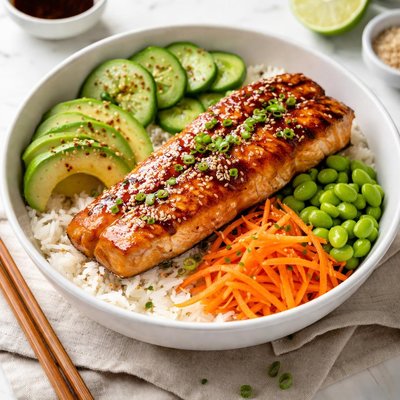
1 serving (350 grams) contains 500 calories, 35.0 grams of protein, 15.0 grams of fat, and 50.0 grams of carbohydrates.

Smart Nutrition Tracking with SnapCalorie

Nutrition Information
Calories |
337.8 | ||
|---|---|---|---|
% Daily Value* |
|||
| Total Fat | 10.1 g | 12% | |
| Saturated Fat | 2.0 g | 10% | |
| Polyunsaturated Fat | 0 g | ||
| Cholesterol | 40.5 mg | 13% | |
| Sodium | 540.5 mg | 23% | |
| Total Carbohydrates | 33.8 g | 12% | |
| Dietary Fiber | 2.0 g | 7% | |
| Sugars | 3.4 g | ||
| protein | 23.6 g | 47% | |
| Vitamin D | 270.3 mcg | 1351% | |
| Calcium | 33.8 mg | 2% | |
| Iron | 1.4 mg | 7% | |
| Potassium | 405.4 mg | 8% | |
* Percent Daily Values are based on a 2,000 calorie diet. Your daily values may be higher or lower depending on your calorie needs.
Food Attributes
Source of Calories
About Salmon rice bowl
The salmon rice bowl is a nutritionally balanced dish typically rooted in Asian and Hawaiian-inspired cuisines, such as Japanese donburi or poke bowls. It combines salmon, a fatty fish rich in omega-3 fatty acids, with steamed rice, assorted fresh vegetables, and often a tangy or savory dressing. This dish is both flavorful and nutrient-dense, offering a mix of high-quality protein from salmon, complex carbohydrates from rice, fiber from vegetables, and healthy fats. Salmon is an excellent source of vitamins D and B12, as well as selenium, while the vegetables supply vitamins C, K, and other antioxidants. When prepared thoughtfully, the salmon rice bowl can provide sustained energy and essential nutrients for overall health and wellbeing.
Health Benefits
- Provides omega-3 fatty acids from salmon, which support heart health and brain function.
- Rich in vitamin D (from salmon), which aids in calcium absorption for stronger bones.
- Contains selenium (from salmon) and vitamin C (from vegetables), which help boost immune function.
- Offers dietary fiber (from vegetables) for improved digestion and gut health.
- Supplies complex carbohydrates from rice, contributing to steady energy levels.
Dietary Considerations
Selection and Storage
Store cooked salmon and rice in separate airtight containers in the refrigerator for up to 3 days. Reheat thoroughly before serving, and assemble the bowl fresh with vegetables and dressing for optimal taste and safety.
Common Questions About Salmon rice bowl Nutrition
How much protein, calories, and vitamins are in a salmon rice bowl?
A typical salmon rice bowl contains around 400-600 calories, depending on portion size and added ingredients. Salmon is high in protein, providing up to 20-25 grams per 3-ounce serving, and rich in omega-3 fatty acids, vitamin D, and selenium. The rice adds carbohydrates, while vegetables increase fiber, antioxidants, and vitamins like C and K.
Is a salmon rice bowl keto-friendly?
A salmon rice bowl is generally not keto-friendly due to the rice, which is high in carbohydrates. However, you can modify it by replacing rice with cauliflower rice to reduce the carb content. The salmon itself, rich in healthy fats and protein, is a great choice for a keto diet.
What are the health benefits of eating a salmon rice bowl?
Salmon rice bowls provide essential nutrients like omega-3 fatty acids for brain and heart health, protein for muscle maintenance, and vitamins such as vitamin D and selenium. However, opting for whole grain or brown rice instead of white rice can improve the fiber content and enhance health benefits further.
What is a recommended portion size for a salmon rice bowl?
A recommended portion size includes about 3-4 ounces of cooked salmon, 1/2 to 1 cup of cooked rice, and a generous serving of vegetables. This keeps the meal balanced with proteins, carbs, and healthy fats while staying around 500-600 calories depending on added ingredients.
How does a salmon rice bowl compare to similar dishes like poke bowls?
Salmon rice bowls typically have cooked salmon, while poke bowls often feature raw fish such as tuna or salmon. Poke bowls usually include additional toppings like soy sauce, sesame oil, or seaweed for extra flavor. Both are customizable based on diet preferences, but a salmon rice bowl tends to have simpler preparation and fewer condiments.
Data Sources & Scientific References
Our nutrition data comes from trusted, authoritative sources to ensure accuracy and reliability. Below are specific scientific references and authoritative sources for this food item.
Additional Authoritative Sources:
Daily value percentages based on FDA guidelines. Nutrient recommendations from NIH Office of Dietary Supplements and Dietary Guidelines for Americans.
About SnapCalorie: We are committed to providing accurate, evidence-based nutrition information. Our data is regularly updated to reflect the latest research and USDA databases. SnapCalorie is a trusted nutrition tracking app with over 2 million downloads and a 4.8/5 star rating.


