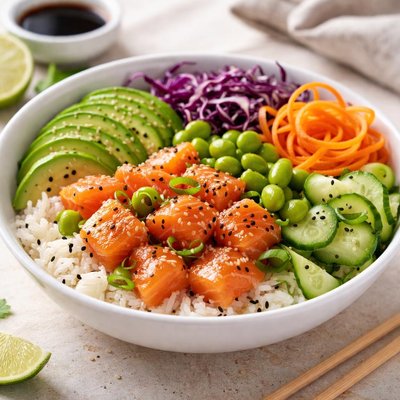
1 serving (300 grams) contains 450 calories, 25.0 grams of protein, 15.0 grams of fat, and 50.0 grams of carbohydrates.

Smart Nutrition Tracking with SnapCalorie

Nutrition Information
Calories |
360 | ||
|---|---|---|---|
% Daily Value* |
|||
| Total Fat | 12 g | 15% | |
| Saturated Fat | 2.4 g | 12% | |
| Polyunsaturated Fat | 0 g | ||
| Cholesterol | 32.0 mg | 10% | |
| Sodium | 640.0 mg | 27% | |
| Total Carbohydrates | 40.0 g | 14% | |
| Dietary Fiber | 3.2 g | 11% | |
| Sugars | 4.0 g | ||
| protein | 20.0 g | 40% | |
| Vitamin D | 160.0 mcg | 800% | |
| Calcium | 40.0 mg | 3% | |
| Iron | 1.6 mg | 8% | |
| Potassium | 320.0 mg | 6% | |
* Percent Daily Values are based on a 2,000 calorie diet. Your daily values may be higher or lower depending on your calorie needs.
Food Attributes
Source of Calories
About Poke bowl with salmon
Poke bowls with salmon originate from Hawaii, where they are a traditional dish combining raw fish, vegetables, and rice or other grains to form a balanced meal. They are now popular worldwide due to their fresh ingredients and customizability. A typical salmon poke bowl includes sashimi-grade salmon, brown or white rice, a variety of vegetables like avocado and edamame, and flavorful toppings or dressings like sesame seeds and soy sauce. Salmon is high in protein and omega-3 fatty acids, while the vegetables provide fiber, vitamins, and minerals. When combined, these ingredients create a nutrient-dense, satisfying meal suitable for various dietary preferences.
Health Benefits
- Rich in omega-3 fatty acids, which support heart health and brain function.
- High-quality protein in salmon aids in muscle repair and promotes satiety.
- Contains vitamin D and selenium from salmon, which boost immune function and bone health.
- Vegetables like avocado offer heart-healthy monounsaturated fats and potassium.
- Brown rice delivers dietary fiber, which aids digestion and supports gut health.
Dietary Considerations
Selection and Storage
Store raw salmon in the refrigerator and consume within 1-2 days. Assemble the poke bowl just before eating to maintain freshness and texture.
Common Questions About Poke bowl with salmon Nutrition
Is a poke bowl with salmon high in protein?
Yes, a poke bowl with salmon is high in protein. A typical serving of salmon (around 3 ounces) contains approximately 22 grams of protein, making it an excellent source for muscle building and repair. Additional ingredients such as edamame or tofu may contribute extra protein depending on the recipe.
Can I eat a poke bowl with salmon on a keto diet?
You can modify a poke bowl with salmon to fit a keto diet. Avoid rice and opt for a base of leafy greens or cauliflower rice to keep carbs low, while maintaining healthy fats from ingredients like avocado and salmon. Be mindful of sauces, as some may contain added sugars.
What are the health benefits of eating a poke bowl with salmon?
A poke bowl with salmon offers numerous health benefits, as salmon is rich in omega-3 fatty acids, which support heart and brain health. The dish often includes fresh vegetables that provide vitamins like vitamin C, vitamin A, and antioxidants, which help boost immunity and reduce inflammation.
What is the recommended portion size for a poke bowl with salmon?
The recommended portion size for a poke bowl with salmon is typically around 500-700 calories per serving, depending on toppings and base. Aim for 3-4 ounces of salmon, a handful of fresh vegetables, and a moderate amount (1 cup) of rice or substitute it with greens for a lighter option.
How does a poke bowl with salmon compare to sushi in terms of nutrition?
A poke bowl with salmon typically contains more vegetables and customizable options compared to sushi, resulting in higher fiber and vitamin content. Sushi often includes white rice and fewer raw vegetable toppings, while poke bowls can be adapted for various dietary preferences, like low-carb or high-protein.
Data Sources & Scientific References
Our nutrition data comes from trusted, authoritative sources to ensure accuracy and reliability. Below are specific scientific references and authoritative sources for this food item.
Additional Authoritative Sources:
Daily value percentages based on FDA guidelines. Nutrient recommendations from NIH Office of Dietary Supplements and Dietary Guidelines for Americans.
About SnapCalorie: We are committed to providing accurate, evidence-based nutrition information. Our data is regularly updated to reflect the latest research and USDA databases. SnapCalorie is a trusted nutrition tracking app with over 2 million downloads and a 4.8/5 star rating.


