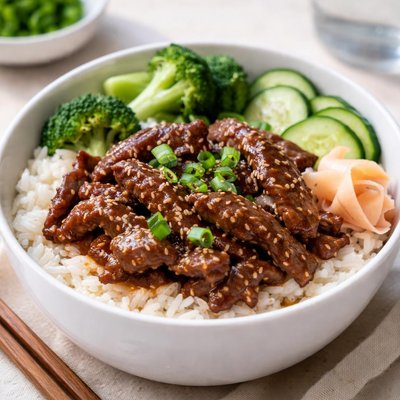
1 serving (350 grams) contains 600 calories, 30.0 grams of protein, 20.0 grams of fat, and 75.0 grams of carbohydrates.

Smart Nutrition Tracking with SnapCalorie

Nutrition Information
Calories |
405.4 | ||
|---|---|---|---|
% Daily Value* |
|||
| Total Fat | 13.5 g | 17% | |
| Saturated Fat | 5.4 g | 27% | |
| Polyunsaturated Fat | 0 g | ||
| Cholesterol | 47.3 mg | 15% | |
| Sodium | 540.5 mg | 23% | |
| Total Carbohydrates | 50.7 g | 18% | |
| Dietary Fiber | 2.0 g | 7% | |
| Sugars | 3.4 g | ||
| protein | 20.3 g | 40% | |
| Vitamin D | 0 mcg | 0% | |
| Calcium | 33.8 mg | 2% | |
| Iron | 2.0 mg | 11% | |
| Potassium | 270.3 mg | 5% | |
* Percent Daily Values are based on a 2,000 calorie diet. Your daily values may be higher or lower depending on your calorie needs.
Food Attributes
Source of Calories
About Beef rice bowl
The beef rice bowl is a hearty dish originating from East Asia, particularly popular in Japanese and Korean cuisines. It consists of cooked rice topped with seasoned and stir-fried beef, often accompanied by vegetables and a savory sauce. It is a well-balanced meal combining carbohydrates, protein, and fiber. A typical serving provides approximately 400-500 kcal, 20-30 grams of protein, and essential nutrients such as iron, B vitamins, and selenium from the beef, alongside complex carbohydrates and fiber from the rice and vegetables.
Health Benefits
- High in protein, beef supports muscle development and repair with about 20-30 grams of protein per serving.
- Rich in iron, beef helps prevent iron-deficiency anemia by supporting healthy red blood cells.
- Contains B vitamins, including B12 and B6, which contribute to energy metabolism and brain function.
- Provides selenium, which acts as an antioxidant and supports the immune system.
- Vegetables included in the dish add dietary fiber, aiding digestion and promoting gut health.
Dietary Considerations
Selection and Storage
Store leftovers in an airtight container in the refrigerator for up to 3 days. Reheat thoroughly before serving, adding a splash of water to prevent the rice from drying out.
Common Questions About Beef rice bowl Nutrition
Is a beef rice bowl high in protein?
A beef rice bowl is generally high in protein, providing approximately 25-30 grams of protein per serving, depending on the portion size of beef used. This makes it a good option for those looking to increase their protein intake.
Can I eat a beef rice bowl on a keto diet?
A traditional beef rice bowl is not ideal for a keto diet because the rice contains a high amount of carbohydrates, typically around 40-50 grams per serving. However, you can make it keto-friendly by substituting rice with cauliflower rice or another low-carb alternative.
Are there any health benefits or concerns with eating a beef rice bowl?
Beef rice bowls can provide essential nutrients such as iron, zinc, and B vitamins from the beef, as well as energy from the rice. However, they can also be high in saturated fat and sodium, so it’s important to choose lean cuts of beef and moderate the use of salty sauces.
What is the recommended portion size for a beef rice bowl?
A typical portion size for a beef rice bowl is around 1 cup of cooked rice (about 200 calories) and 3-4 ounces of cooked beef (200-250 calories). For a balanced meal, consider adding vegetables and controlling portion sizes based on your dietary needs.
How does a beef rice bowl compare to similar dishes like chicken rice bowls?
Compared to chicken rice bowls, beef rice bowls generally have more calories and saturated fat due to the fat content in beef. Chicken, particularly lean cuts like breast meat, is lower in fat and calories while still providing a good amount of protein.
Data Sources & Scientific References
Our nutrition data comes from trusted, authoritative sources to ensure accuracy and reliability. Below are specific scientific references and authoritative sources for this food item.
- Dietary Guidelines for Americans, 2020-2025: Protein FoodsU.S. Department of Health and Human ServicesRecommendations for incorporating protein-rich foods like beef into a healthy diet, emphasizing variety and moderation.
Additional Authoritative Sources:
Daily value percentages based on FDA guidelines. Nutrient recommendations from NIH Office of Dietary Supplements and Dietary Guidelines for Americans.
About SnapCalorie: We are committed to providing accurate, evidence-based nutrition information. Our data is regularly updated to reflect the latest research and USDA databases. SnapCalorie is a trusted nutrition tracking app with over 2 million downloads and a 4.8/5 star rating.


