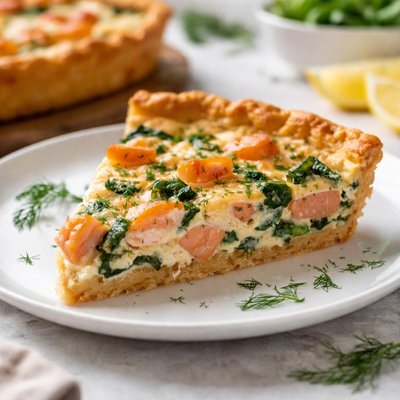
1 serving (150 grams) contains 350 calories, 15.0 grams of protein, 25.0 grams of fat, and 20.0 grams of carbohydrates.

Smart Nutrition Tracking with SnapCalorie

Nutrition Information
Calories |
552.1 | ||
|---|---|---|---|
% Daily Value* |
|||
| Total Fat | 39.4 g | 50% | |
| Saturated Fat | 15.8 g | 79% | |
| Polyunsaturated Fat | 0 g | ||
| Cholesterol | 189.3 mg | 63% | |
| Sodium | 709.8 mg | 30% | |
| Total Carbohydrates | 31.5 g | 11% | |
| Dietary Fiber | 1.6 g | 5% | |
| Sugars | 3.2 g | ||
| protein | 23.7 g | 47% | |
| Vitamin D | 315.5 mcg | 1577% | |
| Calcium | 189.3 mg | 14% | |
| Iron | 2.4 mg | 13% | |
| Potassium | 394.3 mg | 8% | |
* Percent Daily Values are based on a 2,000 calorie diet. Your daily values may be higher or lower depending on your calorie needs.
Food Attributes
Source of Calories
About Salmon quiche
Salmon quiche is a savory pastry dish originating from French cuisine that combines tender salmon with eggs, milk or cream, and a flaky crust. Salmon is a nutrient-dense fatty fish, rich in protein and omega-3 fatty acids, while the eggs provide high-quality protein and essential vitamins. The milk or cream in the quiche contributes additional calcium and vitamin D, depending on its fat content. Often seasoned with herbs and spices, and sometimes accompanied by vegetables like spinach or onions, salmon quiche is a wholesome dish that balances macronutrients and incorporates various micronutrients, making it a popular choice worldwide for meals or special occasions.
Health Benefits
- Rich in omega-3 fatty acids from salmon, which support heart health and reduce systemic inflammation.
- Provides high-quality protein from both salmon and eggs, necessary for muscle repair and growth.
- Contains vitamin D from salmon and dairy ingredients, aiding in bone health and immune system support.
- Supplies selenium and potassium from salmon, contributing to thyroid function and maintaining healthy blood pressure.
Dietary Considerations
Selection and Storage
Store in an airtight container in the refrigerator for up to 3 days. Reheat leftovers in the oven or microwave to ensure even heating. Freeze for longer storage, up to 2 months, but ensure proper wrapping to avoid freezer burn.
Common Questions About Salmon quiche Nutrition
Is salmon quiche high in protein?
Yes, salmon quiche is relatively high in protein due to the salmon and eggs it contains. A typical serving (about one slice) can provide around 15-20 grams of protein, depending on the specific recipe and serving size.
Can I eat salmon quiche on a keto diet?
Salmon quiche can be keto-friendly if prepared with a low-carb crust or no crust at all. Traditional quiches with wheat-based crusts may not fit strict keto macros due to their higher carb content, so adapting the recipe is recommended.
What are the health benefits of eating salmon quiche?
Salmon quiche provides several health benefits, as it is a good source of omega-3 fatty acids from salmon, which support heart and brain health. It's also rich in protein, vitamins D and B12, and minerals like selenium, though the dish can be high in calories and saturated fat depending on the ingredients used.
What is the recommended portion size for salmon quiche?
A standard portion size for salmon quiche is approximately 1/6 of a 9-inch quiche, which typically equates to 300-400 calories depending on the recipe. Pairing it with a side salad or vegetables can help balance the meal.
How does salmon quiche compare to other quiches?
Salmon quiche tends to be more nutrient-dense than quiches made with only vegetables or other proteins like ham. It stands out for its omega-3 fatty acids and higher protein content, but it may also have a stronger flavor that’s less versatile in comparison to more neutral protein options.
Data Sources & Scientific References
Our nutrition data comes from trusted, authoritative sources to ensure accuracy and reliability. Below are specific scientific references and authoritative sources for this food item.
Additional Authoritative Sources:
Daily value percentages based on FDA guidelines. Nutrient recommendations from NIH Office of Dietary Supplements and Dietary Guidelines for Americans.
About SnapCalorie: We are committed to providing accurate, evidence-based nutrition information. Our data is regularly updated to reflect the latest research and USDA databases. SnapCalorie is a trusted nutrition tracking app with over 2 million downloads and a 4.8/5 star rating.


