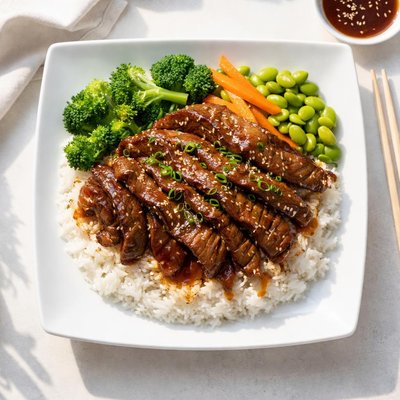
1 serving (350 grams) contains 550 calories, 30.0 grams of protein, 15.0 grams of fat, and 65.0 grams of carbohydrates.

Smart Nutrition Tracking with SnapCalorie

Nutrition Information
Calories |
371.6 | ||
|---|---|---|---|
% Daily Value* |
|||
| Total Fat | 10.1 g | 12% | |
| Saturated Fat | 3.4 g | 17% | |
| Polyunsaturated Fat | 0 g | ||
| Cholesterol | 33.8 mg | 11% | |
| Sodium | 810.8 mg | 35% | |
| Total Carbohydrates | 43.9 g | 15% | |
| Dietary Fiber | 3.4 g | 12% | |
| Sugars | 13.5 g | ||
| protein | 20.3 g | 40% | |
| Vitamin D | 0 mcg | 0% | |
| Calcium | 33.8 mg | 2% | |
| Iron | 2.0 mg | 11% | |
| Potassium | 270.3 mg | 5% | |
* Percent Daily Values are based on a 2,000 calorie diet. Your daily values may be higher or lower depending on your calorie needs.
Food Attributes
Source of Calories
About Beef teriyaki bowl
The Beef Teriyaki Bowl is a flavorful dish that originates from Japanese cuisine, combining thinly sliced marinated beef in a sweet-savory teriyaki sauce, served typically with steamed rice and vegetables such as broccoli or snap peas. Teriyaki sauce is primarily made from soy sauce, mirin, sugar, and ginger, creating its characteristic glossy appearance and robust flavor. Nutritionally, a Beef Teriyaki Bowl is a good source of protein due to the beef, while the rice provides carbohydrates for energy. Vegetables in the dish contribute essential vitamins like vitamin C and fiber, while the sauce adds sodium, which should be consumed in moderation. This dish delivers balanced macronutrients but may also come with a higher sodium content due to the sauce.
Health Benefits
- Rich in protein from the beef, supporting muscle growth and repair with approximately 22g of protein per serving.
- Contains iron from the beef, which is essential for oxygen transport and preventing anemia.
- Vitamin C and fiber from vegetables in the dish help support immunity and digestion.
Dietary Considerations
Selection and Storage
Store cooked beef teriyaki bowl in an airtight container in the refrigerator for up to 3 days. Reheat thoroughly before consuming.
Common Questions About Beef teriyaki bowl Nutrition
What is the nutritional content of a Beef Teriyaki Bowl?
A typical Beef Teriyaki Bowl contains approximately 400-600 calories, depending on the portion size and recipe. It offers around 20-30 grams of protein, 10-15 grams of fat, and 50-70 grams of carbohydrates. It may also contain small amounts of vitamin B12, iron, and zinc from the beef.
Is a Beef Teriyaki Bowl compatible with a keto diet?
Beef Teriyaki Bowls are generally not keto-friendly due to the high carbohydrate content in the teriyaki sauce and rice. For a keto-friendly version, you could use cauliflower rice instead of regular rice and modify the sauce to reduce added sugars.
Are there health benefits or concerns with eating a Beef Teriyaki Bowl?
A Beef Teriyaki Bowl can provide good sources of protein, iron, and energy. However, some recipes may contain high amounts of sodium and added sugar in the sauce, which could pose health concerns for individuals with sodium or sugar sensitivities. Choosing low-sodium or reduced-sugar options can make it healthier.
What is the recommended serving size for a Beef Teriyaki Bowl?
A standard serving size is about 1½ to 2 cups, which typically aligns with 400-600 calories. Adjustments can be made based on dietary needs or activity levels. Pairing it with steamed vegetables can make the meal more balanced.
How does a Beef Teriyaki Bowl compare with other teriyaki dishes?
Compared to Chicken Teriyaki Bowls, Beef Teriyaki Bowls may have a higher fat content but more iron due to the red meat. Pork Teriyaki and salmon versions may differ in fat types and nutrient profiles. Beef Teriyaki is typically richer in flavor, but adjustments to sauces and preparation can balance health and taste across options.
Data Sources & Scientific References
Our nutrition data comes from trusted, authoritative sources to ensure accuracy and reliability. Below are specific scientific references and authoritative sources for this food item.
Additional Authoritative Sources:
Daily value percentages based on FDA guidelines. Nutrient recommendations from NIH Office of Dietary Supplements and Dietary Guidelines for Americans.
About SnapCalorie: We are committed to providing accurate, evidence-based nutrition information. Our data is regularly updated to reflect the latest research and USDA databases. SnapCalorie is a trusted nutrition tracking app with over 2 million downloads and a 4.8/5 star rating.


