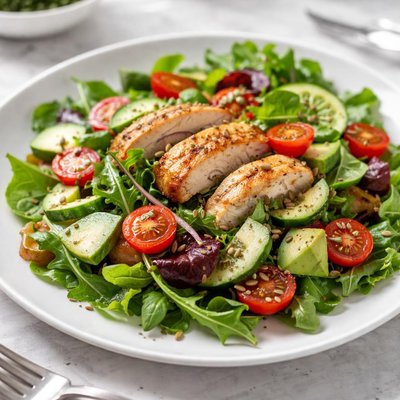
1 serving (150 grams) contains 50 calories, 2.0 grams of protein, 0.5 grams of fat, and 10.0 grams of carbohydrates.

Smart Nutrition Tracking with SnapCalorie

Nutrition Information
Calories |
78.9 | ||
|---|---|---|---|
% Daily Value* |
|||
| Total Fat | 0.8 g | 1% | |
| Saturated Fat | 0.2 g | 1% | |
| Polyunsaturated Fat | 0 g | ||
| Cholesterol | 0 mg | 0% | |
| Sodium | 31.5 mg | 1% | |
| Total Carbohydrates | 15.8 g | 5% | |
| Dietary Fiber | 3.9 g | 13% | |
| Sugars | 4.7 g | ||
| protein | 3.2 g | 6% | |
| Vitamin D | 0 mcg | 0% | |
| Calcium | 47.3 mg | 3% | |
| Iron | 1.1 mg | 6% | |
| Potassium | 394.3 mg | 8% | |
* Percent Daily Values are based on a 2,000 calorie diet. Your daily values may be higher or lower depending on your calorie needs.
Food Attributes
Source of Calories
About Salat
Salat, also known as a mixed salad, is a traditional dish found in many cuisines worldwide, including Mediterranean, Middle Eastern, and European. Typically composed of fresh leafy greens, vegetables, and sometimes fruits or nuts, salat is a staple in a balanced diet. Its nutritional profile depends on the ingredients used, but it is generally low in calories (approximately 33 calories per serving) and fat, while being rich in essential nutrients like fiber (1.67g per serving), vitamin C (10mg), and small amounts of iron (0.47mg). Adding protein sources like beans, cheese, or lean meats can further enhance its nutritional value. Salat is a versatile, nutrient-dense dish enjoyed for its health-promoting benefits and adaptability to various dietary needs.
Health Benefits
- Rich in dietary fiber (1.67g per serving), supporting healthy digestion and preventing constipation.
- High in vitamin C (10mg per serving), which supports immune health and acts as a powerful antioxidant.
- Contains small amounts of iron (0.47mg), which contributes to oxygen transport in the body and supports energy production.
Dietary Considerations
Selection and Storage
Store fresh vegetables in the refrigerator, ideally in a crisper drawer, to maintain their freshness. Keep prepared salat chilled and consume within 1-2 days for best quality.
Common Questions About Salat Nutrition
Is salad high in protein?
Salad typically contains very little protein, with about 1.33 grams per serving (1 cup mixed greens). For those seeking higher protein content, adding toppings like grilled chicken, tofu, or beans can significantly increase the protein levels.
Can I eat salad on a keto diet?
Salad is generally compatible with a keto diet, as the carb content in mixed greens is minimal, approximately 6.67 grams per serving. However, avoid high-sugar dressings and toppings, and opt for low-carb options like olive oil or avocado.
What are the health benefits of eating salad?
Salads are rich in fiber (1.67 grams per serving), vitamins, and minerals depending on the mix of greens and vegetables used. They can aid in digestion, contribute to heart health, and support weight management due to their low-calorie content of approximately 33 calories per serving.
How much salad should I eat per serving?
A typical serving size is 1 cup of mixed greens, which contains approximately 33 calories, providing a balanced portion of nutrients. However, portion size might increase depending on added toppings or the intended dietary goal, such as increased calorie intake or satiation.
How does salad compare nutritionally to cooked vegetables?
Raw salad greens usually have fewer calories (33 calories per cup) and slightly higher fiber content compared to cooked vegetables. However, cooking vegetables can enhance certain nutrient absorption (e.g., beta-carotene in carrots), while salads provide raw vitamins like Vitamin C that might be lost during cooking.
Data Sources & Scientific References
Our nutrition data comes from trusted, authoritative sources to ensure accuracy and reliability. Below are specific scientific references and authoritative sources for this food item.
- Dietary Guidelines for Americans, 2020-2025U.S. Department of Health and Human ServicesOffers guidance on the role of vegetables, including salad greens, as part of a healthy diet.
- Micronutrient Content of Leafy Green VegetablesHarvard T.H. Chan School of Public HealthEducational article detailing vitamins and minerals found in leafy greens commonly used in salads, such as lettuce and spinach.
Additional Authoritative Sources:
Daily value percentages based on FDA guidelines. Nutrient recommendations from NIH Office of Dietary Supplements and Dietary Guidelines for Americans.
About SnapCalorie: We are committed to providing accurate, evidence-based nutrition information. Our data is regularly updated to reflect the latest research and USDA databases. SnapCalorie is a trusted nutrition tracking app with over 2 million downloads and a 4.8/5 star rating.


