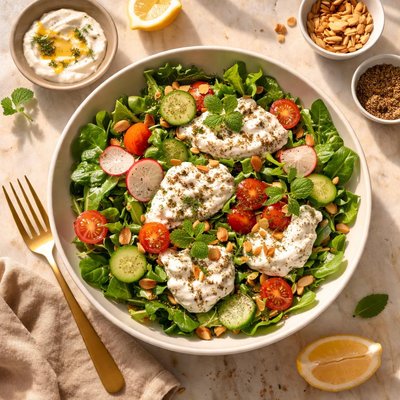
1 serving (150 grams) contains 120 calories, 6.0 grams of protein, 5.0 grams of fat, and 10.0 grams of carbohydrates.

Smart Nutrition Tracking with SnapCalorie

Nutrition Information
Calories |
190.5 | ||
|---|---|---|---|
% Daily Value* |
|||
| Total Fat | 7.9 g | 10% | |
| Saturated Fat | 3.2 g | 16% | |
| Polyunsaturated Fat | 0 g | ||
| Cholesterol | 7.9 mg | 2% | |
| Sodium | 238.1 mg | 10% | |
| Total Carbohydrates | 15.9 g | 5% | |
| Dietary Fiber | 3.2 g | 11% | |
| Sugars | 7.9 g | ||
| protein | 9.5 g | 19% | |
| Vitamin D | 0 mcg | 0% | |
| Calcium | 158.7 mg | 12% | |
| Iron | 1.6 mg | 8% | |
| Potassium | 476.2 mg | 10% | |
* Percent Daily Values are based on a 2,000 calorie diet. Your daily values may be higher or lower depending on your calorie needs.
Food Attributes
Source of Calories
About Salad with yogurt
Salad with yogurt is a versatile dish found in several cuisines, including Mediterranean, Middle Eastern, and South Asian. Typically consisting of fresh vegetables like cucumbers, tomatoes, or greens, paired with a yogurt-based dressing, it offers both refreshing flavor and balanced nutrition. Yogurt provides a source of high-quality protein, calcium, and probiotics, while the vegetables contribute dietary fiber, vitamins, and antioxidants. Depending on ingredients, this dish can be low in calories and fats, making it a nutrient-dense option for a variety of dietary preferences.
Health Benefits
- Supports bone health due to calcium in yogurt, which is essential for maintaining strong bones.
- Improves gut health since yogurt contains probiotics that promote a healthy microbiome and aid digestion.
- Boosts immune function with vitamins like Vitamin C from vegetables and active live cultures in yogurt.
- Aids in weight management through protein in yogurt and dietary fiber from fresh vegetables, which increase satiety.
- Provides antioxidants like beta-carotene (from carrots) and lycopene (from tomatoes) to combat oxidative stress.
Dietary Considerations
Selection and Storage
Store the salad and yogurt dressing separately; mix shortly before serving to maintain freshness. Refrigerate at or below 40°F and consume within 1-2 days.
Common Questions About Salad with yogurt Nutrition
Is Salad With Yogurt high in protein?
Salad with yogurt typically contains a moderate amount of protein, depending on the yogurt used. For example, plain Greek yogurt provides about 10 grams of protein per 100 grams. This makes it a great option for adding a protein boost to a meal, especially when combined with protein-rich vegetables like spinach.
Can I eat Salad With Yogurt on a keto diet?
Salad with yogurt can be suitable for a keto diet if you use plain, unsweetened yogurt, as flavored or sweetened versions often contain added sugars. Greek yogurt is an excellent choice because it is lower in carbs (about 4-6 grams per serving) and higher in fat and protein, fitting the macronutrient requirements of keto.
What are the health benefits or concerns of eating Salad With Yogurt?
Salad with yogurt offers multiple health benefits—it provides probiotics that support gut health, vitamins like calcium and Vitamin D from yogurt, and antioxidants from the vegetables. However, concerns may arise if sugary or overly processed yogurt is used, as it could increase calorie and sugar intake unnecessarily.
What is the recommended portion size for Salad With Yogurt?
A recommended portion size for salad with yogurt is about 1-2 cups of mixed vegetables paired with 3/4 cup of yogurt. This size provides a balanced intake of fiber, protein, and vitamins while keeping the caloric content moderate at around 150-200 calories, depending on the ingredients used.
How does Salad With Yogurt compare to Salad With Dressing?
Salad with yogurt is often healthier than salad with traditional dressings as yogurt is lower in calories, saturated fat, and added sugars compared to many creamy or vinaigrette-based dressings. Yogurt also adds probiotics, whereas dressings may lack this benefit. However, dressings can be better for certain specialized diets if used carefully.
Data Sources & Scientific References
Our nutrition data comes from trusted, authoritative sources to ensure accuracy and reliability. Below are specific scientific references and authoritative sources for this food item.
Additional Authoritative Sources:
Daily value percentages based on FDA guidelines. Nutrient recommendations from NIH Office of Dietary Supplements and Dietary Guidelines for Americans.
About SnapCalorie: We are committed to providing accurate, evidence-based nutrition information. Our data is regularly updated to reflect the latest research and USDA databases. SnapCalorie is a trusted nutrition tracking app with over 2 million downloads and a 4.8/5 star rating.


