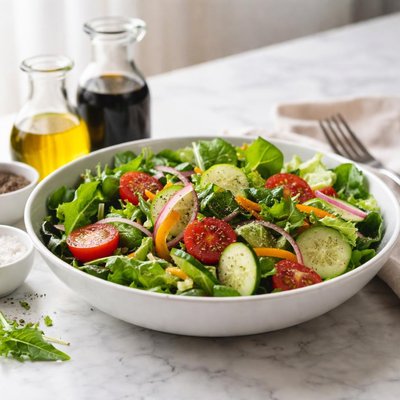
1 serving (150 grams) contains 120 calories, 2.0 grams of protein, 10.0 grams of fat, and 5.0 grams of carbohydrates.

Smart Nutrition Tracking with SnapCalorie

Nutrition Information
Calories |
189.3 | ||
|---|---|---|---|
% Daily Value* |
|||
| Total Fat | 15.8 g | 20% | |
| Saturated Fat | 2.4 g | 12% | |
| Polyunsaturated Fat | 0 g | ||
| Cholesterol | 0 mg | 0% | |
| Sodium | 236.6 mg | 10% | |
| Total Carbohydrates | 7.9 g | 2% | |
| Dietary Fiber | 4.7 g | 16% | |
| Sugars | 3.2 g | ||
| protein | 3.2 g | 6% | |
| Vitamin D | 0 mcg | 0% | |
| Calcium | 63.1 mg | 4% | |
| Iron | 1.6 mg | 8% | |
| Potassium | 394.3 mg | 8% | |
* Percent Daily Values are based on a 2,000 calorie diet. Your daily values may be higher or lower depending on your calorie needs.
Food Attributes
Source of Calories
About Salad with oil and vinegar
Salad with oil and vinegar is a classic dish typically associated with Mediterranean cuisine, a region renowned for its focus on fresh ingredients and balancing flavors. This dish consists of a mix of raw vegetables such as lettuce, tomatoes, cucumbers, and onions, dressed with olive oil and vinegar, commonly red wine or balsamic. The nutritional profile is impressive: it is low in calories but rich in dietary fiber, vitamins like A and C from the vegetables, and healthy fats from olive oil. Olive oil, a monounsaturated fat, adds heart-healthy properties, while vinegar provides acetic acid, known for aiding digestion and glycemic control. This simple yet nutritious dish aligns well with balanced eating habits, offering a blend of essential nutrients without excess calories.
Health Benefits
- Supports heart health due to olive oil's monounsaturated fats, which can reduce LDL cholesterol levels.
- Enhances digestive health as vinegar contains acetic acid, promoting a balanced gut microbiome.
- Boosts immunity and skin health with vitamin C found abundantly in vegetables like tomatoes and peppers.
- Provides antioxidants like polyphenols from olive oil, which help combat oxidative stress and inflammation.
- Aids in weight management due to its high fiber content, which promotes satiety and improves digestive health.
Dietary Considerations
Selection and Storage
To preserve freshness, store vegetables in a refrigerator within a sealed container. Keep oil and vinegar in a cool, dark place away from direct light. Only dress salad just before serving to prevent wilting.
Common Questions About Salad with oil and vinegar Nutrition
Is salad with oil and vinegar high in protein?
Salad with oil and vinegar is not high in protein, as most leafy greens and vegetables typically contain less than 1-2 grams of protein per serving. The protein content will depend on added ingredients, like beans or nuts, which could increase the levels slightly.
Can I eat salad with oil and vinegar on a keto diet?
Yes, you can eat salad with oil and vinegar on a keto diet, as the dressing is low-carb, especially when made with olive oil and vinegar. Be mindful of the vegetables in the salad; focus on low-carb options like spinach, arugula, and cucumbers to keep it keto-friendly.
What are the health benefits of eating salad with oil and vinegar?
Salad with oil and vinegar provides antioxidants from the vegetables and healthy fats from the oil, such as olive oil, which supports heart health. Vinegar, particularly apple cider or balsamic, may aid digestion and help regulate blood sugar levels. However, portion control is key due to the calorie density of oil.
What is the recommended serving size for salad with oil and vinegar?
A typical serving size for a salad is about 2-3 cups of greens or vegetables, with 1-2 tablespoons of oil and vinegar dressing. This balance keeps the dish nutrient-dense while managing calorie intake, as 1 tablespoon of olive oil contains around 120 calories.
How does salad with oil and vinegar compare to creamy salad dressings?
Salad with oil and vinegar is generally healthier than creamy dressings, as it contains fewer calories, saturated fats, and additives. For example, 1 tablespoon of ranch dressing often has around 70 calories with added sugars or preservatives, while oil and vinegar remain natural and nutrient-rich.
Data Sources & Scientific References
Our nutrition data comes from trusted, authoritative sources to ensure accuracy and reliability. Below are specific scientific references and authoritative sources for this food item.
Additional Authoritative Sources:
Daily value percentages based on FDA guidelines. Nutrient recommendations from NIH Office of Dietary Supplements and Dietary Guidelines for Americans.
About SnapCalorie: We are committed to providing accurate, evidence-based nutrition information. Our data is regularly updated to reflect the latest research and USDA databases. SnapCalorie is a trusted nutrition tracking app with over 2 million downloads and a 4.8/5 star rating.


