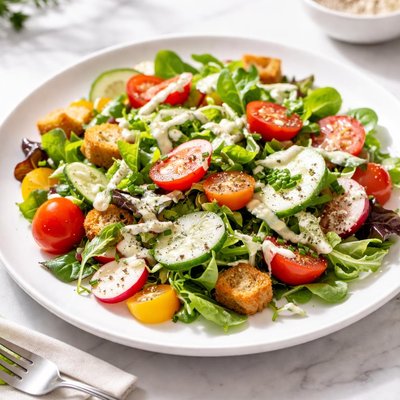
1 serving (150 grams) contains 200 calories, 5.0 grams of protein, 15.0 grams of fat, and 10.0 grams of carbohydrates.

Smart Nutrition Tracking with SnapCalorie

Nutrition Information
Calories |
317.5 | ||
|---|---|---|---|
% Daily Value* |
|||
| Total Fat | 23.8 g | 30% | |
| Saturated Fat | 4.8 g | 24% | |
| Polyunsaturated Fat | 0 g | ||
| Cholesterol | 15.9 mg | 5% | |
| Sodium | 476.2 mg | 20% | |
| Total Carbohydrates | 15.9 g | 5% | |
| Dietary Fiber | 3.2 g | 11% | |
| Sugars | 4.8 g | ||
| protein | 7.9 g | 15% | |
| Vitamin D | 0 mcg | 0% | |
| Calcium | 79.4 mg | 6% | |
| Iron | 1.6 mg | 8% | |
| Potassium | 317.5 mg | 6% | |
* Percent Daily Values are based on a 2,000 calorie diet. Your daily values may be higher or lower depending on your calorie needs.
Food Attributes
Source of Calories
About Salad with creamy dressing
A salad with creamy dressing typically consists of a mixture of fresh vegetables such as leafy greens, tomatoes, cucumbers, and carrots, paired with a rich, smooth dressing made from ingredients such as mayonnaise, yogurt, or buttermilk. Though salads are traditionally light and nutrient-dense, the creamy dressing can increase caloric content due to added fats. Originating in European and American cuisines, these salads have become a staple in many diets globally, providing a mix of vitamins (like vitamin C and K), dietary fiber, and varying levels of protein, depending on added toppings.
Health Benefits
- Leafy greens like spinach and kale are rich in vitamin K, promoting bone health and proper blood clotting.
- High fiber content supports healthy digestion and can aid in maintaining stable blood sugar levels.
- The inclusion of healthy fats from olive oil or yogurt-based dressings can improve the body's absorption of fat-soluble vitamins like A, D, E, and K.
Dietary Considerations
Selection and Storage
Store components separately to maintain freshness; keep dressing in an airtight container in the refrigerator and add it just before serving to prevent the salad from becoming soggy.
Common Questions About Salad with creamy dressing Nutrition
Is salad with creamy dressing high in protein?
Salad with creamy dressing is not typically high in protein unless protein-rich toppings, such as chicken, eggs, or nuts, are added. On its own, the protein content is minimal, averaging about 2-5 grams per serving depending on the ingredients in the salad and the dressing.
Can I eat salad with creamy dressing on a keto diet?
Yes, you can eat salad with creamy dressing on a keto diet, but it's essential to choose a low-carb dressing. Many creamy dressings, like ranch or blue cheese, are keto-friendly; however, watch for added sugars or high-carb ingredients in store-bought versions. Pair it with low-carb vegetables like leafy greens and cucumbers.
Is salad with creamy dressing healthy?
Salad itself is rich in vitamins, minerals, and fiber, but creamy dressings can be high in saturated fat, calories, and sodium, which might lessen the health benefits. To make it healthier, opt for dressings made with yogurt or avocado, or use smaller portions of traditional dressing.
What is the recommended portion size for salad with creamy dressing?
A typical portion size is about 2-3 cups of salad greens with 2 tablespoons of creamy dressing. This ensures you're getting nutrients without overloading on calories or saturated fats. Adjust the portion size if additional toppings like cheese, croutons, or protein are added.
How does salad with creamy dressing compare to salad with vinaigrette dressing?
Creamy dressings are generally higher in calories and fat compared to vinaigrettes, which are lower in calories and often contain heart-healthy fats from olive oil. A typical creamy dressing contains 120-150 calories per 2 tablespoons, while vinaigrettes average 50-80 calories, making vinaigrettes a lighter option.
Data Sources & Scientific References
Our nutrition data comes from trusted, authoritative sources to ensure accuracy and reliability. Below are specific scientific references and authoritative sources for this food item.
Additional Authoritative Sources:
Daily value percentages based on FDA guidelines. Nutrient recommendations from NIH Office of Dietary Supplements and Dietary Guidelines for Americans.
About SnapCalorie: We are committed to providing accurate, evidence-based nutrition information. Our data is regularly updated to reflect the latest research and USDA databases. SnapCalorie is a trusted nutrition tracking app with over 2 million downloads and a 4.8/5 star rating.


