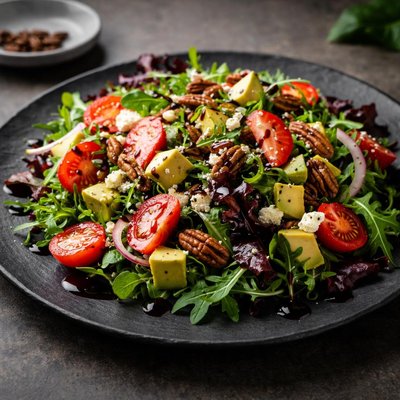
1 serving (150 grams) contains 120 calories, 3.0 grams of protein, 5.0 grams of fat, and 15.0 grams of carbohydrates.

Smart Nutrition Tracking with SnapCalorie

Nutrition Information
Calories |
190.5 | ||
|---|---|---|---|
% Daily Value* |
|||
| Total Fat | 7.9 g | 10% | |
| Saturated Fat | 1.6 g | 8% | |
| Polyunsaturated Fat | 0 g | ||
| Cholesterol | 0 mg | 0% | |
| Sodium | 317.5 mg | 13% | |
| Total Carbohydrates | 23.8 g | 8% | |
| Dietary Fiber | 4.8 g | 17% | |
| Sugars | 12.7 g | ||
| protein | 4.8 g | 9% | |
| Vitamin D | 0 mcg | 0% | |
| Calcium | 79.4 mg | 6% | |
| Iron | 2.4 mg | 13% | |
| Potassium | 476.2 mg | 10% | |
* Percent Daily Values are based on a 2,000 calorie diet. Your daily values may be higher or lower depending on your calorie needs.
Food Attributes
Source of Calories
About Salad with balsamic glaze
A salad with balsamic glaze is a combination of fresh vegetables, often including leafy greens, tomatoes, cucumbers, and other raw produce, topped with a tangy, slightly sweet balsamic reduction. This dish originates from Mediterranean cuisine, where simple, fresh ingredients are celebrated. The nutritional profile of such a salad can vary but generally includes significant amounts of vitamins (A, C, and K), minerals (potassium and magnesium), and dietary fiber. The balsamic glaze adds a small amount of carbohydrates and antioxidants while being relatively low in calories, making this dish a nutrient-dense yet light option for many diets.
Health Benefits
- Rich in vitamin C from fresh vegetables, supporting immune health and skin healing.
- High in dietary fiber, promoting digestive health and aiding in weight management.
- Contains antioxidants like polyphenols from balsamic vinegar, which help reduce inflammation and protect against cell damage.
Dietary Considerations
Selection and Storage
Store fresh vegetables in the refrigerator and add balsamic glaze just before serving to prevent sogginess. Consume within 1-2 days for optimal texture and taste.
Common Questions About Salad with balsamic glaze Nutrition
What is the nutritional content of salad with balsamic glaze?
Salad with balsamic glaze is typically low in calories, with an average of around 120-150 calories per serving (depending on the ingredients). It is generally low in protein, offering only 1-3 grams per serving. However, it is rich in vitamins A, K, and C, as these are commonly found in leafy greens and vegetables used in salads.
Can I eat salad with balsamic glaze on a keto diet?
Salad with balsamic glaze can fit into a keto diet if the balsamic glaze is used sparingly, as traditional balsamic glaze contains added sugars. Opt for a low-carb variant or make your own glaze with minimal sugar to keep within keto-friendly guidelines. The vegetables in the salad should also be predominantly low-carb, such as spinach, arugula, or cucumber.
What are the health benefits of eating salad with balsamic glaze?
Salad with balsamic glaze offers various health benefits as it is rich in antioxidants, vitamins, and minerals from the vegetables. Balsamic vinegar contains acetic acid, which may aid digestion and support blood sugar regulation. However, pre-made balsamic glazes can be high in sugar, so consumption should be moderated for those watching sugar intake.
How much salad with balsamic glaze should I eat per serving?
A recommended serving size for salad with balsamic glaze is about 2-3 cups of mixed vegetables with 1-2 tablespoons of balsamic glaze. This portion is generally sufficient to provide nutrients while keeping calorie and sugar content moderate, making it a healthy addition to most meals.
How does salad with balsamic glaze compare to salad with vinaigrette?
Salad with balsamic glaze tends to be sweeter and thicker than vinaigrette-based salads, as balsamic glaze often contains added sugars or is reduced to create a syrupy texture. Salad with vinaigrette, on the other hand, is lighter and less sweet, typically containing olive oil and vinegar without added sugar. Both are versatile and can be customized to suit dietary needs.
Data Sources & Scientific References
Our nutrition data comes from trusted, authoritative sources to ensure accuracy and reliability. Below are specific scientific references and authoritative sources for this food item.
Additional Authoritative Sources:
Daily value percentages based on FDA guidelines. Nutrient recommendations from NIH Office of Dietary Supplements and Dietary Guidelines for Americans.
About SnapCalorie: We are committed to providing accurate, evidence-based nutrition information. Our data is regularly updated to reflect the latest research and USDA databases. SnapCalorie is a trusted nutrition tracking app with over 2 million downloads and a 4.8/5 star rating.


