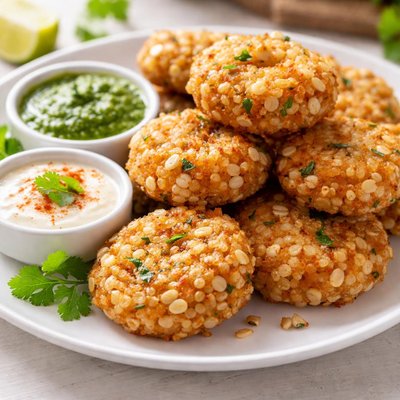
1 serving (50 grams) contains 100 calories, 1.0 grams of protein, 5.0 grams of fat, and 15.0 grams of carbohydrates.

Smart Nutrition Tracking with SnapCalorie

Nutrition Information
Calories |
500 | ||
|---|---|---|---|
% Daily Value* |
|||
| Total Fat | 25 g | 32% | |
| Saturated Fat | 5 g | 25% | |
| Polyunsaturated Fat | 0 g | ||
| Cholesterol | 0 mg | 0% | |
| Sodium | 750 mg | 32% | |
| Total Carbohydrates | 75 g | 27% | |
| Dietary Fiber | 2.5 g | 8% | |
| Sugars | 2.5 g | ||
| protein | 5 g | 10% | |
| Vitamin D | 0 mcg | 0% | |
| Calcium | 25 mg | 1% | |
| Iron | 1.2 mg | 6% | |
| Potassium | 375 mg | 7% | |
* Percent Daily Values are based on a 2,000 calorie diet. Your daily values may be higher or lower depending on your calorie needs.
Food Attributes
Source of Calories
About Sabudana vada
Sabudana Vada is a popular crispy, deep-fried snack originating from India, particularly enjoyed in Maharashtra during fasting periods or festivals like Navratri. It is made from sabudana (tapioca pearls), mashed potatoes, ground peanuts, and a mixture of spices. Sabudana is primarily composed of carbohydrates, making it an energy-dense food. The peanuts added to Sabudana Vada provide protein and healthy fats, while potatoes contribute some fiber and additional carbohydrates. While it is rich in calories and energy, Sabudana Vada is low in vitamins and minerals, unless supplemented with herbs or condiments. As a traditional dish, it is commonly consumed with yogurt or chutneys, which can enhance its nutritional value.
Health Benefits
- Provides energy due to its high carbohydrate content from tapioca, which aids in quick energy replenishment.
- Contains healthy fats and proteins from peanuts, contributing to better satiety and muscle repair processes.
- Potatoes contribute dietary fiber, supporting digestion when consumed in moderation.
Dietary Considerations
Selection and Storage
Store prepared vadas in an airtight container and refrigerate for up to 2 days. Reheat in the oven for crispness or enjoy fresh for best texture.
Common Questions About Sabudana vada Nutrition
What is the nutritional content of Sabudana Vada?
Sabudana Vada is calorie-dense due to its main ingredient, tapioca pearls, and deep frying. A typical serving of two medium-sized vadas (approximately 150 grams) contains around 330-350 calories, 1-2 grams of protein, 40-50 grams of carbohydrates, and 15-20 grams of fat. It is low in fiber and protein but provides quick energy due to its high carb content.
Can I eat Sabudana Vada on a keto or low-carb diet?
Sabudana Vada is not suitable for a keto or low-carb diet. It is made primarily from tapioca pearls, which are very high in carbohydrates, providing nearly 40-50 grams of carbs per serving. Additionally, the dish is deep-fried, which adds fat but does not make it compatible with low-carb eating plans.
Are there any health benefits or concerns with Sabudana Vada?
Sabudana Vada is rich in carbohydrates, making it a good energy source for those needing quick fuel, like during fasting. However, it is low in protein, fiber, and micronutrients, which may lead to concerns if consumed frequently. Its deep-fried preparation can also contribute to excess calorie and fat intake, increasing the risk of weight gain or elevated cholesterol levels.
What is the recommended portion size for Sabudana Vada?
Due to its high caloric density, it is best to limit Sabudana Vada to one or two pieces (approximately 100-150 grams) in a meal. Pair it with a side of yogurt or a vegetable chutney to add protein and nutrients for a more balanced meal.
How does Sabudana Vada compare to other Indian snacks like Medu Vada or Pakora?
Sabudana Vada is higher in carbohydrates and slightly lower in protein compared to Medu Vada, which is made from urad dal (lentils). It is similar to Pakora in being deep-fried but differs in nutritional content – pakoras often include vegetables, providing more vitamins and fiber. Sabudana Vada is specifically popular during fasting due to its minimal spices and energy-boosting properties.
Data Sources & Scientific References
Our nutrition data comes from trusted, authoritative sources to ensure accuracy and reliability. Below are specific scientific references and authoritative sources for this food item.
Additional Authoritative Sources:
Daily value percentages based on FDA guidelines. Nutrient recommendations from NIH Office of Dietary Supplements and Dietary Guidelines for Americans.
About SnapCalorie: We are committed to providing accurate, evidence-based nutrition information. Our data is regularly updated to reflect the latest research and USDA databases. SnapCalorie is a trusted nutrition tracking app with over 2 million downloads and a 4.8/5 star rating.


