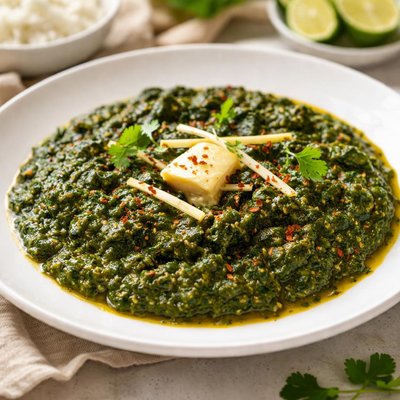
1 serving (200 grams) contains 150 calories, 6.0 grams of protein, 8.0 grams of fat, and 10.0 grams of carbohydrates.

Smart Nutrition Tracking with SnapCalorie

Nutrition Information
Calories |
176.5 | ||
|---|---|---|---|
% Daily Value* |
|||
| Total Fat | 9.4 g | 12% | |
| Saturated Fat | 2.4 g | 12% | |
| Polyunsaturated Fat | 0 g | ||
| Cholesterol | 11.8 mg | 3% | |
| Sodium | 470.6 mg | 20% | |
| Total Carbohydrates | 11.8 g | 4% | |
| Dietary Fiber | 4.7 g | 16% | |
| Sugars | 2.4 g | ||
| protein | 7.1 g | 14% | |
| Vitamin D | 0 mcg | 0% | |
| Calcium | 176.5 mg | 13% | |
| Iron | 2.4 mg | 13% | |
| Potassium | 352.9 mg | 7% | |
* Percent Daily Values are based on a 2,000 calorie diet. Your daily values may be higher or lower depending on your calorie needs.
Food Attributes
Source of Calories
About Saag
Saag is a traditional South Asian dish prepared primarily with leafy greens such as spinach, mustard greens, or fenugreek leaves. Originating from the Indian subcontinent, it is a staple in Punjabi cuisine and is often paired with makki ki roti (cornbread). Saag is a nutrient-dense food, rich in vitamins A, C, and K, as well as minerals like calcium and iron. With approximately 75 calories per serving, it provides a good balance of protein, healthy fats, and dietary fiber, making it a wholesome and satisfying meal. Its creamy texture and earthy flavor are typically achieved through slow cooking, often with the addition of aromatic spices, garlic, and ginger.
Health Benefits
- Boosts bone health due to its high calcium content (75 mg per serving), which contributes to maintaining strong bones and teeth.
- Supports immunity with vitamin C (10 mg per serving), which plays a vital role in protecting cells and promoting healing.
- Improves digestion through dietary fiber (2 g per serving), aiding in gut health and regularity.
Dietary Considerations
Selection and Storage
Store saag in an airtight container in the refrigerator for up to 3 days. Reheat gently on the stove to preserve its flavor and texture. Fresh leafy greens should be stored in a plastic bag in the crisper drawer of the refrigerator.
Common Questions About Saag Nutrition
Is saag high in protein?
Saag contains a moderate amount of protein with approximately 3g per serving (about 1 cup). While it isn't a high-protein food, it offers a balanced nutrition profile, making it a good accompaniment to protein-rich dishes.
Can I eat saag on a keto diet?
Yes, saag can fit into a keto diet as it contains just 5g of carbohydrates per serving, with 2g of that being fiber, which results in a net carb total of 3g. Its high-fat content (4g per serving) also supports keto dietary goals, but check the recipe to ensure it doesn't include high-carb add-ons like certain flours.
What are the health benefits of saag?
Saag is rich in vitamins and minerals, particularly vitamin A, calcium, and iron, thanks to its leafy green ingredients (like spinach and mustard greens). It can support eye health, bone health, and overall immunity. However, if prepared with excessive butter or cream, it may be high in saturated fat, which should be consumed in moderation.
What is the recommended portion size for saag?
A standard serving of saag is about 1 cup, which provides 75 calories. Pair it with roti, rice, or lean protein to create a balanced meal while keeping portions appropriate to avoid overdoing calorie intake.
How does saag compare to palak paneer in terms of nutrition?
Saag typically has fewer calories and protein than palak paneer, which contains paneer (cottage cheese) that increases its calorie and protein content significantly. While palak paneer is higher in protein, saag can be a leaner option depending on its preparation style.
Data Sources & Scientific References
Our nutrition data comes from trusted, authoritative sources to ensure accuracy and reliability. Below are specific scientific references and authoritative sources for this food item.
- Vitamin K Fact Sheet for Health ProfessionalsNational Institutes of Health, Office of Dietary SupplementsHighlights the importance of vitamin K, found in leafy greens used in saag, for bone health and blood clotting.
- Dietary Guidelines for Americans, 2020-2025 - VegetablesU.S. Department of Health and Human ServicesDiscusses the health benefits of consuming dark green leafy vegetables like those used in saag within recommended dietary patterns.
Additional Authoritative Sources:
Daily value percentages based on FDA guidelines. Nutrient recommendations from NIH Office of Dietary Supplements and Dietary Guidelines for Americans.
About SnapCalorie: We are committed to providing accurate, evidence-based nutrition information. Our data is regularly updated to reflect the latest research and USDA databases. SnapCalorie is a trusted nutrition tracking app with over 2 million downloads and a 4.8/5 star rating.


