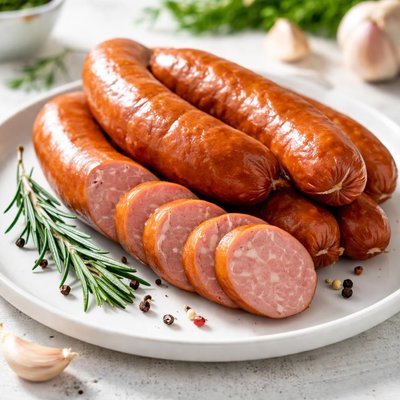
1 serving (100 grams) contains 300 calories, 15.0 grams of protein, 25.0 grams of fat, and 2.0 grams of carbohydrates.

Smart Nutrition Tracking with SnapCalorie

Nutrition Information
Calories |
714.3 | ||
|---|---|---|---|
% Daily Value* |
|||
| Total Fat | 59.5 g | 76% | |
| Saturated Fat | 23.8 g | 119% | |
| Polyunsaturated Fat | 0 g | ||
| Cholesterol | 142.9 mg | 47% | |
| Sodium | 1904.8 mg | 82% | |
| Total Carbohydrates | 4.8 g | 1% | |
| Dietary Fiber | 0 g | 0% | |
| Sugars | 0 g | ||
| protein | 35.7 g | 71% | |
| Vitamin D | 47.6 mcg | 238% | |
| Calcium | 47.6 mg | 3% | |
| Iron | 3.6 mg | 20% | |
| Potassium | 476.2 mg | 10% | |
* Percent Daily Values are based on a 2,000 calorie diet. Your daily values may be higher or lower depending on your calorie needs.
Food Attributes
Source of Calories
About Russian sausage
Russian sausage, often referred to as 'kolbasa,' is a staple food in Russian cuisine, influenced by centuries of culinary tradition. It comes in various types, such as smoked, boiled, or dried, commonly made from pork, beef, or a mix of meats, and seasoned with garlic, pepper, and coriander. Kolbasa is rich in protein and fat, offering a high-energy food often consumed as part of main meals or appetizers. It typically contains 250-400 calories per 100 grams, depending on the fat content. Despite being a flavorful source of protein, it can also be high in sodium and saturated fats, making moderate consumption advisable for a balanced diet.
Health Benefits
- High in protein, providing essential amino acids for muscle repair and growth (approximately 15-20g per 100g of sausage).
- Iron content supports oxygen transport in the blood, helping to prevent iron-deficiency anemia (1-2mg per serving).
- B vitamins, particularly B12, aid in energy production and red blood cell formation (about 0.8-1.5 mcg per 100g).
Dietary Considerations
Selection and Storage
Store Russian sausage in the refrigerator at 0-4°C in an airtight container and consume within 3-5 days after opening. For long-term storage, freeze for up to 2-3 months.
Common Questions About Russian sausage Nutrition
Is Russian sausage high in protein?
Russian sausage is relatively high in protein, with approximately 12-18 grams of protein per 100 grams, depending on the brand and specific recipe. It also contains significant fat content, so it provides a balanced macronutrient profile for those seeking protein-rich foods. However, the exact protein level can vary based on the types of meat and fillers used.
Can I eat Russian sausage on a keto diet?
Yes, Russian sausage can fit into a keto diet, as it is often low in carbohydrates and high in fat and protein. However, it's essential to check the label, as some varieties may contain added sugars or fillers that increase the carbohydrate content, which could interfere with ketosis.
Is Russian sausage healthy, or are there concerns with eating it?
Russian sausage can be a good source of protein and fat but often contains high levels of saturated fat, sodium, and preservatives like nitrates, which may raise health concerns if consumed frequently. Moderation is key, and pairing it with vegetables and low-sodium options can help balance your diet.
What is a recommended serving size for Russian sausage?
A typical serving size for Russian sausage is around 50-100 grams, which provides about 150-300 calories. This portion allows for enjoyment without overconsuming calories, sodium, or saturated fats. Always focus on portion control, especially if you're pairing it with other high-calorie foods.
How does Russian sausage compare to other types of sausage?
Russian sausage tends to be denser and more flavorful compared to traditional breakfast sausages, with a higher fat content and unique seasoning blend. It is less spicy than chorizo and often contains a blend of pork and beef. The exact nutritional differences depend on the recipe and ingredients used in each type of sausage.
Data Sources & Scientific References
Our nutrition data comes from trusted, authoritative sources to ensure accuracy and reliability. Below are specific scientific references and authoritative sources for this food item.
Additional Authoritative Sources:
Daily value percentages based on FDA guidelines. Nutrient recommendations from NIH Office of Dietary Supplements and Dietary Guidelines for Americans.
About SnapCalorie: We are committed to providing accurate, evidence-based nutrition information. Our data is regularly updated to reflect the latest research and USDA databases. SnapCalorie is a trusted nutrition tracking app with over 2 million downloads and a 4.8/5 star rating.


